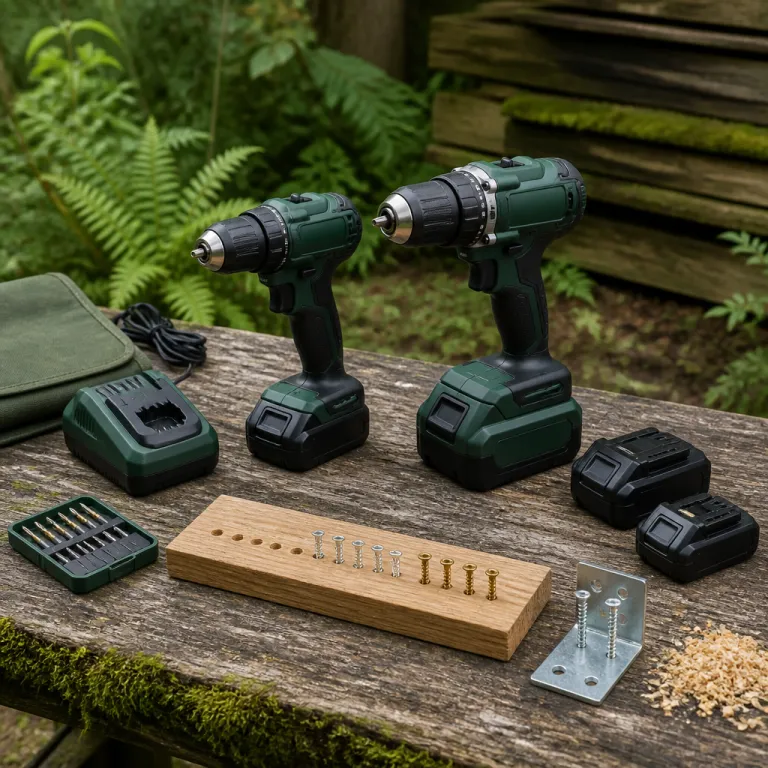
Ryobi ONE vs ONE HP drill comparison: what actually changes
The real difference between Ryobi ONE+ and ONE+ HP drills starts with the motor hidden inside. A standard Ryobi drill in the ONE+ line uses a brushed motor, while the ONE+ HP drill driver switches to a compact brushless design that changes torque, speed, heat buildup and long term durability. That single shift from brushed motors to a Ryobi brushless layout is what you are really paying the extra money for.
In practical terms, the brushless driver inside a ONE+ HP tool wastes less power as heat. Ryobi’s own runtime claims for comparable 18 V models, such as the PCL206B (brushed) versus the PSBRS01B (brushless), typically show roughly 20 to 30 percent more drilling time per charge for brushless variants under mixed drilling and driving cycles (based on Ryobi spec sheets downloaded from ryobitools.com in March 2024). Under the same load, the HP hammer drill or standard drill driver will feel similar at first, but the HP keeps its high performance longer before the batteries sag.
Ryobi tools in the basic ONE+ range still offer decent performance for light drilling and driving screws into pine or drywall. The gap between the two lines only becomes obvious when you lean on the tool, because the HP model holds higher speed under pressure and delivers more usable torque at the chuck. That is where a brushless hammer drill or compact impact driver in the HP family starts to feel closer to entry level power tools from DeWalt or Milwaukee, even if ultimate durability still favors the pro brands.
Both Ryobi drill lines share the same 18 V ONE+ batteries and chargers, so your existing tool kit remains compatible. You can buy a cheap brushed drill kit now, then later add a single HP brushless hammer drill bare tool when you tackle a deck or shed. That shared battery platform is why many homeowners treat the choice between ONE+ and ONE+ HP as a question of timing rather than a permanent either or decision.
Power, torque and speed: where HP earns its price
When you compare power and torque numbers, the difference between the two Ryobi drill families looks less like marketing and more like physics. A typical standard Ryobi drill driver in the ONE+ range, such as the PCL206B, is rated around 50 Nm of torque with a top no load speed near 1,750 rpm, while the equivalent ONE+ HP brushless model, for example the PSBHM01B, jumps closer to 60 Nm with a higher top speed in the second gear (based on Ryobi product specifications published on ryobitools.com in 2023–2024). That extra torque from the brushless driver shows up when you are driving long screws or using hammer mode for masonry drilling.
In real use, a standard Ryobi drill will spin a 6 mm wood bit through soft studs all day, but it slows and chatters when you push a 25 mm spade bit through wet framing lumber. The HP hammer drills and HP drill impact driver combos hold their speed better under that heavy load, which means cleaner holes and less risk of stalling halfway through the cut. That is the difference between a tool that feels fine for hanging shelves and a high performance drill that you trust for structural work.
Impact driver models in the ONE+ HP line show the same pattern, with higher impact energy and faster driving speed than their brushed cousins. A compact HP impact driver such as the PSBID01B will sink structural screws into pressure treated lumber with fewer cam outs, while a basic Ryobi tools impact driver like the PCL235B may need more patience and pre drilling holes. If you are assembling flat pack furniture, either impact driver model works, but deck framing is where the HP earns its keep.
Hammer drill variants tell a similar story, because the HP brushless hammer mechanism keeps its blows per minute higher as the battery drains. Standard hammer drills in the ONE+ family can handle occasional brick anchors, yet the HP brushless hammer drill keeps pace better when you are setting a full row of sleeve anchors along a foundation. For a first time buyer, that means the best Ryobi choice depends on whether you expect quick weekend tasks or repeated heavy drilling in wood, metal and masonry.
For a deeper look at how torque, speed and motor design affect long term reliability across brands, you can read this detailed teardown of a Makita XT269M kit on inside the Makita XT269M on a remodel crew. That kind of long horizon testing explains why brushless model designs usually outlast brushed motors when used hard. The same principles apply directly to the Ryobi ONE vs ONE HP drill comparison, even if the Ryobi price bracket targets homeowners rather than full time tradespeople.
Battery life, heat and motor wear in everyday drilling
Battery behavior is where the contrast between brushed and brushless Ryobi drills becomes obvious during a long Saturday project. With the same 2 Ah battery, a brushed Ryobi drill will usually run noticeably warmer at the handle and motor housing after repeated drilling holes in studs. The HP brushless drill driver stays cooler, which protects the windings and electronics and extends motor life over years of use.
Because brushless motors waste less energy as heat, every Ryobi brushless tool squeezes more work from the same batteries. In testing by independent reviewers such as Pro Tool Reviews and Consumer Reports, brushless drills commonly deliver two or three extra 25 mm spade bit holes per charge, or around a dozen more 75 mm deck screws driven before the battery gauge drops to one bar, compared with similar brushed models (for example, Pro Tool Reviews’ 18V drill shootouts in 2022 and Consumer Reports cordless drill ratings updated in early 2024). For a homeowner, that can be the difference between finishing a task on one battery or stopping to swap packs halfway through.
Heat also affects plastic gears, clutches and chucks, especially in compact drill impact designs that live near their limits. A brushed hammer drill that spends its life in hammer mode on concrete will cook its grease and brushes faster than a brushless hammer drill doing the same anchors. Over time, that shows up as more wobble at the chuck, weaker hammer action and shorter runtime even on fresh batteries.
Because both Ryobi ONE and ONE+ HP tools share the same 18 V battery platform, you can mix and match brushed and brushless tools in one tool kit. Many buyers start with a brushed Ryobi drill kit that includes two small batteries and a charger, then add a single HP impact driver or HP hammer drill bare tool when they feel the limits of the original drill. That staged upgrade path is one reason Ryobi tools remain popular with budget conscious homeowners who still want access to higher performance options later.
If you want to see how Ryobi tools fit into a broader cordless ecosystem, including saws, nailers and specialty power tools, there is a useful overview on exploring the versatility of Ryobi tools for cordless drill sets. That kind of ecosystem view matters because your first Ryobi drill often leads to several more tools on the same batteries. The Ryobi ONE vs ONE HP drill comparison is really the first fork in a much longer upgrade path.
When the standard ONE+ drill is enough for your projects
Not every buyer needs the high performance edge of a brushless model, and the decision between the two Ryobi lines should start with your actual projects. If your drill lives in a kitchen drawer and only sees action for curtain rods, picture frames and the occasional flat pack, the basic Ryobi drill driver is usually the best Ryobi choice. In that light duty role, the extra torque and runtime of an HP hammer drill or HP impact driver will sit mostly unused.
Standard Ryobi tools with brushed motors still handle most common homeowner tasks like drilling holes in softwood, driving screws into wall plugs and assembling furniture. The lower upfront cost of a brushed drill kit, especially during a prime day or amazon prime sale, leaves more budget for bits, anchors and a small accessory tool kit. For many first time buyers, that combination of low price and adequate performance matters more than shaving a few seconds off each screw.
Because the same ONE+ batteries power over three hundred tools, a basic Ryobi drill can be the gateway to a surprisingly broad range of power tools. You might start with a simple drill impact combo kit, then later add a work light, inflator or small saw without buying more batteries. In that scenario, the Ryobi ONE vs ONE HP drill comparison becomes less urgent, because the ecosystem value outweighs the performance gap between brushed and brushless drills.
There is also a psychological angle that many new homeowners underestimate when choosing their first drill. A lighter, slightly less aggressive brushed drill feels less intimidating, especially for someone who has never used hammer drills or impact drivers before. That comfort can mean you actually use the tool regularly, which is far more important than owning the highest spec brushless hammer drill that never leaves its case.
When the ONE+ HP brushless upgrade is worth the extra $40
The balance tilts toward the HP line once you move beyond light duty tasks. If you are planning a deck, shed, fence or repeated projects in hardwood, the extra torque and cooler running of a Ryobi brushless drill driver quickly justify the premium. Long structural screws, spade bits and masonry anchors all expose the limits of brushed motors faster than casual furniture assembly ever will.
For example, driving 100 mm structural screws into pressure treated lumber with a brushed Ryobi drill will work, but you will feel the motor bog and the battery fade sooner. Swap to an HP impact driver or HP hammer drill, and the same work goes faster with fewer stalls and less heat at the grip. Over a full weekend, that difference is not just comfort, it is whether your batteries and motors still feel strong on Sunday afternoon.
Buyers who regularly use hammer mode for brick or block anchors also benefit from the HP line. A brushless hammer drill maintains its blows per minute more consistently as the battery drains, which means cleaner holes and less time leaning on the tool. If you are hanging cabinets on masonry walls or setting repeated anchors for a ledger board, that high performance behavior matters more than the small price gap.
There is also the long view on wear, because brushless motors typically last two to three times longer than brushed motors under similar loads. Independent lab style endurance tests reported by outlets such as Consumer Reports and Pro Tool Reviews in 2022–2024 have repeatedly found that brushless drills survive far more heavy load cycles before failure than comparable brushed models. If you expect to keep your Ryobi drill for a decade of projects, the extra $40 spread over that duration becomes trivial compared with the cost of replacing a tired brushed drill. In that sense, the best Ryobi choice for serious DIYers is often a mixed stable, with a brushed drill for light tasks and a ONE+ HP brushless hammer drill or impact driver reserved for the heavy lifting.
Price, kits and how Ryobi stacks against pro brands
Price is where the Ryobi ONE vs ONE HP drill comparison intersects with bigger questions about DeWalt, Milwaukee and Makita. A standard Ryobi drill kit with two small batteries and a charger often lands under the psychological $150 mark, especially during prime day or other big box promotions. The equivalent ONE+ HP brushless model kit usually adds around $40, yet still undercuts many entry level pro brand kits on the shelf.
On raw performance, a Ryobi brushless drill impact combo will not match a Milwaukee M18 Fuel or a DeWalt XR hammer drill for sustained heavy work. However, the HP line closes the gap enough that most homeowners will never feel shortchanged when driving screws, drilling holes in wood or using hammer drills for occasional anchors. That is why many reviewers describe ONE+ HP as living in the grey zone between pure homeowner tools and light duty trade power tools.
Durability is where the pro brands still hold an edge, particularly in metal gear trains, chuck runout and resistance to job site abuse. A Ryobi drill that rides in a kitchen cabinet will last for years, while the same model tossed daily into a contractor truck bed will show its limits sooner. If you expect that kind of punishment, you should treat Ryobi as a secondary platform and look at long term test reports from outlets that track failures over thousands of hours.
For most first time buyers though, the key is choosing a battery platform that will grow with their needs. Ryobi’s 18 V ONE+ ecosystem offers one of the widest selections of compatible tools, which means your first drill purchase quietly commits you to a future stable of saws, nailers and specialty tools. In that context, the Ryobi ONE vs ONE HP drill comparison is less about chasing the highest spec sheet and more about buying into a system that still feels like the right choice when you are driving the tenth deck screw at a frozen six in the morning.
Key figures for Ryobi ONE vs ONE HP buyers
- Brushless motors in ONE+ HP drills typically deliver 20 to 30 percent more runtime per charge than brushed motors in standard ONE+ drills, based on Ryobi manufacturer testing across mixed drilling and driving cycles (for example, PCL206B vs PSBHM01B spec sheets and marketing literature reviewed on ryobitools.com in 2023–2024).
- Ryobi’s 18 V ONE+ platform includes more than 300 compatible tools, which is one of the largest single voltage ecosystems available to homeowners in big box retail channels as of mid 2024.
- Typical bare tool pricing for a standard ONE+ drill driver ranges from about $50 to $70, while a comparable ONE+ HP brushless drill or hammer drill bare tool usually costs between $80 and $100, based on advertised prices at major US retailers in 2024.
- Independent lab tests from organizations such as Consumer Reports and trade reviewers like Pro Tool Reviews have found that brushless drills can achieve roughly two to three times the motor life of comparable brushed drills under repeated heavy load conditions (summarized in Consumer Reports cordless drill reliability notes and Pro Tool Reviews endurance comparisons published between 2021 and 2024).
- Entry level pro grade drill kits from brands like DeWalt, Milwaukee and Makita often start around $180 to $250, which means a Ryobi ONE+ HP kit can undercut them by $50 or more while still offering competitive performance for homeowner tasks, according to price snapshots taken in early 2024.
FAQ about Ryobi ONE vs ONE HP drills
Is the Ryobi ONE+ HP brushless drill worth the extra money for a first time buyer ?
The decision between a standard ONE+ drill and an HP brushless model comes down to how often and how hard you use the tool. If you mainly hang pictures, assemble furniture and drill occasional small holes, the standard ONE+ brushed drill is usually enough. If you expect regular weekend projects with long screws, hardwood or masonry anchors, the extra torque, cooler running and longer motor life of the ONE+ HP brushless drill make the upgrade worth the additional cost.
Do Ryobi ONE and ONE+ HP drills use the same batteries and chargers ?
Both Ryobi ONE and ONE+ HP drills run on the same 18 V ONE+ batteries and chargers, so you can mix brushed and brushless tools on a single platform. That means you can start with a budget friendly brushed drill kit and later add an HP brushless hammer drill or impact driver as a bare tool without buying more batteries. This shared battery system is a major advantage for homeowners building a flexible cordless tool kit over time.
How does a Ryobi ONE+ HP drill compare to DeWalt or Milwaukee for heavy work ?
In the Ryobi ONE vs ONE HP drill comparison, the HP line narrows the performance gap with entry level DeWalt and Milwaukee drills but does not fully match their durability for daily job site abuse. A Ryobi brushless drill impact combo can handle most homeowner and light contractor tasks, including deck building and light masonry work. For full time tradespeople who punish their tools every day, pro grade platforms like DeWalt 20 V Max XR or Milwaukee M18 Fuel still offer stronger housings, tougher chucks and better long term reliability.
Should I buy a hammer drill, an impact driver or a standard drill driver first ?
For most first time buyers, a standard Ryobi drill driver is the most versatile starting point, because it handles both drilling holes and driving screws in one tool. If you plan a lot of decking or structural framing, pairing a drill with an impact driver gives faster screw driving and less wrist strain. A hammer drill is only essential if you expect regular drilling in brick, block or concrete, in which case choosing a ONE+ HP brushless hammer drill will give better performance and less overheating.
Can I upgrade from a brushed Ryobi drill to an HP brushless model later without wasting money ?
Yes, the Ryobi ONE vs ONE HP drill comparison is not a permanent either or decision because both lines share the same batteries. Many homeowners start with a low cost brushed drill kit to get batteries and a charger, then add a single ONE+ HP brushless hammer drill or impact driver as their projects grow more demanding. The original brushed drill still serves for light tasks, while the HP model takes over for heavy drilling and driving work.