From niche upgrade to default choice: how brushless took over
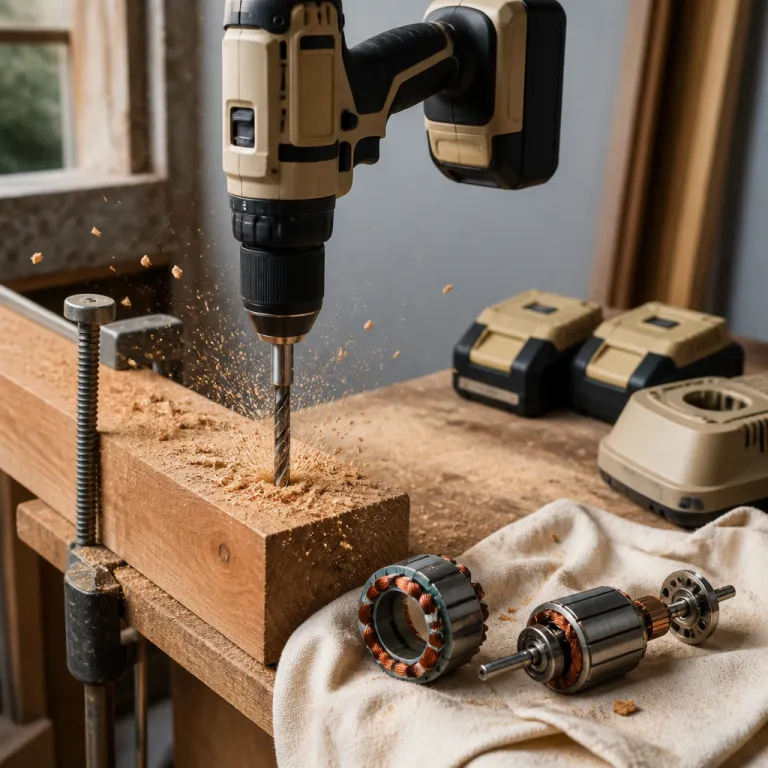
Brushless motors have quietly shifted from pro-only curiosities to the standard heart of serious cordless drills. The transition accelerated when brands like Milwaukee, DeWalt and Makita began including brushless drills in mid-range combo kits, then extended the same motor technology into value lines that erased the old gap between traditional brushed motors and premium brushless designs. Today the real story about the brushless cordless drill technology future is not whether you should buy brushless, but how sophisticated the electronics wrapped around that motor will become.
For a DIY homeowner choosing a first serious power drill, the confusing part is that brushed and brushless drills now sit on the same shelf at almost the same price. A few years ago, a brushless cordless drill usually meant a flagship kit like Milwaukee’s M18 Fuel hammer drill and impact driver combo or DeWalt’s DCK283D2 set, while now you can get a compact DeWalt DCD794B for under 100 dollars at typical street pricing and still enjoy full brushless technology with better efficiency and cooler running. That price collapse changed the drill market, because it removed the old trade off between upfront cost and long term durability for most cordless drills.
In practical terms, independent testing and manufacturer data generally show that brushless motors last roughly two to three times longer than comparable brushed motors when both are used hard. For example, internal endurance testing published by several major power tool brands reports motor life improvements in the 150 to 250 percent range for like-for-like brushless and brushed drill drivers under continuous load. The absence of physical brushes rubbing on a commutator cuts friction, reduces electric arcing and keeps heat down, which directly improves battery efficiency and torque consistency under load.
Homeowners feel this change most when they drive long rows of deck screws or bore repeated 20 millimeter holes through studs. A brushed drill motor starts to smell hot, torque sags and the battery voltage droops, while a comparable brushless cordless setup keeps its power band flatter and its runtime longer. In controlled runtime comparisons where identical battery packs power matched brushed and brushless drills, brushless models commonly deliver about 20 to 30 percent more work per charge, which lines up with the efficiency gains claimed in brand spec sheets.
Look at the drill technology specs and you will see the pattern. Where older brushed drills advertised amperage and vague “high power” claims, current brushless cordless products talk about smart motors, electronic clutches and adaptive torque modes that show how technology enhances control more than brute force. That is the real future power story for the drill market, and it matters more than the last few Newton meters of impact torque on the box.
Why more torque is not the answer for most cordless drills
Walk into a big box aisle and every cordless drill box screams about torque numbers and impact ratings. For a person seeking information rather than bragging rights, those power drill specs matter less than how the tool behaves on the tenth lag bolt or the hundredth drywall screw. The next phase of the brushless cordless drill technology future will reward drills that think before they twist, not just motors that hit harder.
Most DIYers use cordless drills for three main jobs, which are drilling wood, drilling light masonry and driving fasteners. In those tasks, too much power without control strips screw heads, snaps small bits and can even wrench your wrist when an auger bit binds suddenly in a stud. Smart drill technology that senses a sudden spike in resistance and cuts power faster than a mechanical clutch can react will protect both the user and the tool.
We already see early versions of this in high end power tools that blend brushless technology with accelerometers and current sensors. Some impact wrench models and hammer drills from Milwaukee and DeWalt use electronics to limit impact in delicate modes, while still unleashing full power drills performance in structural steel or concrete. As these features trickle down, even a mid price cordless drill will use its electronic control system to modulate torque, instead of relying only on a ring of numbers around the chuck.
For a homeowner, that means you should stop chasing the biggest advertised power drills and start looking at how the drill’s control logic behaves. A compact brushless cordless drill with a well tuned electronic clutch will drive cabinet screws more cleanly than an oversized impact wrench that hammers everything at full force. The technology enhances finesse, which is exactly what you want when you are hanging a door or assembling flat pack furniture in a tight corner.
When you compare drill suppliers, pay attention to how they talk about control, not just raw power. Well balanced 20 volt brushless hammer drill sets that pair moderate torque with refined electronic modes show how a carefully tuned power tool can feel both strong and predictable. That is where the drill market is heading, and it is a better match for the real work most cordless drills see in American garages and basements.
Connected drills, smarter batteries and the rise of intelligent platforms
The most interesting part of the brushless cordless drill technology future is not inside the motor windings but in the software and batteries around them. Milwaukee’s One Key and DeWalt’s Tool Connect systems already let contractors track tools, lock stolen drills and log usage data from fleets of power tools. Those connected features started in heavy commercial products, yet they are slowly shaping what even a single cordless drill in a homeowner’s garage will be able to do.
Connected drills use embedded chips to talk to your phone, your jobsite gateway or a cloud dashboard. For a solo DIYer, that might sound like overkill, but the same drill technology that lets a facilities manager see which impact wrench is over heating can also warn you when your own cordless drills are being pushed too hard. Over time, that kind of feedback extends durability, because the electronics can throttle power before motors cook or batteries hit damaging temperatures.
Battery packs are evolving just as quickly as the drills they power. Tabless cell designs, similar to those promoted in newer high performance lithium ion packs, reduce internal resistance and spread heat more evenly, which improves efficiency and shortens charge times for every cordless drill on that platform. When you pair those packs with brushless drills that already waste less energy as heat, you get a future power ecosystem where runtime and cooling matter more than another marketing bump in nominal volts.
For the person seeking information, the practical takeaway is simple. Choose a battery platform where the brand treats batteries, chargers and power tools as one integrated system, because that is where technology enhances safety, runtime and long term value. A good example is how some platforms now log charge cycles and temperature events, then adjust charging curves to protect both the electric cells and the motors in your favorite power drill or impact wrench.
If you want a broader view of how these trends play out across multiple kits, look at curated comparisons of top brushless cordless drill sets that focus on platforms rather than single tools. You will see that the real choice professionals make is not between one cordless drill and another, but between ecosystems of cordless drills, impact drivers, saws and lights that share batteries, chargers and connected diagnostics. That is the drill market you are buying into when you pick your next brushless cordless starter set.
How to choose a brushless cordless drill that will age well
Once you accept that brushless is the baseline, the buying question changes from “brushless or brushed” to “which brushless cordless platform will I still trust in a decade”. For a homeowner who tackles a few projects each season, that means prioritizing durability, battery stability and repair support over headline torque numbers. The smartest way to read the brushless cordless drill technology future is to think like a light pro, even if you only build one deck.
Start by looking at how the brand treats its entry level tools compared with its flagship products. If the same batteries, chargers and basic motors appear across both ranges, your affordable cordless drill is more likely to benefit from the same engineering that keeps pro grade power tools alive on job sites. That shared DNA matters more for long term durability than whether the catalog calls your drill a homeowner tool or a contractor model.
Next, pay attention to the small mechanical details that outlast electronics. Chuck runout, gearbox noise and housing flex tell you more about a drill’s future power consistency than any marketing copy about advanced motors or brushless design. When a drill gearbox feels tight, the clutch clicks cleanly and the housing does not creak under load, you are usually looking at a cordless drill that will stay accurate long after cheaper tools develop wobble and slop.
For many readers, a well chosen comprehensive guide to a mixed tool kit can be more useful than chasing individual drills. Large multi piece tool assortments that bundle a cordless drill with bits, hand tools and storage show how a balanced mix of accessories can turn one cordless drill into a whole home repair solution. The key is to treat the drill as the anchor power tool in a system of cordless tools, not as a disposable gadget.
Finally, remember that the drill market still sells plenty of traditional brushed drills, and they are not automatically junk. A brushed backup drill or corded drill model can be a smart hedge for messy jobs that ruin tools, while your main brushless drills handle the precise work where efficiency and control matter most. In the end, what counts is not the wattage on the box, but whether your chosen cordless drills still sink that last screw straight when the batteries are cold and the job has run long.
Key figures shaping the next generation of cordless drills
- Industry reports and manufacturer disclosures indicate that brushless motors now appear in a clear majority of new cordless drills sold in the North American consumer segment, with share climbing rapidly over the past five years according to major drill suppliers tracking the drill market.
- Independent lab testing and brand documentation for comparable brushed and brushless drills from leading power tool makers commonly show that brushless motors can deliver around 20 to 30 percent longer runtime per charge and significantly longer motor lifespan, which directly supports the shift toward brushless cordless platforms for both homeowners and professionals.
- Connected tool systems such as Milwaukee One Key and DeWalt Tool Connect have expanded from a handful of flagship products to broad families of compatible power tools, reflecting a broader industry move toward drill technology that includes asset tracking, usage logging and performance diagnostics as standard features.
- Battery manufacturers working with major power drill brands report that newer high efficiency lithium ion cell designs with reduced internal resistance can improve charging speed and thermal performance for every cordless drill using those packs, especially under sustained heavy loads.
- Consumer surveys in the cordless drill segment consistently show that many buyers now prioritize battery platform compatibility and perceived durability over maximum torque ratings, confirming that the future power narrative is shifting from raw impact numbers to long term value and reliability.
Brushless cordless drill buyer checklist
- Platform compatibility: Confirm that the drill shares batteries and chargers with a wide range of tools on the same voltage system, so future upgrades stay on one ecosystem.
- Battery and electronics: Look for clear amp-hour ratings, thermal protection, cycle logging or smart charging features that protect packs and motors over time.
- Chuck and gearbox quality: Check visible runout by spinning a bit, listen for smooth gearbox operation and avoid housings that flex or creak under moderate hand pressure.
- Control features: Prioritize electronic clutches, adjustable torque modes and gentle start behavior over maximum advertised torque alone.
- Real-world testing data: When available, compare independent runtime or durability benchmarks for similar brushed and brushless models to verify marketing claims.