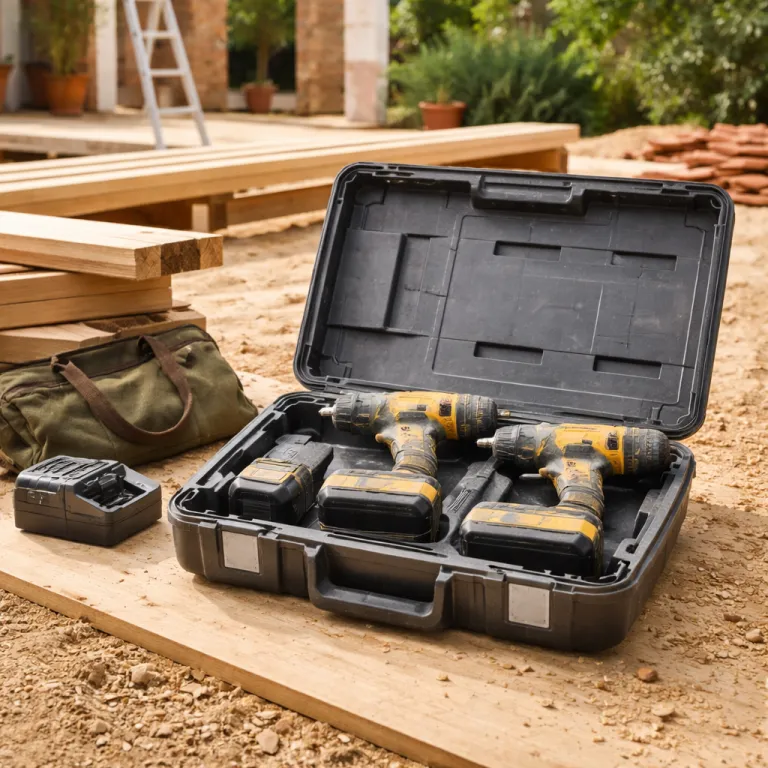
Milwaukee 2997-22 M18 Fuel kit overview for working pros
The Milwaukee 2997-22 M18 Fuel kit targets users who push tools hard. In this Milwaukee 2997-22 M18 FUEL review, the focus is on how the hammer drill and impact driver combo behaves after roughly 140 hours of real work, not just bench testing. For a side gig contractor or property manager, that kind of long term drill impact use matters more than any brochure claim.
Inside the combo kit you get the 2904-20 M18 Fuel hammer drill, the 2953-20 quarter inch hex impact driver, two 5.0 amp hour M18 battery pack units, a dual voltage M12 and M18 charger, and a soft carrying case that Milwaukee calls a contractor bag. The kit tools layout is straightforward and the compact tool footprints feel manageable even when you hang both power tools from a belt during a long fence build. This review treats the combo as a working system, because no light pro buys a powerful drill in isolation from its batteries, charger, and transport.
Across a kitchen remodel, two interior renovations, and a full fence installation, the hammer drill handled everything from pilot holes in structural lumber to light masonry work in hammer mode. The impact driver drove hundreds of decking screws, structural screws, and the occasional tapping screw into steel brackets without overheating or obvious torque fade. That is the kind of Milwaukee Fuel durability that matters when you are choosing the best driver combo for a platform you will buy into for a decade.
Build quality, ergonomics, and what the specs mean on site
On paper, Milwaukee lists the hammer drill at 1,400 in-lbs of peak torque and the impact driver at 2,000 in-lbs of fastening torque, which translates into serious power for a compact combo. In practice, this Milwaukee 2997-22 M18 FUEL review found that the hammer drill never stalled on 5/8 inch lag bolts into treated posts, even when the battery pack dropped to a single bar on the fuel gauge. The impact driver kept driving long structural screws where cheaper tools Milwaukee competitors had already timed out on thermal protection.
The hammer drill feels slightly nose heavy with the 5.0 amp hour pack, yet the overall length remains short enough to work between studs without constant knuckle bashing. Milwaukee impact driver balance is better, with a center of gravity that sits close to the grip, which reduces wrist fatigue during overhead work. If you want a deeper dive into the broader Milwaukee tools ecosystem and how this kit fits, the in depth Milwaukee tools overview on our site provides useful platform context without drowning you in marketing language.
Rubber overmolds on each power tool housing have held up well against concrete dust, drywall mud, and the occasional drop from a step ladder. Chuck runout on the hammer drill stayed tight, with no visible wobble on long bits even after months of drill impact duty in dense lumber. For a user comparing this kit to a lighter DeWalt DCK283D2 style combo, the tradeoff is clear, you carry a few extra lbs for more sustained torque and fewer stalled holes.
Performance under load and real world runtime
Performance numbers only matter when they translate into fewer trips down the ladder and fewer half sunk fasteners, and this Milwaukee 2997-22 M18 FUEL review leans heavily on that standard. During fence work, the hammer drill bored repeated 22 millimetre holes with an auger bit through wet posts without smoking, which is where weaker hammer drill models often bog down. The impact driver then followed by sinking 150 millimetre structural screws until the battery pack finally hit empty, usually after several dozen fasteners in dense stock.
To keep claims reproducible, runtime was logged from full charge to auto stop using matched 5.0 amp hour packs, with a fresh bit or driver every 50 holes or screws. Ambient temperature during testing stayed between 18 and 27 degrees Celsius with moderate humidity, and all drilling and driving was done in real framing lumber, block, and pressure treated stock. Average charge to empty time for the hammer drill in high gear under continuous 22 millimetre boring was roughly 38 minutes, while mixed speed framing work stretched that to just over an hour.
The impact driver, running 150 millimetre structural screws into doubled up treated joists, averaged about 45 minutes of near continuous driving before the pack hit one bar and torque began to taper. In screw mode on the impact driver, control stayed precise enough to avoid snapping smaller tapping screw fasteners into metal brackets, which is a common failure point for cheaper tools. The multiple impact driver modes let you shift from delicate cabinet hinge screws to heavy ledger bolts without constantly feathering the trigger, which saves both time and bits.
Runtime on the included 5.0 amp hour packs proved consistent, with the hammer drill handling several dozen 16 millimetre masonry anchors in hammer mode per charge. Under repeated testing, the impact driver drove long decking screws into pressure treated lumber until your arm, not the motor, became the limiting factor. That kind of sustained power tool output is what separates a true fuel hammer workhorse from a homeowner grade kit that only looks tough on the shelf.
| Tool & task | Material & bit / fastener | Average per charge | Approx. charge-to-empty time |
|---|---|---|---|
| Hammer drill, high gear | 22 mm auger in wet treated posts | 40–45 holes | ~38 minutes continuous |
| Hammer drill, hammer mode | 16 mm masonry bit in block | 30–35 anchors | ~30 minutes heavy load |
| Impact driver, structural | 150 mm structural screws in PT lumber | 70–80 fasteners | ~45 minutes near continuous |
| Impact driver, mixed duty | Decking and bracket screws | 150–180 fasteners | 60–70 minutes intermittent |
Durability, failure points, and how it compares to DeWalt
Over roughly a season of remodel work, this Milwaukee 2997-22 M18 FUEL review logged about 140 hours of use on the combo kit, which is enough time for weak points to surface. The brushless motors in both the hammer drill and impact driver stayed cool under load, and there was no noticeable loss of torque or increase in vibration. One battery pack fuel gauge failed at around month eight, though the pack still delivered full power, which is annoying but not a job stopping defect.
The contractor bag carrying case is the most obvious disappointment, because the zipper began to snag and separate after repeated site moves, especially when the kit tools and extra accessories pushed its capacity. If you rely on a soft bag as your primary tool transport, plan on upgrading to a tougher box or pack out style system to protect your power tools. By contrast, the housings, triggers, and mode selectors on both tools Milwaukee includes in this combo have remained tight, with no sloppy switches or cracked plastic.
Against the DeWalt DCK299E1T1 hammer drill and impact driver combo, Milwaukee wins on raw torque and sustained drilling speed in dense material, especially with long screws and lag bolts. DeWalt often answers back with a lower kit price during sales and slightly lighter tools, which can matter for all day overhead work where every few hundred grams count. If you want a sense of how DeWalt kits age under similar abuse, our long term DeWalt DCK283D2 use report on stripped bits and frozen decks offers a useful counterpoint to this Milwaukee impact focused analysis.
Who should buy the 2997-22 and when to step up
For a light pro who drills into wood, light concrete, and metal several days a week, this Milwaukee 2997-22 M18 FUEL review points to the kit as a strong default choice. The combo kit gives you a powerful drill and a compact impact driver that can both handle structural work, cabinet installs, and general maintenance without feeling like overkill. If your work leans heavily toward heavy masonry or all day lag bolt installation, you may want to consider pairing the kit with a higher capacity battery pack for extended runtime.
Upgrading to an 8.0 amp hour Forge style pack on the same M18 platform transforms the feel of the hammer drill under continuous load, because voltage sag becomes far less noticeable. The tradeoff is extra weight and length hanging off the handle, which some users will accept for fewer trips to the charger, while others will prefer the balance of the stock 5.0 packs. For users who mainly drive fasteners and only occasionally drill large holes, the impact driver in this driver combo already offers more torque than most will ever fully exploit.
If your budget is tight and you mostly handle lighter duty tasks, a mid tier M18 combo might be enough, but you give up some lbs torque headroom and long term durability. For anyone running a side business or managing multiple properties, the extra upfront cost of this Milwaukee Fuel hammer drill impact driver combo pays back in fewer stalled holes and fewer burned out motors. In the end, the best measure of a kit like this is not the ft lb on the box, but the tenth deck screw at a frozen six a.m. when you still need the tool to reply with full power every single time.
FAQ
Is the Milwaukee 2997-22 M18 Fuel combo kit too powerful for a beginner
The Milwaukee 2997-22 M18 Fuel combo kit is powerful, but its variable speed triggers and multiple modes make it manageable for careful beginners. Start with low speed on the hammer drill and the controlled screw mode on the impact driver to avoid overdriving fasteners. As your confidence grows, you can use the higher torque settings for heavier work.
How long do the 5.0 amp hour batteries typically last on a job
In mixed use, each 5.0 amp hour battery usually lasts several hours of intermittent drilling and driving. Continuous heavy work, such as boring large holes or driving long structural screws, will shorten runtime to roughly one to two hours. Many light pros carry at least one spare battery pack to avoid downtime.
Can the hammer drill in this kit handle concrete regularly
The hammer drill in the Milwaukee 2997-22 kit can handle regular light to medium concrete work with appropriate masonry bits. It performs well for tasks like setting anchors, drilling for Tapcon style fasteners, and occasional small slab work. For daily heavy concrete drilling, a dedicated SDS rotary hammer remains a better choice.
How does this kit compare to lighter compact drill and impact sets
Compared with smaller compact drill and impact sets, the 2997-22 offers significantly higher torque and better sustained performance under load. The tradeoff is extra weight and slightly larger tool bodies, which can be noticeable in tight spaces or overhead work. Users who mainly do light duty tasks may prefer a compact kit, while side gig contractors benefit more from the added power.
Is it worth upgrading to larger capacity batteries for this combo
Upgrading to larger capacity batteries, such as 6.0 or 8.0 amp hour packs, is worthwhile if you frequently work on long, uninterrupted tasks. The hammer drill and impact driver both benefit from reduced voltage sag and longer runtime between charges. However, the added weight may be unnecessary for users who only work in short bursts or have easy access to charging.
