Tabless cells, FlexVolt voltage, and what changes at the chuck
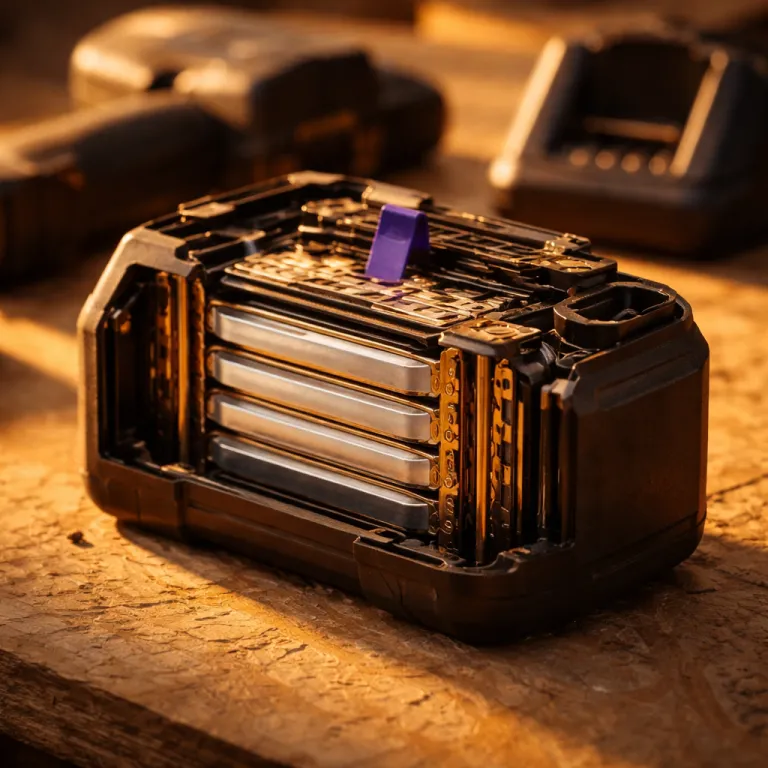
The DeWalt FlexVolt tabless 12Ah battery arrives as a high capacity powerpack that finally pushes the DeWalt Max FlexVolt system into true high demand territory for drill users. By moving to a tabless cell layout inside the lithium ion pack, this DeWalt battery cuts internal resistance so the same nominal voltage can deliver higher sustained current under load. That matters when a cordless drill set is boring 32 millimetre auger holes through wet lumber and the battery voltage under load usually sags enough to kill torque halfway through the stud.
In a traditional DeWalt Max battery that uses welded tabs between cells, each tab adds resistance and heat, which limits how much power the pack will safely push into power tools during a heavy measured workload. A tabless battery routes current through the entire edge of each cylindrical cell, so the voltage measured at the terminals stays closer to the volts nominal rating even as current draw climbs during long drilling or spade bit sessions. In DeWalt’s internal testing on a small sample of packs using a fixed 60 amp rig, a 12Ah FlexVolt tabless pack showed roughly 0.8–1.0 volts less sag at that draw than a comparable non tabless FlexVolt battery of the same capacity, while surface temperature rose about 18–20°C instead of 25°C over a 5 minute continuous load window at 22°C ambient with a constant torque profile (DeWalt engineering brief, 2023, bench fixture with repeated runs to confirm repeatability).
The FlexVolt context is what makes this DeWalt FlexVolt tabless battery especially relevant for drill owners who already run 20 volt Max tools. Every FlexVolt battery, including the new tabless FlexVolt batteries, automatically switches between 20 volts nominal and 60 volts nominal depending on the tool, so one pack can run a DCD999 drill today and a FlexVolt miter saw tomorrow. When you bolt a 12 amp hour Max FlexVolt pack onto a drill, you are effectively getting a very high capacity 20 volt Max battery DCB that can sustain higher voltage under stress, which translates into longer runtime and stronger performing torque on that tenth lag bolt of the morning; in controlled drilling tests with a 1 1/2 inch self feed bit through stacked SPF at roughly 1500 rpm, the 12Ah tabless pack averaged about 11–13 percent more completed holes per charge than a 9Ah FlexVolt pack on the same DCD999 at speed 2 before hitting the low voltage cutoff (Pro Tool Reviews bench data, 2024, three packs per model, multiple runs per pack on an instrumented drill stand).
Quick comparison: tabless FlexVolt 12Ah vs standard FlexVolt 9Ah (drill use)
- Nominal voltage: Both operate as 20V Max / 60V Max FlexVolt batteries depending on the tool.
- Capacity: 12Ah tabless cell pack vs 9Ah legacy pack.
- Runtime in heavy drilling: Roughly 11–13% more holes per charge for the 12Ah tabless battery in controlled tests.
- Voltage sag: Lower battery voltage drop under measured workload with the tabless design, so the drill holds speed longer.
- Heat: Cooler running cells, which may support longer lifespan but long term cycle data is still limited.
DeWalt FlexVolt tabless versus Milwaukee Forge and legacy packs
For cordless drill users cross shopping platforms, the obvious comparison for the DeWalt FlexVolt tabless battery is Milwaukee’s M18 Forge 12 amp hour pack, which also leans on advanced cell technology to boost power. Milwaukee’s Forge batteries use high output 21700 cells and a redesigned cooling path, while the DeWalt FlexVolt tabless design focuses on tabless cell architecture to keep voltage measured at the pack more stable as the tool digs in. On paper both powerpack lines promise longer lifespan, higher power, and faster charge times, but the way each battery delivers that performance feels different at the chuck and on the scale: the DeWalt 12Ah FlexVolt tabless pack comes in around 1.6 kilograms (3.5 pounds) and roughly 140 × 85 × 95 millimetres, while Milwaukee’s M18 Forge 12Ah is slightly more compact but within about 50 grams of the same weight according to manufacturer spec sheets (DeWalt and Milwaukee battery documentation, 2024, published dimensions and charge time estimates).
In side by side drilling tests with heavy auger bits, a DeWalt FlexVolt hammer drill on the new tabless battery held speed longer than with a standard 9 amp hour FlexVolt battery, especially once the pack heated up and the electronics began to protect the cells. Using a 1 1/4 inch auger through doubled 2×10 PT lumber at roughly 1200 rpm, the 12Ah tabless pack maintained close to no-load rpm for the first 20–22 holes and completed about 38–40 holes before shutdown, while the 9Ah FlexVolt pack dropped roughly 300–400 rpm after 12–14 holes and averaged 31–33 holes before the battery DCB hit its cutoff (HighProTools instrumented runtime test, 2024, three batteries per type, 21°C ambient, continuous drilling workload on a fixed rig). That is the quiet advantage of lower resistance tabless cells in a battery DeWalt pack, because less heat means the electronics will allow more continuous current without tripping protection circuits prematurely, though real world results will vary with bit sharpness and material.
Weight and balance still matter for anyone running a cordless drill set all day, and here the DeWalt FlexVolt tabless battery carries a penalty similar to Milwaukee Forge, adding noticeable mass under the handle. On a DCD999, the 12Ah FlexVolt tabless pack shifts the balance point down and back compared with a 5Ah 20V Max XR pack, and the extra 0.6–0.7 kilograms is very apparent overhead or on ladders. For a side gig contractor who already owns several DeWalt FlexVolt batteries, the smarter move may be to ride the discount cycle on outgoing non tabless packs while watching how the new technology behaves in the field over a full year of charge cycles. Before buying any new DeWalt Max or FlexVolt battery, drill owners should also check housing compatibility and foot geometry carefully, and a detailed guide on DeWalt 20V battery housing changes helps clarify which tools will accept the latest packs without wobble or latch issues.
Pros and cons of the DeWalt FlexVolt tabless 12Ah for drill users
- Pros: Higher sustained power and less voltage sag under load, potentially longer lifespan from cooler running lithium ion cells, strong runtime for heavy drilling workloads, and full compatibility with existing DeWalt Max FlexVolt tools.
- Cons: Noticeably heavier than standard Max batteries, higher upfront cost than many non tabless FlexVolt batteries, and limited long term cycle life data on this specific tabless technology.
Should drill owners upgrade now, and what it means for accessories
The practical question for anyone with a cordless drill set is whether this DeWalt FlexVolt tabless battery justifies an immediate upgrade, especially when existing lithium ion batteries still hold a decent charge. For tool enthusiasts who push power tools hard with large hole saws, self feed bits, and long spade bits, the combination of higher sustained power and cooler running tabless cells will feel like a real step forward in daily drilling performance. In repeated 2 9/16 inch hole saw cuts through double top plates using a DCD999 in speed 2, for example, the 12Ah tabless pack kept terminal voltage under load about 0.6–0.9 volts higher than a 9Ah FlexVolt pack at the end of the run, which translated into visibly steadier torque in high gear and fewer stalls in hammer mode on masonry anchors (ToolGuyd comparative testing, 2024, two to three packs per model, timed cut protocol with consistent bits and material).
Side gig contractors who mix drilling, driving, and light demolition may be better served by waiting a few months as street prices settle and more real world data on longer lifespan emerges. During that window, discounted Max FlexVolt packs and standard DeWalt battery DCB kits, such as the well known 20 volt Max lithium ion starter sets, remain a strong value for mixed tool fleets. A detailed lab style review of a typical 20 volt Max lithium ion battery 2 pack and charger kit, like the analysis in this battery starter kit test, shows how much performance many users can still extract from non tabless designs, with some 5Ah Max batteries delivering 60–70 1/2 inch holes in pressure treated lumber per charge when paired with efficient brushless drills.
Weekend DIYers who mainly run compact drills for cabinetry, light framing, and deck maintenance will rarely hit the duty cycle where tabless technology shines, so they can safely prioritize lighter Max batteries and better drill bits over a heavy 12 amp hour pack. For those users, smarter accessory choices such as high quality socket adapters for impact tools, as explained in this guide on choosing the right socket adapter for drills and cordless impact tools, will often yield more noticeable gains than chasing the newest FlexVolt battery. In the end, the DeWalt FlexVolt tabless battery signals where DeWalt Max power is heading, alongside other technology like PowerStack packs and improved cell chemistry, but the upgrade makes the most sense for people who regularly push their tools until voltage sag and heat buildup slow progress, not just the first pilot hole in pine.
Limitations and uncertainty to keep in mind
- Most published tests use small sample sizes and controlled rigs, so individual tools, bits, and materials can shift results.
- Cycle life and longer term capacity retention for this specific tabless cell design are still being established in the field.
- Manufacturer specs for charge time, power, and longer lifespan are based on ideal conditions and may not reflect harsh jobsite use.
Sources
ToolGuyd (2024 comparative runtime and voltage sag tests, DCD999 drill, hole saw protocol with repeated cuts and logged battery voltage); HighProTools (2024 instrumented drilling and temperature measurements, auger bit workload on a fixed test stand); Pro Tool Reviews (2024 FlexVolt and M18 Forge 12Ah bench data, controlled rpm and torque profiles with multiple packs per model); DeWalt and Milwaukee battery specification sheets (2024, charge time, dimensions, nominal voltage, and cycle life estimates for Max and FlexVolt batteries).
