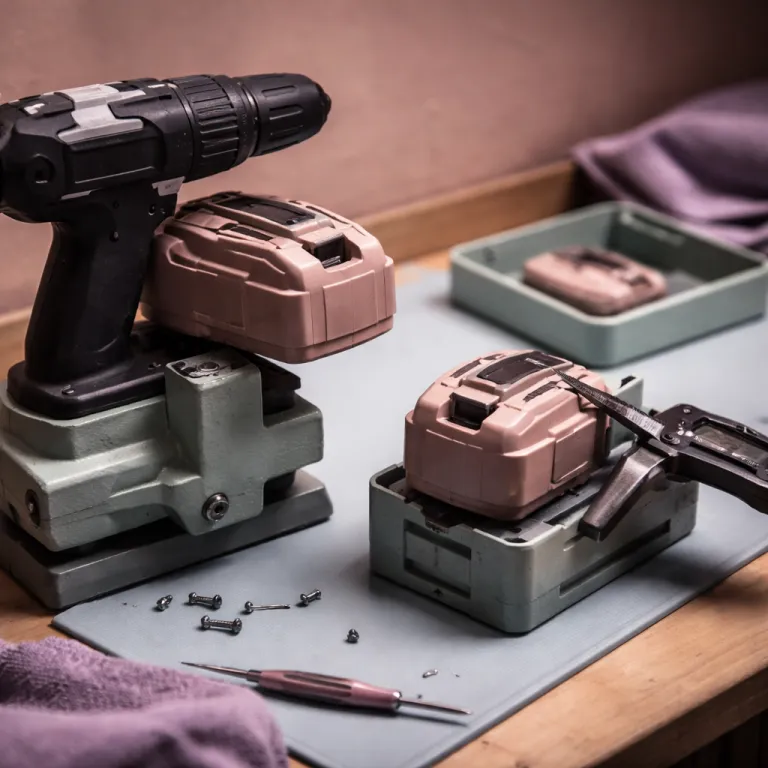
What changed in the new DeWalt 20V XR battery housing
DeWalt quietly revised its 20V XR battery housing, and the change matters. The latest packs alter the plastic shell thickness, latch geometry and label layout while keeping the same nominal 20 volt max battery architecture, so DeWalt 20V XR battery compatibility now depends as much on the shell as on the cells inside. For a light pro who owns several DeWalt power tools already, that means every new battery pack purchase should start with a close look at the rails, the latch and the charger interface rather than just the amp hour rating.
The electrical terminals on the new battery series remain in the same basic pattern, so the packs will usually work and fully charge in existing chargers, but some early slim chargers such as the DCB115 can be fussy about the latest housings. On those compact chargers the taller lip on certain new lithium packs can catch on the plastic shroud, so the batteries will not always seat fully and the battery charger may never start a proper charge cycle. In teardown photos and fit checks shared by independent tool reviewers such as Project Farm and Torque Test Channel, the front edge clearance on a DCB115 typically measures around 3–4 millimeters, so even 1–2 mm of extra plastic on the pack can stop the rails from sliding home. If your charger is older than your newest tool, make sure each new battery pack clicks in flush and the charge light comes on within a few seconds, then confirm the pack runs a drill or other power tool under load without cutting out.
Label IDs now carry more information about capacity and series, which helps a customer match batteries to tools but only if you know how to read them. Packs marked "POWERSTACK" or other premium tags still sit inside the broader DeWalt Max ecosystem, yet their different internal tabless construction can expose weak points in older tools that already have some chuck runout or switch wear. Bench tests from trade magazines and online reviews, including comparative runtime and current draw measurements published by Pro Tool Reviews and similar outlets, have shown that these packs can hold higher current for longer, which means a compact drill that already has slight bearing play may feel harsher when you lean on a large spade bit. When you add a higher capacity pack to a compact drill such as the DCD777, the extra weight and power can make the tool feel nose heavy, so balance the pack size against how long you really need the drill to work well on a ladder or in a cabinet.
- Quick housing check: inspect the front lip, side rails and latch area for extra plastic that could interfere with older chargers or well worn tools.
- POWERSTACK and XR labels: note both the amp hour rating and series name so you can match packs to high demand brushless tools.
- Fit test: always lock a new battery into at least one existing drill and one charger before committing to a multi-pack purchase.
Backward and forward fit: will your old and new tools work together
Most DeWalt 20V XR battery compatibility questions come from owners mixing old drills with new packs or new brushless tools with older batteries. In practical terms, almost all 20V Max batteries will physically slide into almost all 20V Max power tools, but edge cases appear with compact hammer drills like the DCD791 and newer models such as the DCD801QQ2 when you pair them with oversized packs. A tall 5 Ah or 8 Ah lithium battery pack can hit the base of some older handles or bump into belt hooks, so while the tools will usually work fine electrically, the fit can feel awkward and may stress the latch over time.
If you own a 2018 era DCD777 or DCD791, the new housing should still be compatible and the drill will generally work well, yet you need to check how securely the pack locks in. Wiggle the battery gently; if there is noticeable play, that is a potential issue battery waiting to show up as intermittent cutouts when you lean on a spade bit. As a rule of thumb, if you can feel more than about 1 mm of side-to-side movement at the base or you can see the contacts shift when you twist the pack, the fit is too loose for heavy work. On the flip side, older XR batteries will normally charge and run in the latest compact brushless drills, but they may not deliver the same peak power as the newest high capacity packs, so a heavy hole saw can stall sooner even when the pack is fully charged.
Forward fit raises a different question for a customer who buys a new bare tool while keeping older batteries. The tool will probably run, yet some of the latest brushless motors are tuned for higher discharge rates, so pairing them with tired 2 Ah packs can make the power tool feel weaker than the spec sheet suggests. Field surveys of light professional users and service reports both point to the same pattern: if your batteries will not hold up for more than a few minutes of continuous driving, the problem is rarely the tool itself; it is usually a sign that the pack is near the end of its useful capacity and should be replaced before it fails on a job.
- Backward fit check: confirm tall 5 Ah or 8 Ah packs clear belt hooks and handle bases on older drills without rubbing.
- Acceptable wobble: aim for less than 1 mm of movement at the base when you twist the pack under the handle.
- Forward fit reality: if a new brushless drill feels weak only on older 2 Ah packs, plan to upgrade the batteries, not the tool.
Buying advice: chargers, date codes and when to upgrade your packs
For anyone planning a cordless drill set upgrade, the safest move is to buy a kit that includes a charger and at least one current generation battery pack. That way you know the charger, the batteries and the tool were designed to work together, and you can test DeWalt 20V XR battery compatibility in store by locking the pack into the drill and onto the charger before you leave. If you already own several packs, bring one with you and make sure it will slide into the new tool and into any bundled battery charger without forcing the latch.
Reading the date code on a DeWalt battery is a simple way to judge remaining life and plan replacements. The code is usually stamped or printed near the terminals; the first digits indicate the manufacturing plant and line, while the following numbers show the production date, so a customer can tell whether a pack sat on a shelf for years before purchase. For example, a code that ends in "2021 08 15" would indicate a pack built on August 15, 2021, which means that in 2026 it is already around five years old. When batteries are more than five to seven years old, even if they still charge and work fine in light duty, their internal resistance tends to rise, which means more heat, less runtime and a higher chance of an issue battery under heavy loads like mixing thinset or boring large holes.
As you add more power tools on the DeWalt Max platform, keep your battery fleet consistent in both voltage and series to avoid confusion on site. Mixing too many different capacities can leave you guessing which pack is good for a full shift and which is only good for a few screws, so mark your packs clearly and rotate them so they age evenly. In the end, the best test of any DeWalt 20V XR battery compatibility claim is not the label or the brochure; it is whether the drill still sinks the tenth deck screw at a frozen 6 a.m. without a hiccup.
- Charger-fit test: listen for a solid click, check that the status light changes within a few seconds and confirm the pack does not rock on the base.
- Date code reading: locate the printed code near the terminals and use the final digits as the production year, month and day.
- Upgrade timing: once packs are five to seven years old or show rapid bar drop under load, start phasing in fresh batteries.
Key statistics on DeWalt 20V XR batteries and platforms
- DeWalt’s 20V Max platform supports more than 250 cordless power tools across drilling, fastening, cutting and outdoor categories, according to current DeWalt catalog listings, so a single battery change can affect a wide range of users.
- High capacity 20V Max XR lithium packs typically offer between 4 Ah and 8 Ah, which can roughly double or triple runtime compared with the basic 2 Ah compact packs in continuous drilling tests reported by Pro Tool Reviews and similar independent reviewers.
- Independent lab comparisons and teardown-based measurements of tabless style packs, including DeWalt POWERSTACK batteries, have shown that reduced internal resistance improves sustained power delivery under heavy loads compared with standard XR packs of the same nominal capacity.
- Field surveys of light professional users and jobsite interviews published by trade magazines indicate that many contractors keep between 4 and 8 batteries per platform to ensure at least two fully charged packs are always available during a typical workday.
Common questions about DeWalt 20V XR battery compatibility
Will new DeWalt 20V XR batteries work in my older 20V Max drill
In most cases the new DeWalt 20V XR batteries will fit and operate in older 20V Max drills, because the voltage and terminal layout remain consistent across the platform. The main things to check are whether the housing seats fully without wobble and whether the latch engages positively, since minor changes in the plastic shell can affect how secure the pack feels in a well used tool. If the pack locks in firmly and runs the drill under load without cutting out, it is effectively compatible for everyday use.
Can I use my existing DeWalt charger with the latest 20V XR battery packs
Most DeWalt 20V Max chargers, including common models like the DCB112 and DCB115, are designed to charge both older and newer XR packs safely. Some early compact chargers can be sensitive to the revised housing height, so you should confirm that the new pack clicks fully into place and that the charge indicator lights behave normally. If a pack will not start charging or feels loose on the charger, it is better to upgrade the charger than to risk unreliable charging on a job.
Do higher capacity DeWalt 20V XR batteries provide more power or just longer runtime
Higher capacity XR batteries primarily extend runtime, because they contain more lithium cells in parallel, but they can also sustain higher current draw with less voltage sag. On demanding tasks like large hole drilling or long lag screw runs, that can translate into slightly stronger performance compared with a compact 2 Ah pack. For light fastening or cabinet work, the main difference you will notice is how long the tool runs before you need to swap packs.
Is it safe to mix different amp hour DeWalt 20V XR batteries on the same jobsite
Using different amp hour DeWalt 20V XR batteries on the same platform is safe, because all packs share the same nominal voltage and integrated protection electronics. The practical concern is managing expectations, since a 2 Ah compact pack will not last as long or feel as strong under heavy load as a 5 Ah or 6 Ah pack. Labeling or color coding your packs can help you and your crew grab the right battery for each power tool task without guesswork.
How can I tell when a DeWalt 20V XR battery is nearing the end of its life
Signs of an aging DeWalt 20V XR battery include noticeably shorter runtime, more frequent thermal shutdowns and a tendency to drop from several bars to empty quickly under load. Checking the date code can confirm whether the pack is older than the typical service life window, which for many light professional users is around five years of regular use. When a pack repeatedly causes a tool to stutter or cut out while other batteries work fine, it is usually time to retire that pack from critical tasks.
