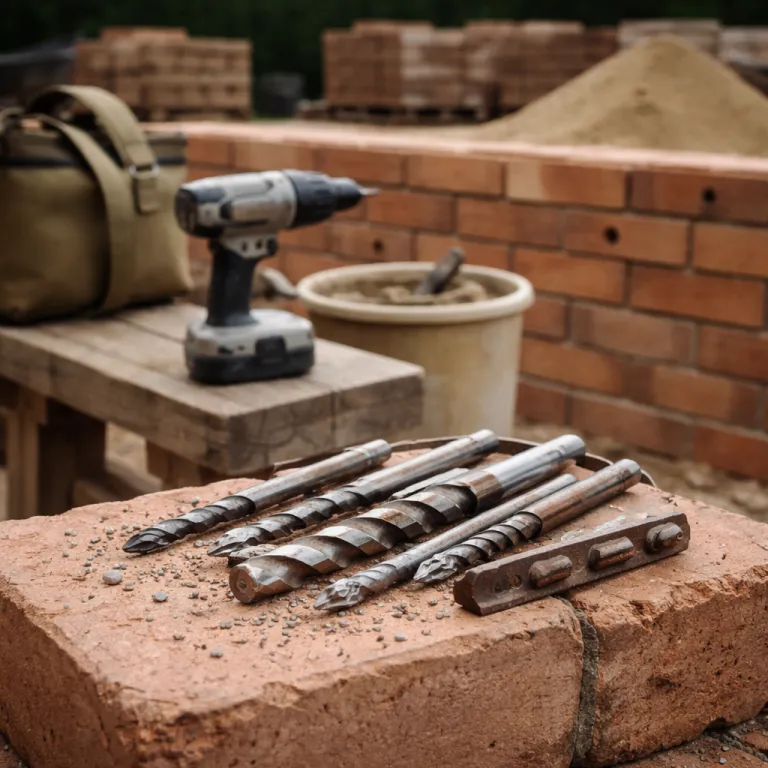
Why carbide masonry drill bits matter more than the drill
Most homeowners blame a weak drill when the real culprit is the bit. A cordless hammer drill from top brands like DeWalt 20V Max or Milwaukee M18 will stall if cheap masonry bits smear instead of cut through brick, poured concrete, or concrete tile. Spend a little more on the right carbide masonry drill bits and your existing drill suddenly feels stronger, cleaner, and faster.
When you push a masonry bit into concrete, the tungsten carbide tip does the cutting while the steel shank just carries torque. If that carbide-tipped head is soft, poorly brazed, or the shank size is mismatched to your chuck, you burn the bit, glaze the surface, and assume the tool is junk. Matching a quality masonry bit to the correct hammer drill mode is what separates a clean 8 mm hole from a smoking crater that eats batteries.
For a typical DIY cordless drill set, you want a short, focused list of sizes that masonry specialists actually use, not a 50-piece plastic case of random diameters. A tight set of carbide masonry drill bits in 3/16, 1/4, 5/16, 3/8, and 1/2 inch covers anchors in brick, Tapcon-style screws in concrete, and sleeve anchors in block or structural concrete. That compact drill bit selection costs more per piece than a bargain assortment, but the real price is measured in holes drilled, not in how many parts ship in the box.
Grades, geometry, and matching bits to your cordless hammer drill
Not all carbide is equal, and your cordless drill shows the difference in seconds. Standard masonry drills from big-box store assortments often use a basic carbide insert that works for light brick but dulls quickly in cured concrete or hard mortar. Premium carbide masonry designs such as Bosch BlueGranite, DeWalt Rock Carbide, or Milwaukee Shockwave use tougher tungsten carbide grades and refined cutting geometry that are engineered to survive repeated impacts in dense aggregate.
Look closely at the drill bit head and you will see the geometry that controls how it bites into masonry. Many general-purpose masonry drills use a point angle around 120–130 degrees with a two-flute helix that clears dust, while heavy-duty SDS rotary hammer bits may use multi-cutter heads and different angles. What matters is sharp, well-supported carbide and flutes deep enough to move debris out of the hole. If the flutes are shallow or the shank is too small for the torque of your hammer drill, the bit will chatter, overheat, and polish the concrete instead of cutting it.
For cordless drill sets without a dedicated rotary hammer, stay with straight-shank masonry bits designed for three-jaw chucks, not SDS shanks meant for a rotary hammer class tool. SDS and SDS-Plus bits lock into a specialized chuck and are intended for continuous heavy-duty drilling in structural concrete, while straight-shank carbide masonry drills are the correct choice for typical home anchors in brick, block, and standard concrete around the house. To keep your accessories organized and ready, a magnetic bit holder for your cordless drill set can help you add and swap each bit quickly without digging through a case, as explained in this guide on how a magnetic bit holder enhances your cordless drill set.
The five masonry bit sizes that actually earn their keep
Most drill bit sets throw in dozens of sizes you will never touch. For masonry drilling with a cordless hammer drill, five core diameters quietly handle almost every anchor, sleeve, and Tapcon-style screw you will ever install. Those workhorse sizes are 3/16, 1/4, 5/16, 3/8, and 1/2 inch, and each bit should be a quality carbide masonry design, not a bargain-bin product.
Use a 3/16 masonry drill for small Tapcon screws into brick or concrete tile, where a clean, tight hole matters more than speed. Step up to a 1/4 or 5/16 masonry bit when you need plastic anchors in brick or block, or when the product packaging for your fasteners lists a larger pilot size. The 3/8 and 1/2 inch drill bits handle wedge anchors for heavier loads, and here a premium tungsten carbide-tipped masonry design really pays off in both life and straight tracking.
Instead of chasing a giant list of options, keep a mental picture of these five sizes and maintain duplicates of each bit on hand. When one masonry bit finally dies, you simply add a replacement of the same shank size and length, rather than buying another bloated kit that ships with filler pieces. The table below shows how these core diameters typically line up with common fasteners and anchors so you can choose quickly without guessing:
| Bit diameter | Typical use |
|---|---|
| 3/16 inch | Small Tapcon-style concrete screws, light-duty anchors in brick or concrete tile |
| 1/4 inch | Medium plastic wall plugs, sleeve anchors in block, general-purpose masonry fastening |
| 5/16 inch | Larger plastic anchors, heavier Tapcon screws, fixtures needing extra grip in concrete |
| 3/8 inch | Standard wedge anchors and sleeve anchors for structural connections and heavier loads |
| 1/2 inch | Large wedge anchors, expansion anchors, and high-load fixings in structural concrete |
If you are already thinking about other accessories like router cutters, a separate guide on exploring the essential guide to router bit sets shows the same principle applies there too.
Value, price, and what to actually buy in carbide masonry drill bits
The price on the hang tag rarely tells the truth about value. An eight-dollar assortment of generic masonry bits might look tempting, but the price–performance equation collapses when you burn through three drills on one stubborn concrete wall. A thirty-dollar set of five premium carbide masonry drill bits from top brands will quietly outlast several of those cheap products, especially in structural concrete and dense block.
When you compare options, think in terms of holes per bit, not just the initial price. Independent trade tests and manufacturer durability data commonly show that a Bosch BlueGranite or DeWalt Rock Carbide masonry drill can deliver several times as many holes in concrete as an entry-level bit of the same size, assuming similar drilling technique and material hardness. That means fewer orders to place, less packaging waste, and less time spent waiting while a replacement ships to your door.
For a cordless drill set owner, a smart shopping list looks like this: one compact set of straight-shank masonry bits in the five key sizes, plus a couple of longer versions for deep holes. Avoid kits that pad the images on the box with tiny sizes you will never use, and skip packaging that shows dozens of near-duplicate pieces. If you already bought a bargain kit and regret it, treat that as tuition and upgrade when you next add accessories, ideally after reading guidance on choosing the right power tool batteries for your cordless drill set so your drill can actually drive those bits.
Care, storage, and knowing when a masonry bit is finished
Good carbide masonry drill bits will not last forever, but they should not die in a weekend. After each drilling session in brick, block, or concrete tile, wipe the bit clean, knock dust from the flutes, and let the tungsten carbide tip cool before tossing it back in a case. Leaving masonry accessories caked in slurry inside a damp toolbox is a fast way to rust the shank and weaken the braze that holds the carbide-tipped head.
Unlike steel twist drills, you generally do not regrind a tipped masonry product at home because the carbide geometry is precise and the braze line is fragile. Signs that a masonry drill is finished include a glazed, shiny tip, flutes that clog even when you pulse the hammer drill, and hole walls that polish instead of producing dust. When that happens, retire the bit, add a fresh one to your next orders, and accept that shipping a replacement costs less than forcing a dead tool through concrete.
Store your drill bits in a labeled case where each shank size has its own slot, rather than a loose pile that bangs tips together. If the set you bought came in a flimsy plastic box, upgrade to a small metal or heavy-duty organizer and move each bit and masonry drill accessory into it carefully. The goal is simple but important for every cordless drill set owner, because the tool you trust is not the one with the highest torque rating, but the one that still sinks the tenth masonry anchor at a frozen 6 a.m.
FAQ
How do I choose the right carbide masonry drill bits for my cordless drill
Match straight-shank masonry bits to your three-jaw chuck and avoid SDS shanks unless you own a rotary hammer. Choose tungsten carbide-tipped masonry drills from reputable brands in the five core sizes that match your anchors. Check that the drill bit packaging lists compatibility with hammer drill mode and the materials you plan to drill, such as brick, block, or concrete.
Can I use regular steel drill bits in concrete or brick
Standard steel drill bits are not designed for masonry and will dull almost immediately in concrete or brick. You need carbide masonry drill bits with a brazed tungsten carbide tip and masonry-specific geometry to survive hammering action. Using the wrong bit risks overheating your cordless drill, damaging the chuck, and producing oversized, unreliable holes.
When should I replace a masonry drill bit
Replace a masonry bit when the carbide-tipped head looks polished, chipped, or blue from heat. If your hammer drill stops producing dust and starts squealing or polishing the hole walls, the cutting edges are likely worn out. At that point, forcing the product only wastes battery life and increases the chance of cracking brick, block, or concrete tile.
Do I need a rotary hammer for home masonry projects
Most DIY homeowners can handle typical anchors in brick and light concrete with a cordless hammer drill and good carbide masonry drill bits. A rotary hammer with SDS shank bits becomes worthwhile if you regularly drill many large-diameter holes in very hard concrete or stone. For occasional projects, investing in premium straight-shank masonry drills usually offers better value than buying a new tool.
Why do cheap masonry drill bit sets wear out so quickly
Low-cost sets often use softer carbide, poor brazing, and inconsistent shank size tolerances, which all shorten bit life. Their flutes may also be shallow, so dust cannot escape and heat builds up rapidly in concrete. Spending more on a smaller list of high-quality products usually delivers far more holes per bit and a better overall price–performance ratio.