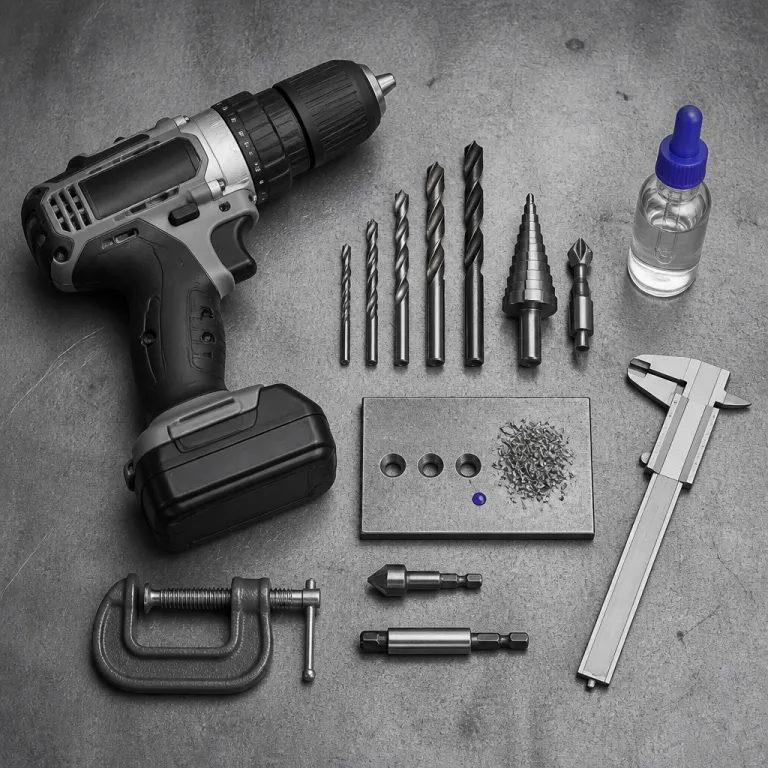
Why drilling into metal with a cordless drill usually goes wrong
Most people start drilling into metal with a cordless drill at full trigger, then wonder why the drill bit squeals and turns blue. When you run a drill at high speed on steel or other hard metals, friction heat builds so fast that even good drill bits lose their edge in seconds. The result is a polished dent on the metal piece, a smoking drill bit and a cordless drill that smells like hot plastic.
For small holes up to about 4 millimeters in mild steel, you want the drill running around 1 000 to 2 000 revolutions per minute, not the maximum high speed your best drill can deliver. That slower speed keeps friction heat under control, lets the cutting edges bite and makes metal drilling feel steady instead of screechy. When you move to thicker metals or stainless steel brackets, you should keep speeds even lower and let the drill bit work rather than forcing it.
Aluminum is more forgiving than steel, but drilling fast still creates unnecessary heat and clogged flutes in the bits. If you ease the trigger and keep the cordless drill under control, chips clear cleanly and the drill bit stays sharp much longer. Think of speed as a dial for heat management in drilling metal, not as a shortcut to finish the hole faster.
Quick reference: drill speed and feed guide
Values below are approximate ranges compiled from typical manufacturer charts and metalworking handbooks such as the Machinery’s Handbook and common twist drill data from major bit brands. Always check the documentation for your specific drill bits and cordless drill before use.
| Bit diameter | Material | Suggested RPM range* | Feed guidance |
|---|---|---|---|
| 3–4 mm | Mild steel | 1 000–2 000 | Firm pressure, continuous chips |
| 5–6 mm | Mild steel | 700–1 200 | Moderate pressure, clear chips often |
| 8–10 mm | Mild steel | 400–800 | Lower speed, steady feed, use cutting oil |
| 3–6 mm | Stainless steel | 400–900 | Slow speed, light oil, do not force |
*RPM ranges based on common recommendations from drill bit manufacturers and metalworking handbooks; treat them as starting points and adjust for your specific tool and material.
Simple RPM guide for common cordless drills
On a typical 18–20 V cordless drill with two gears, low gear often tops out around 400–600 RPM and high gear around 1 500–2 000 RPM. For most drilling into steel or stainless steel with bits up to 10 mm, select low gear and use the trigger to keep speeds in the lower half of that range instead of running flat out.
Choosing drill bits for steel, stainless and other metals
The drill bit you choose matters as much as the cordless drill driving it, especially when drilling into hard metals like structural steel or stainless steel. Standard high speed steel drill bits are fine for occasional holes in mild steel angle or thin sheet metals, but they struggle badly once the material gets thicker or the stainless content rises. When you feel the bit skating on the surface instead of cutting, that is the drill metal warning sign that you need better metallurgy, not more trigger.
Cobalt alloy drill bits, often sold as bits with cobalt content around 5 to 8 percent according to typical manufacturer specifications, handle heat and abrasion from drilling metal far better than basic high speed steel. Those bits cobalt sets cost more, yet they stay sharp longer in stainless, hardened steel and other hard metals where cheap bits simply burn. If you mainly work on brackets, hinges and stainless steel fasteners, a small cobalt drill bit set paired with a solid cordless drill will pay for itself in saved time and fewer ruined pieces.
Titanium coated drill bits look impressive, but the thin coating does little once friction heat wears it off during metal drilling. For most DIYers drilling into steel, a mix of quality high speed steel for soft metals and a handful of cobalt drill bits for stainless steel is the best drill strategy. That combination lets you keep drill costs reasonable while still having the right drill bit ready when a hard piece of steel refuses to cooperate with cordless power alone.
When your metal projects expand into fastening and framing, the same logic about bit quality applies to masonry and specialty fasteners. If you are driving concrete screws with a cordless drill into steel reinforced slabs or block, controlled speed and the correct bit type matter just as much as they do for drilling into metal with a cordless drill. A detailed guide on how concrete screws deliver reliable fastening for demanding cordless drill projects can help you match the right accessory to each material without burning tools or anchors.
Quick bit and cutting fluid guide
| Material | Recommended drill bits | Cutting fluid |
|---|---|---|
| Mild steel | High speed steel or cobalt drill bit | Light oil helpful on larger holes |
| Stainless steel | Cobalt drill bits for hard metals | Cutting oil strongly recommended |
| Aluminum | Sharp HSS or step bit | Lubricant optional, use sparingly |
Speed, feed pressure and the role of cutting oil
Once you have the right drill bits for metal, the next step is learning how to feed them so they cut instead of rub. When drilling into metal with a cordless drill, you want enough pressure that the bit produces continuous curled chips, but not so much that the drill stalls or the bit chatters. If you see dust instead of chips, or hear the drill bit squeal, you are rubbing and generating friction heat instead of clean cutting.
Chip color is your live temperature gauge while drilling metal, and it tells you more than any marketing claim about the best drill or bits cobalt composition. Bright silver chips mean your speed and pressure are in the safe zone, while dark straw or blue chips signal too much heat and too much speed. Back off the trigger, keep speeds lower and let a drop of cutting oil help the drill bit glide through the metal piece instead of fighting it.
Cutting oil is essential when you drill into stainless steel, thick steel plate or other hard metals that hold heat. A few drops of proper cutting fluid or even light machine oil on the drill bit reduce friction heat, protect the cutting edges and keep drill temperatures manageable for longer holes. For larger diameters in sheet metals, a stepped drill bit combined with cutting oil and a moderate speed often outperforms trying to hog out a big hole in one pass.
When you need very large openings in metal, such as for conduit or plumbing, hole saws for cordless drills become the smarter choice. A bi metal hole saw with the correct teeth count, run at controlled speed with cutting oil, will outlast a stack of abused twist bits and leave a cleaner hole in steel or stainless. You can learn precise cutting strategies for metal and wood using these accessories in a dedicated guide on hole saws for cordless drills, which pairs well with the techniques for drilling into metal with a cordless drill explained here.
Diagram idea for reference
For quick visual checks while drilling metal, imagine a simple diagram showing three chip colors next to a drill bit: bright silver chips labeled “safe temperature,” light straw chips labeled “borderline heat,” and dark blue chips labeled “too hot – reduce speed and add oil.” Keeping that picture in mind helps you keep drill speed and pressure in the right zone.
Pilot holes, step bits and controlling the workpiece
Large holes in metal almost always start with a small pilot hole, especially when you are working with a cordless drill instead of a drill press. A 3 millimeter pilot hole gives the larger drill bit a centered path, reduces wandering on smooth steel and cuts the load on the drill motor. Without that first step, the larger bit can skate, grab and twist the metal piece or even your wrist.
For sheet metals such as electrical boxes, ductwork or thin stainless panels, a stepped drill bit is often the best drill accessory you can own. These cone shaped bits let you enlarge a pilot hole in controlled steps, each step labeled with its diameter, so you can stop exactly when the hole matches your fastener or conduit. Because each cutting edge only removes a thin ring of metal, step bits generate less heat and stress on the cordless drill than forcing a single large twist bit through the sheet.
Clamping the workpiece is non negotiable when drilling into metal with a cordless drill, whether you are opening a pilot hole or finishing to size. A loose piece of steel can spin like a propeller the moment the drill bit catches, and that is how wrists get sprained and edges get bent. Use a vise, C clamps or even a sacrificial wood backing board to keep the metal stable, keep drill alignment true and keep speeds consistent across each step of the drilling process.
Safety checklist for cordless drilling in metal
Before you pull the trigger, confirm that you are wearing safety glasses and hearing protection, and that any gloves are snug fitting and kept well clear of the rotating chuck and bit. Loose gloves, jewelry or sleeves can catch on a spinning drill bit and pull your hand into the work, so remove them before drilling metal. Make sure the workpiece is clamped securely, the drill is in low gear, the clutch or torque setting is appropriate for the bit size and the battery is locked in place. Stand in a balanced position, keep loose clothing and hair clear of the rotating chuck and be ready to release the trigger if the bit binds.
Once your metal projects grow beyond a few brackets and hinges, organizing your cordless drill set and accessories becomes part of drilling safely and efficiently. Building a wall mounted drill charging station this weekend is a practical way to keep drill bodies, batteries, drill bits and cutting fluids in one visible place instead of scattered across a bench. That simple storage step means you reach for the right drill bit and the right oil every time, which quietly improves every hole you drill metal for years.
Diagram idea for clamping and step bits
Picture a simple sketch showing a sheet metal panel clamped between a wood backing board and a bench, with a step bit centered in a pilot hole and arrows marking the next step size. That mental image reinforces the habit of clamping the piece, using a pilot hole and enlarging the opening in controlled stages.
Matching your cordless drill set to real metal work
Modern brushless 18 volt and 20 volt cordless drill kits have enough torque for most home metal drilling, but not all sets are equal once the steel gets thick. A compact drill with a small battery can handle occasional drilling into metal with a cordless drill, yet it may overheat or stall if you lean on a 10 millimeter bit in stainless steel. Larger drills with all metal chucks, better gearboxes and higher rated torque keep drill performance stable when you push into hard metals or long holes.
When you compare cordless drill options, pay more attention to low speed torque and control than to the headline high speed number on the box. Metal drilling lives in the lower gear, where a good drill will hold a steady speed under load instead of surging or bogging as the bit bites. A model that lets you keep speeds consistent with a sensitive trigger and clear clutch settings will protect both your drill bits and your wrists.
Cordless versus corded only becomes a real question when you move into repeated drilling of large holes in thick steel or stainless steel plate. For most DIYers, a solid 20 volt brushless cordless drill paired with cobalt drill bits, cutting oil and good technique will handle every bracket, angle and hardware piece they meet. When you finally reach the point where the drill smokes before the hole finishes, that is the signal to borrow a drill press rather than to blame the cordless platform.
In the end, the cordless drill you trust for metal work is not the one with the flashiest marketing, but the one that still turns a 6 millimeter drill bit through a stubborn steel joist without drama after years of service. What matters is not the torque rating on the box, but whether the tool can calmly push a sharp bit through hard metals while you keep drill pressure steady and heat under control. The real test is not the advertised newton meters, but the tenth hole in a cold steel bracket at a frozen dawn when the battery is on its last bar.
Basic torque and gear guidance
As a rough rule, many 18–20 V drills rated around 50–70 Nm of torque can comfortably drive a 10 mm drill bit through mild steel in low gear if you keep drill speed moderate and use cutting oil. For smaller holes in steel or stainless, set the clutch just high enough that it will slip before the bit can wrench your wrist, and always choose low gear for better control when drilling metal.
FAQ
What speed should I use when drilling into steel with a cordless drill ?
For small holes up to about 4 millimeters in mild steel, keep the cordless drill between roughly 1 000 and 2 000 revolutions per minute in low gear. As the drill bit diameter increases, reduce speed further to limit friction heat and protect the cutting edges. Stainless steel and other hard metals need even slower speeds, plus cutting oil, to avoid burning the drill bits.
Do I really need cobalt drill bits for metal drilling at home ?
If you mostly drill into mild steel brackets or thin sheet metals, quality high speed steel drill bits are usually enough. Once you start working with stainless steel, hardened fasteners or thicker structural steel, cobalt drill bits or bits with cobalt alloy become worth the investment. They handle heat better, stay sharp longer and make drilling into metal with a cordless drill feel controlled instead of frustrating.
Why do my drill bits turn blue and stop cutting in metal ?
Blue coloring on a drill bit is a sign of overheating from excessive speed, pressure or both during drilling metal. When the cutting edges rub instead of slicing, friction heat climbs until it ruins the temper of the steel in the bit. To prevent this, keep speeds moderate, use cutting oil on hard metals and back the drill bit out occasionally to clear chips.
When should I use a pilot hole in metal ?
Any time you plan to drill a hole larger than about 6 millimeters in steel or stainless, start with a smaller pilot hole. The pilot hole guides the larger drill bit, reduces wandering on smooth surfaces and lowers the load on the cordless drill motor. It also helps keep drill alignment accurate, which is critical when you are drilling into metal with a cordless drill on a ladder or in a tight space.
Is a cordless drill as good as a corded drill for metal work ?
For typical home projects such as brackets, shelves and light framing, a modern brushless cordless drill is effectively as capable as a corded drill when paired with the right bits. Corded models still have an edge for repeated large diameter holes in thick steel plate or stainless steel, where continuous power and higher duty cycles matter. For most DIYers, the convenience of cordless with good drill bits and proper technique will cover nearly all metal drilling tasks they encounter.