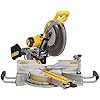
Summary
Editor's rating
Value: not cheap, but does it earn its keep?
Design: big capacity, big footprint, and not shy about it
Comfort and handling: powerful, but not exactly friendly to your back
Durability and build: feels like it’s meant to live in a truck
Performance: cuts fast, cuts true, but you need to respect it
What you actually get with the DWS780
Dust collection and precision in real use
Pros
- Strong 15-amp motor with plenty of cutting capacity (handles 2x14 at 90° and 2x10 at 45°)
- XPS shadow light system makes lining up cuts quick and reliable without calibration
- Accurate and stable once calibrated, with solid miter and bevel adjustments and good dust collection when used with a vac
Cons
- Heavy and bulky, needs a lot of space and isn’t fun to move around frequently
- No soft start, so the blade jumps at startup and stop, which can affect delicate cuts
- Included dust bag and clamp are basic and not very convenient for regular pro use

Specifications
View full product page →| Brand | DEWALT |
A serious saw if you actually build stuff, not just weekend shelves
I’ve been using the DEWALT DWS780 12" double bevel sliding miter saw on and off for a while now for trim, framing, and a couple of built-ins. This isn’t a toy and it’s not something you casually drag out to cut one 2x4. It’s a big, heavy saw that’s clearly built for people who actually cut wood a lot, whether that’s finish work, crown, or just banging out framing cuts all day. If you’re used to a simple 10" non-slider, this feels like stepping up a weight class.
The first thing that hit me is the mix of pros and cons that all come from the same thing: size and power. It has a ton of capacity, the motor is strong, and the sliding action lets you cut wide boards and big crown. But you pay for that with weight, bulk, and the fact you need real space to set it up. This is not the saw you squeeze onto a tiny apartment balcony to build one shelf.
What pushed me toward this model over cheaper ones is the combination of the sliding capacity, double bevel, and that XPS shadow light system. I’ve used lasers on other miter saws and they go out of alignment or get annoying. The shadow line on this one is simple and just works, and for actual jobsite use, that matters more than fancy marketing. Out of the box, it was close to square, but like most saws, it needed a little tweaking.
Overall, my take so far: it’s a pretty solid workhorse with a couple of quirks. If you need portability and light weight, this is probably the wrong tool. If you want accuracy, capacity, and you don’t mind lugging something heavy that takes up room, then it starts to make sense. I’ll break down the details by how it actually behaves day to day, not just what’s written on the box.
Value: not cheap, but does it earn its keep?
Price-wise, the DWS780 sits in the higher range for miter saws, especially compared to basic 10" non-sliders or even some other 12" models. You’re paying for the sliding capacity, the double bevel, the XPS light, and the general DEWALT build. For someone who only does a deck once every few years, it’s overkill. You can get by with something cheaper and simpler. But if you’re a contractor, serious DIYer, or you do a lot of trim and built-ins, the cost starts to make more sense.
Compared to the DWS779 (the very similar model without the XPS light), the 780 is usually more expensive. People who’ve used both generally say the only real difference is that light. Personally, I think the light is worth having if you’re doing detailed work regularly. It speeds up lining up cuts and avoids some mistakes. But if budget is tight and you don’t mind marking more carefully or adding an aftermarket solution, the 779 can be better value. So you’re basically paying extra for convenience and speed with the 780.
Where the DWS780 earns its keep is time saved and fewer bad cuts. It’s fast to adjust, accurate once set up, and powerful enough that you’re not standing there babying cuts through hardwood. If you bill hours or you’re tackling a big renovation, that adds up. The durability also means you’re not likely replacing it anytime soon if you take care of it, so the cost spreads out over many projects.
Overall, I’d say the value is good but not mind-blowing. It’s not the cheapest, but you’re clearly getting a real pro-level tool, not a disposable box-store special. If you just want to build a few shelves, look lower. If you’re actually running trim, framing, and doing built-ins regularly, the price is reasonable for what it delivers.
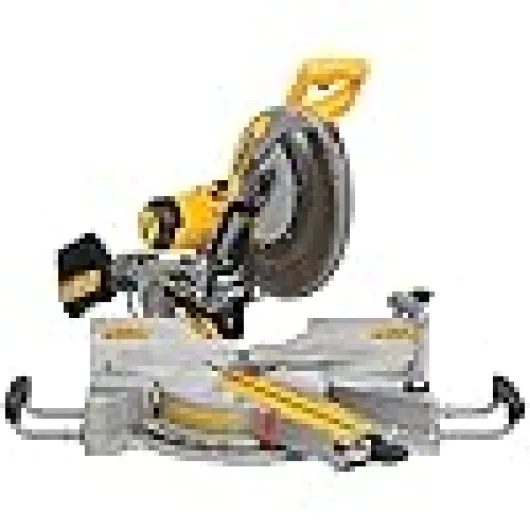
Design: big capacity, big footprint, and not shy about it
The design is clearly focused on capacity and accuracy, not on being compact. The sliding rails give you that wide cut reach, but they also mean the saw has to sit a good distance from the wall. With the dust bag attached, you need even more space behind it. On a roomy jobsite or in a decent-sized shop, that’s fine. In a tight garage or hallway, it’s annoying. I’ve had to move benches around just to give it enough travel, which is something to keep in mind if your workspace is cramped.
The controls are laid out in a fairly logical way. The miter detent plate has clear, big markings and solid positive stops, so flipping from, say, 0° to 45° goes quickly. The cam lock feels sturdy and doesn’t give that cheap, wobbly feel some lower-end saws have. The bevel scale is oversized and easy to read, which I actually appreciate when I’m tired and just want to double-check I’m at the right angle without squinting. Both left and right bevel are reachable without doing weird gymnastics, which is the point of a double bevel saw in the first place.
One design quirk is the startup and stop behavior of the motor. There’s no soft start, so when you pull the trigger, the blade jumps a bit as it spins up. Same thing when it stops. If you’re not ready for it, you can mess up a cut, especially on small trim pieces where you’re trying to be precise. After a few days, you get used to it, but I did ruin a couple of pieces early on. A soft start would have been nicer for control, especially on finish work.
The fences are tall and slide out of the way for bevel cuts, which is handy for crown and baseboard. But the included clamp is clunky. It works, but it’s slow to adjust, and I honestly find myself reaching for my own clamping setup instead. The overall design is very much “DEWALT jobsite style”: chunky, robust, and functional, but not really optimized for being compact or super ergonomic. It’s built more like a stationary tool that can move, rather than a portable saw you constantly relocate.
Comfort and handling: powerful, but not exactly friendly to your back
From a comfort point of view, this saw is a mix of good and annoying. On the good side, the handle layout is familiar if you’ve used other DEWALT saws. The trigger is in a natural spot, and the safety isn’t overly fussy. You can run it one-handed without feeling like you’re fighting the controls. Visibility of the cut line is solid, especially with the XPS light on, so you’re not leaning in at weird angles just to see your mark.
On the downside, the lack of soft start really does affect comfort in use. That startup jolt is noticeable. When you’re cutting delicate trim, that little jump can throw off your control at the start or end of the cut. After a while you adapt: you learn to keep a firm grip and let the blade fully spin up before dropping into the cut. But it’s something you have to think about, especially if you’re used to smoother-starting tools. A softer ramp-up would make the saw feel more controlled and less harsh.
The bigger comfort issue is just the weight and bulk. At around 55 pounds, hauling this thing in and out of a van, or up stairs, is a workout. If you’re moving it once in the morning and once at night, it’s acceptable. If you’re dragging it between rooms or up and down flights of stairs all day, it gets old quickly. This is why a lot of pros keep a smaller saw for quick jobs and bring this one when they know they’ll be set up for a few days.
Noise-wise, it’s a miter saw: it’s loud, but not brutal compared to others in this size range. Hearing protection is still a must. Vibration is manageable once it’s running; the saw feels stable on a solid stand. So comfort overall: decent ergonomics while cutting, but the weight and harsh startup mean it’s not exactly a “grab and go” friendly tool.
Durability and build: feels like it’s meant to live in a truck
The DWS780 isn’t light, and that weight comes from a lot of metal parts and a generally solid build. After regular use, the rails still run true, there’s no noticeable slop in the head, and the detents on the miter plate still click in firmly. It doesn’t feel like something that’s going to rattle apart after a year of jobsite abuse. The stainless-steel miter detent plate in particular is a nice touch compared to cheaper stamped parts you see on budget saws.
The motor also gives the impression it’s built to last. It has that strong kick on startup, which I don’t love from a comfort point of view, but it does show there’s real torque behind it. I haven’t noticed any weird noises, excessive heat, or loss of power after long cutting sessions. This isn’t a cordless tool where you’re wondering how the battery will hold up in a few years; as long as the brushes and bearings are fine, you’re good. Being a corded 110V unit, it’s pretty straightforward from a maintenance angle.
Plastic parts, like the handle and a few adjustment knobs, feel decent. Not luxury, but not cheap toy plastic either. They’ve taken a few knocks being moved in and out of a van and banged around in a garage without cracking. The sliding fences still move smoothly and lock down tight. The factory brushed finish on the metal surfaces holds up okay; it’ll get scratched and marked like any jobsite tool, but nothing that affects function.
If you’re the type who leaves tools outside in the rain, you’ll kill it sooner than later, but that’s true of any saw. Treated like a normal pro tool—stored dry, blown off now and then, rails kept reasonably clean—it feels like something that can easily run for years. Given how long some people kept their older DEWALT chop saws (20+ years), I’d expect a similar story here if you don’t abuse it.
Performance: cuts fast, cuts true, but you need to respect it
In terms of raw cutting performance, the DWS780 does what it’s supposed to do. The 15-amp motor at 3,800 RPM has plenty of power. I’ve ripped through 2x lumber, wet framing stock, and hardwood like walnut without it bogging down. Compared to smaller 10" saws I’ve used, this one just feels like it doesn’t care what you put under it, it keeps going. For a lot of users, that’s the main reason to pick a 12" slider: you don’t have to think twice about capacity or power.
Accuracy out of the box was decent but not perfect. The miter was basically dead-on 90° to the fence, but the bevel needed a bit of adjustment, which lines up with what other owners report. The good news is that the adjustments are straightforward: a couple of bolts, a decent square, and you’re done. Once dialed in, the saw holds its settings well. I haven’t had to constantly re-adjust, even after transporting it a few times, which is important if you’re using it on different sites.
The XPS light is genuinely helpful for performance. Because it uses the blade shadow as the reference, it stays accurate even when you change blades. On trim jobs, it makes it quicker to line up and split a pencil line. I’ve worked in rooms with bad lighting where normally I’d be fighting to see my mark, and here I just flip the light on and go. It’s not magic, but it cuts down on measuring mistakes and speeds things up.
The dust collection is better than most miter saws I’ve used, especially when hooked to a decent shop vac or dust extractor. With a Festool-style extractor, it pulls most of the fine dust right at the cut. You still get some chips and bigger dust falling behind the saw, but it doesn’t fog the whole room like cheaper units. On indoor jobs, that’s a big plus. Overall, performance-wise, it’s a strong, accurate saw that rewards a proper setup and a bit of calibration at the start.
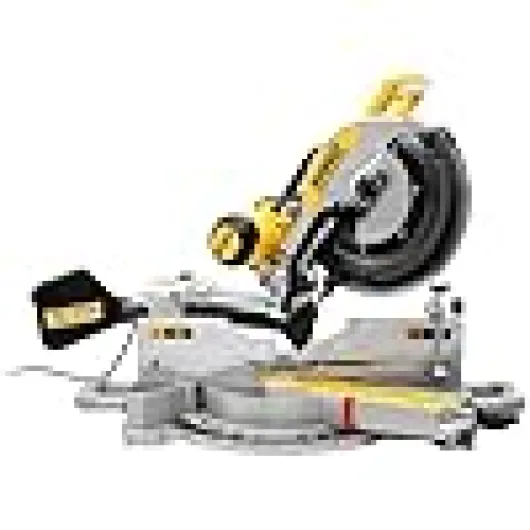
What you actually get with the DWS780
On paper, the DWS780 is a 12" double bevel sliding compound miter saw with a 15-amp motor, 3,800 RPM speed, and a big cutting capacity. In real life, that translates into a saw that will comfortably handle 2x14 at 90° and 2x10 at 45°, plus tall fences for crown and baseboard. DEWALT clearly targeted pros: trim carpenters, cabinet folks, framers, and installers. For a homeowner, it’s honestly more saw than most people need, but if you’re doing a lot of renos or building furniture, it starts to justify itself.
In the box you get the saw, a 12" carbide blade, dust bag, blade wrench, and a vertical clamp. No stand, no fancy extras. The stock blade is fine for rougher cuts and basic trim, but if you’re picky about finish work, you’ll probably swap to a higher-tooth blade pretty fast. That lines up with what a lot of reviewers say: good enough to start, but not the last blade you’ll own.
The XPS LED light is the main “special” feature. Instead of a laser, it casts a shadow of the blade onto the workpiece, so your cut line is basically the shadow. In practice, it’s simple and reliable. No calibration when you change blades, no worrying about a laser getting bumped. I’ve used it in bad lighting in a garage and in a dim hallway, and it genuinely helps. It’s not some gimmick; it just makes it easier to hit your pencil line fast.
So overall, presentation-wise, it’s pretty straightforward: big corded saw, pro-level capacity, a functional stock blade, and a light system that’s actually useful. Nothing fancy in terms of accessories, no batteries to think about, just a solid corded machine meant to go on a stand and stay in use for hours at a time.
Dust collection and precision in real use
Dust collection on this saw is better than most miter saws I’ve used, but it still isn’t perfect. Hooked up to a decent dust extractor, it grabs a big chunk of the fine dust right at the blade. That means less airborne junk in your face and less cleanup across the whole room. You still get chips and some heavier dust collecting behind the saw, especially on longer sessions, but it doesn’t turn the jobsite into a cloud the way cheaper saws often do. The included dust bag is honestly too small and fills fast, so if you care about dust, plan on using a vac.
Precision-wise, once you’ve done the initial calibration, it’s very solid. The miter detents land where they should, and there’s no noticeable play in the head that would mess up your angle. I’ve used it for big crown runs, baseboard, and even some more finicky furniture cuts, and it holds measurements consistently. The fence is tall enough to support molding properly, which helps keep your work stable and reduces the chance of weird twists that throw your cuts off.
The XPS shadow line is probably the single most useful precision feature. It lets you line up to a pencil line very quickly, and because it’s using the blade’s actual position, you don’t have to fuss with recalibrating if you swap blades. I’ve found that after a bit of use, you can easily split a pencil line and get tight joints without a lot of test cuts. That alone speeds up work a lot, especially when you’re doing repetitive cuts on trim.
In day-to-day reality, precision on a tool like this isn’t just about the saw; it’s about how often you have to fight it. With the DWS780, once set, I don’t find myself constantly checking and re-checking. I’ll still throw a square on it now and then out of habit, but it doesn’t drift. So if your work leans toward finish carpentry or you just like your miters actually closing up, this saw holds up pretty well.
Pros
- Strong 15-amp motor with plenty of cutting capacity (handles 2x14 at 90° and 2x10 at 45°)
- XPS shadow light system makes lining up cuts quick and reliable without calibration
- Accurate and stable once calibrated, with solid miter and bevel adjustments and good dust collection when used with a vac
Cons
- Heavy and bulky, needs a lot of space and isn’t fun to move around frequently
- No soft start, so the blade jumps at startup and stop, which can affect delicate cuts
- Included dust bag and clamp are basic and not very convenient for regular pro use
Conclusion
Editor's rating
The DEWALT DWS780 is a solid 12" double bevel sliding miter saw that’s built more for serious work than casual DIY. It’s powerful, accurate once dialed in, and the cutting capacity covers pretty much anything you’ll realistically throw at a miter saw: big crown, wide baseboard, chunky framing lumber, and hardwood. The XPS shadow light isn’t just a gimmick; it genuinely helps with quick, accurate lineups, especially in bad lighting. Dust collection is better than most saws in this category, especially with a proper vac attached, which is a real benefit if you work indoors a lot.
It’s not perfect, though. The biggest downsides are the weight, the bulk, and the lack of soft start. Moving it around all day is a pain, and you need a decent amount of space behind it for full slide travel. The startup jolt takes some getting used to and can mess with delicate cuts until you adapt. The stock blade is okay but nothing special, and the included clamp is slow and kind of annoying to use. For the price, there are cheaper options if you don’t need all the capacity or the fancy light.
Who is it for? Pros and heavy DIYers who want a reliable, accurate workhorse and don’t mind the size and weight. If you’re doing trim carpentry, cabinet installs, framing, or regular renovation work, it’s a good fit and should pay for itself in time saved. Who should skip it? People with tiny workspaces, folks who only need a miter saw a couple of times a year, or anyone who cares more about portability than capacity. In short: a strong, capable saw that gets the job done very well, as long as you actually have enough work and enough space to justify it.