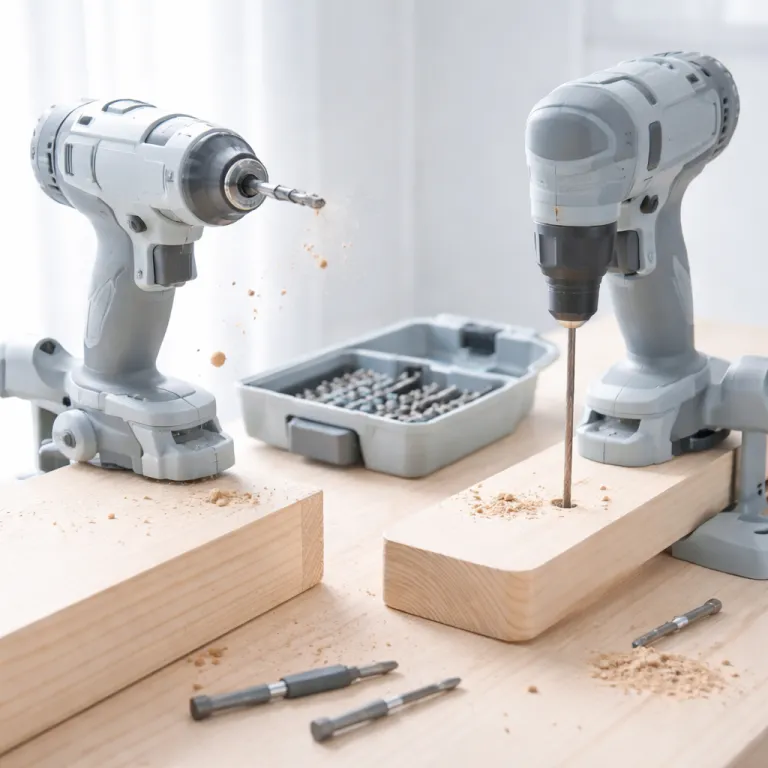
Impact driver vs drill in plain language
The core difference in the impact driver vs drill debate is how each tool turns a fastener. A standard drill driver uses smooth continuous rotation and relies on motor torque alone, while an impact driver adds rapid rotational hammer blows that multiply twisting force without wrenching your wrist as hard. For a first cordless set, understanding this impact mechanism is more important than memorizing any marketing number on power tools packaging.
A cordless drill is built around a three jaw chuck that grips round or hex shank drill bits and a clutch that slips before you snap small screws. An impact driver instead uses a 1/4 inch quick release hex collet that only accepts hex bits, but it can keep driving screws long after a regular driver drill stalls or starts camming out. When you compare drills impact performance to an impact driver on a ledger board or deck frame, the difference in driving speed and control over long fasteners becomes obvious.
Think of the drill as your general purpose tool for drilling holes in wood, metal, or masonry and for delicate driving tasks. Think of the impact driver as the specialist for driving screws and structural fasteners where high torque and compact size matter more than finesse. Most pros carry both drivers drills on their belt because swapping a drill bit for a driver bit every few minutes wastes time and eventually wears the chuck on even the best cordless drills.
What a cordless drill does best in everyday projects
When you hang shelves, assemble flat pack furniture, or pre drill for wall anchors, a cordless drill driver is the right starting point. Its adjustable clutch lets you set a torque limit so you do not strip brass screws in a hinge or crush soft pine when driving screws into a cabinet face. For a new homeowner choosing between impact drivers and drills, that clutch is the quiet unsung member of the tool that prevents a lot of beginner mistakes.
A typical 18 volt or 20 volt class drill has two mechanical speed ranges, with low speed for high torque drilling holes in studs and high speed for small drill bits in sheet metal. Pair that with a decent set of drill bits and you can handle most household drilling without needing hammer drills or an impact wrench. Even budget kits like the DeWalt DCD771C2 or Makita FD07R1 give you enough power to run a 25 millimeter spade bit through a stud, though you will feel the drill impact your wrist if the bit binds suddenly.
For precision work, the smooth rotation of drills is a real advantage over any driver impact tool. You can countersink a drill bit for a hinge screw, then swap to a brad nailer for trim, and your holes will line up cleanly because the chuck holds bits straight with minimal runout. If you are shopping during big holiday promotions, guides on how to read tool sales and discount theater can help you avoid weak drill driver bundles that hide low capacity batteries behind flashy bonus tools.
Where an impact driver earns its keep
Once you move from hanging pictures to building a deck, the impact driver vs drill choice tilts hard toward the impact side. An impact driver uses a hammer and anvil mechanism that repeatedly strikes in the direction of rotation, so the bit keeps turning even when the screw threads bite deep into wet lumber. That pulsing rotational force means the tool body does not try to spin your arm around, which is why many drivers feel easier to control than big drills when you drive screws all day.
On a ledger board or fence build, an impact driver with a quality 5 amp hour battery will sink 100 millimeter structural screws faster than most hammer drill models in drill mode. You match it with impact rated bits and you can drive fasteners into pressure treated posts, galvanized brackets, and composite decking without smoking the motor. For mixed fastening and drilling tasks, a modern 20 volt impact drill style combo that pairs an impact driver with a compact drill driver gives you the best of both tools in one cordless kit.
Impacts are not only for heavy carpentry, because they shine whenever you are driving screws into awkward corners or overhead. The short front to back length of many impact drivers lets you get a bit between joists where a full size drill driver simply will not fit. If you want a deeper dive into how an impact style drill impact mechanism changes everyday drilling and driving, a detailed guide on transforming fastening and drilling tasks with a 20 volt impact drill is worth reading before you buy.
Chucks, bits, and the limits of each tool
The chuck is the quiet dividing line in the impact driver vs drill conversation, and it dictates which bits you can actually use. A standard cordless drill uses a 10 millimeter or 13 millimeter keyless chuck that grips round shank drill bits, hex shank driver bits, hole saw arbors, and even small mixing paddles. An impact driver instead locks only 1/4 inch hex bits, so you must choose impact rated bits for both drilling and driving screws if you want them to survive the hammer blows.
Because of that chuck difference, drills remain the better choice for clean drilling holes in tile, metal, or brick when paired with the right drill bits or a hammer drill in masonry mode. Hammer drills add an in line hammer action that chips masonry as the drill bit rotates, which is very different from the sideways hammer action in impact drivers that boosts torque on screws and lag bolts. When you see drills impact performance charts in lab tests, the hammer drills usually win in concrete, while impact drivers win in driving long fasteners into wood.
There are limits though, and you should respect them if you want your tools to last. Using an impact driver as a substitute for an impact wrench on rusted automotive bolts can snap bits and overheat the driver, while using a small drill driver to drive screws bigger than 150 millimeters can burn the clutch. For buyers comparing different brands and legacy platforms, a focused guide on Hitachi and other Japanese power tools in cordless drill sets can clarify which drill bit and driver impact accessories actually fit your chosen battery system.
Buying one tool, a combo kit, or a full cordless platform
Most first time buyers walk into a store asking about impact driver vs drill and walk out with a combo kit because the price gap is small. If your projects mix drilling holes in walls with driving screws into furniture and light framing, start with a drill driver and add an impact driver later when you tackle a deck or shed. If your work is mostly fastening, like building a fence or assembling raised beds, an impact driver as your first cordless tool will feel like the best money you spend on tools that year.
Combo kits under roughly 150 dollars from DeWalt 20V Max, Milwaukee M18, and Makita LXT often bundle a compact drill driver, an impact driver, two batteries, and a charger. The smart move is to treat that purchase as your entry into a battery platform, because every later tool from a brad nailer to a small impact wrench will share those same packs. When you compare drivers drills across brands, pay more attention to battery amp hours, real world torque on driving screws, and reported chuck runout than to the headline maximum speed number on the box.
If you truly must choose only one tool, be honest about your next twelve months of projects. Apartment dwellers hanging shelves and occasionally drilling holes for anchors will be happier with a compact drill, while a side gig deck builder should not pretend a single drill impact style tool can replace a dedicated impact driver. The right answer is not the biggest spec sheet, but the tool that still drives the tenth deck screw at a frozen six in the morning without smoking or stripping bits.
Quick task cheat sheet and practical torque tips
Sorting the impact driver vs drill question by task makes the choice less abstract and more about what you actually do. For drilling holes in wood, metal, or masonry, reach for the drill driver or hammer drill because the clutch and steady rotation protect both the drill bit and the work surface. For driving screws longer than about 65 millimeters into framing lumber or ledger boards, the impact driver wins on torque, speed, and reduced strain on your wrist.
Use the drill for small fasteners, cabinet hardware, and any job where over driving would split trim or crush drywall anchors. Use the impact driver for structural fasteners, deck screws, and repetitive driving where you care more about getting 200 screws flush than about whisper quiet operation. When you need both drilling and driving in the same project, pros often keep a drill with a drill bit in one hand and an impact driver with a driver bit in the other, which eliminates constant bit changes and keeps both tools running cooler.
Remember that bits are consumables, and cheap ones turn any good tool into a bad experience. Invest in a mixed set of quality drill bits and impact rated driver bits, then match the bit type to the tool and the material every time you drive screws or start drilling holes. In the end, the smartest member of your cordless setup is not the newest hammer drills or the flashiest drivers, but the person who knows when to let torque, speed, and the right tool do the work.
Key figures on drills, impacts, and cordless buying choices
- In comparative lab style tests by outlets such as TechGearLab, compact impact drivers typically delivered roughly 2 to 3 times more effective torque than similarly sized drill drivers when driving 100 millimeter structural screws into framing lumber, while drawing similar battery power over the same task duration. Exact newton meter values vary by model and test protocol, so always check the current manufacturer specifications and the latest published test notes for the specific tools you are comparing.
- Pro Tool Reviews and similar testing groups have measured average user driving speed and found that impact drivers often install deck screws about 30 to 40 percent faster than standard cordless drills, which translates into saving close to an hour on a 500 screw deck build for a typical homeowner. Those percentages depend on screw length, wood species, and bit condition, but the general speed advantage for impacts remains consistent across most controlled tests.
- Industry sales data from major retailers show that more than half of cordless combo kits sold in the DIY price band now include both a drill driver and an impact driver, indicating that buyers increasingly see the two tools as complementary rather than interchangeable. That shift also reflects how many manufacturers now design their 18 volt and 20 volt platforms around a drill and impact pair as the default starter kit.
- Testing published by several manufacturers shows that using non impact rated bits in an impact driver can reduce bit life by up to 70 percent compared with impact rated bits, especially when driving large fasteners into dense engineered lumber. The higher peak torque and repeated hammer blows concentrate stress at the bit tip and shank, so hardened impact bits are essential if you want consistent performance.
- Field surveys of light pro contractors report that more than 80 percent keep both a drill and an impact driver on site, with many carrying a third hammer drill or compact impact wrench for masonry anchors and heavier fasteners. That real world mix mirrors the lab data and underlines the practical takeaway for homeowners choosing between a single drill, an impact driver, or a full cordless combo kit.
FAQ: impact driver vs drill for first time buyers
Do I need both a drill and an impact driver for home use ?
Most new homeowners can start with a single cordless drill driver, because it handles drilling holes, light driving, and general repairs with one tool. As your projects shift toward decks, fences, or framing, adding an impact driver makes sense because it drives long screws and lag style fasteners faster and with less strain. Combo kits that bundle both tools on one battery platform are usually the best long term value.
Can an impact driver drill holes as well as a drill ?
An impact driver can drill holes in wood and some metals if you use hex shank drill bits that are rated for impact use. It will not be as smooth or precise as a dedicated drill, and it is a poor choice for masonry unless you have specialized bits and accept rougher holes. For clean, accurate drilling in a variety of materials, a standard drill or hammer drill remains the better primary tool.
Why do my screws keep stripping when I use a cordless drill ?
Stripped screws usually come from using worn bits, the wrong bit size, or too much speed and torque for the material. Set the clutch lower on your drill driver, slow the speed, and use fresh bits that fit the screw head snugly to reduce cam out. If you still struggle with long structural screws, an impact driver with impact rated bits will often grip better and reduce stripping.
Is a hammer drill the same as an impact driver ?
A hammer drill and an impact driver use different hammer actions for different jobs, even though the names sound similar. Hammer drills add an in line pounding motion that helps the drill bit chip masonry while drilling holes in concrete or brick, while impact drivers add a rotational hammer that boosts torque for driving screws and bolts. For most homeowners, a standard drill driver plus an impact driver covers more tasks than a hammer drill alone.
What battery voltage should I choose for my first cordless set ?
For a first cordless drill and impact driver set, the 18 volt or 20 volt class hits the best balance of power, weight, and tool selection. These platforms from major brands support a wide range of power tools, from drill drivers and impact drivers to saws and nailers, all on the same batteries. Lower voltage 12 volt tools are lighter and fine for light duty work, but they can struggle with drilling large holes or driving long fasteners into dense lumber.