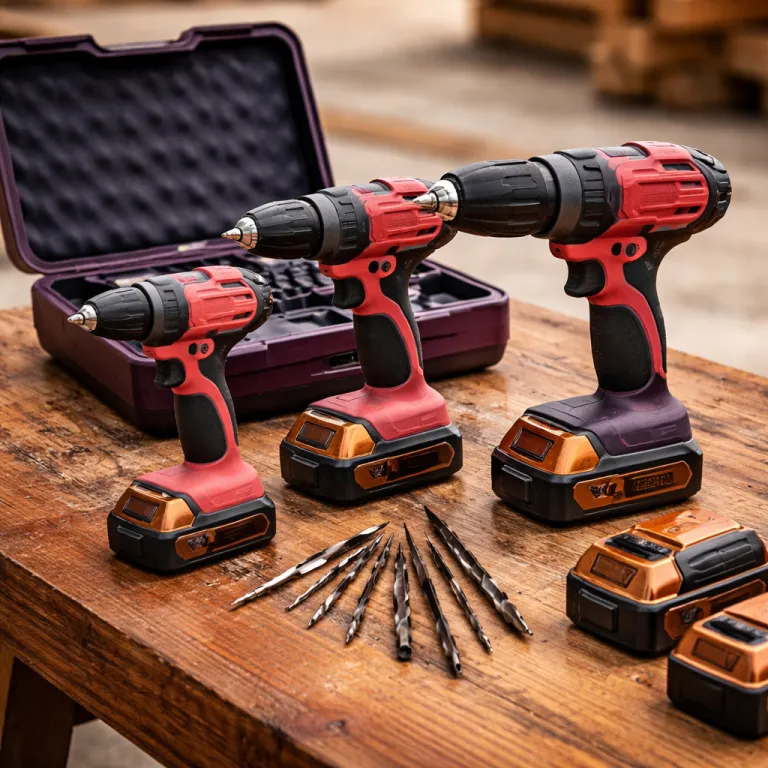
Why one “best cordless drill set” does not exist
The phrase best cordless drill set sounds simple, yet reality is messy. A deck builder driving 150 structural screws a day needs a very different cordless drill from a renter hanging two shelves and assembling flat pack furniture once a month. If you try to crown one single best drill set, you end up with a heavy duty hammer drill kit that is overkill for most homeowners and still not tough enough for a framing crew.
Think first about the work, not the tool brand or the price tag. A homeowner who tackles around ten projects a year usually wants a compact drill driver with a brushless motor, two mid size batteries and a sensible cordless kit rather than a monster power drill that weighs like a brick. A side gig contractor who runs drills all week needs more volt options, more amp hour capacity and a platform that offers dozens of compatible tools.
Project type also dictates whether you need a hammer drill or just a standard drill driver. If you rarely touch masonry, a lighter cordless drill without hammer mode will feel better in the hand and save money on the kit. If you routinely anchor into concrete or brick, a hammer drill in a serious drill set is non negotiable, because raw power without impact blows just burns bits and batteries.
Usage frequency changes what “best” means again. Someone who only owns one or two power tools and buys a drill set every decade should prioritize reliability, a long year warranty and a stable battery platform over headline max torque numbers. A gear head who already owns multiple cordless drills, a saw and other tools on one platform might instead chase max cordless performance, higher speed ranges and the newest battery powered packs just to shave seconds off each task.
Finally, ergonomics and control matter as much as raw power in real life. A drill with a sloppy keyless chuck, noticeable chuck runout and a vague clutch will strip screws and frustrate you long before the motor fails. The best cordless drill set for you is the one whose driver feels balanced at arm’s length, whose batteries match your work rhythm and whose price reflects how hard you actually push your tools.
Choosing a battery platform: DeWalt 20V Max vs Milwaukee M18 vs the rest
Before you obsess over any single drill, decide which cordless battery system you want to live with. DeWalt 20V Max and Milwaukee M18 dominate the American jobsite because their batteries power dozens of tools, from compact drills to heavy duty rotary hammers and outdoor equipment. Locking into one platform means every future tool set, from impact driver to circular saw, can share the same batteries and the same battery charger.
For many homeowners, DeWalt Max hits a sweet spot between price, performance and availability. Kits like the DeWalt DCK283D2 pair a compact brushless drill driver with an impact driver, two 2.0 amp hour batteries and a charger, giving you a versatile cordless kit without feeling like contractor overkill. If you want to compare the DeWalt Max cordless drill platform directly with Milwaukee M18, a detailed DeWalt 20V Max vs Milwaukee M18 battery platform guide offers a clear breakdown of strengths and weaknesses.
Milwaukee’s M18 line, especially the Fuel series, leans harder into heavy duty performance. A kit such as the Milwaukee 2997-22 bundles a hammer drill and impact driver with 5.0 amp hour batteries that deliver more sustained power for lag bolts, hole saws and long spade bits. If you already own Milwaukee tools, adding another power drill or drill driver to that ecosystem usually makes more sense than chasing a slightly lower price on a random cordless drill set.
Do not ignore second tier but still credible brands. Makita’s 18 volt LXT and 40 volt XGT platforms offer refined, compact drills with excellent speed control and long battery life, while Metabo HPT sells value focused kits that often undercut DeWalt and Milwaukee on price without feeling like disposable tools. Black Decker cordless drills sit at the light DIY end of the spectrum, fine for occasional furniture assembly but not built for repeated hammer drill use into concrete.
Whichever platform you choose, check the real battery options, not just the headline max voltage. A system that offers only small 1.5 amp hour batteries will frustrate you on deck builds, while a platform with 4.0 or 5.0 amp hour packs and compact 2.0 amp hour options lets you tailor weight and runtime. The best cordless drill set is rarely the cheapest box on the shelf, but the one that ties you into a battery powered ecosystem you will still want to expand five years from now.
The sweet spot: best cordless drill sets for typical homeowners
If you are a homeowner doing roughly ten projects a year, you sit in the real design target for many mid range cordless drills. You want a drill set that can hang cabinets, drive deck screws, drill metal brackets and occasionally tap a masonry anchor without feeling like a boat anchor in your hand. In this range, the best cordless drill set is usually a two tool combo kit around the 200 dollar mark with brushless motors and two decent batteries.
DeWalt’s DCK283D2 combo is a textbook example of this sweet spot. The kit includes a compact DeWalt DCD brushless drill driver and an impact driver, two 2.0 amp hour 20 volt Max batteries, a battery charger and a contractor bag, giving you enough power and speed for most wood and metal work. Milwaukee’s 2892-22CT kit plays a similar role on the M18 side, pairing a compact drill with an impact driver and smaller batteries that keep weight down for overhead work.
Runtime matters more than peak torque for this kind of user. Two mid size batteries let you keep one on the drill and one on the charger, so your cordless drill rarely sits idle waiting for power, and you can rotate packs during longer weekend projects. If you know you will be drilling many large holes or using hammer drill mode into concrete, consider stepping up to a kit with 4.0 amp hour batteries or adding a separate higher capacity pack later.
Pay attention to ergonomics and control features in these mid range kits. A good keyless chuck should tighten smoothly with one hand and hold bits without slipping, while the clutch on the drill driver should offer enough settings to avoid overdriving screws into soft pine or delicate hardware. Many of the better cordless drills in this class also include a work light, belt hook and a reasonably compact head length that fits between studs.
If you want a quick way to compare homeowner friendly cordless drill sets that include two batteries, a curated overview of top cordless drill sets with two batteries can help you see which kits balance price, performance and accessories. Look for at least a three year warranty on the tools and a separate year warranty on the batteries, because those packs are the consumables in any cordless kit. When you find a drill set that feels balanced, offers enough power for your heaviest planned task and fits your budget, that is your personal best.
Stepping up: side gig contractors and heavy duty users
Once you start charging money for your work, the definition of best cordless drill set shifts again. A side gig contractor hanging doors, building decks or installing cabinets needs a drill and driver kit that can survive daily use, not just weekend bursts. Here, heavy duty hammer drill combos with larger batteries and more robust chucks earn their keep.
Milwaukee’s M18 Fuel 2997-22 kit is a benchmark in this category. The hammer drill in this set delivers serious power and speed, backed by 5.0 amp hour batteries that keep the tool running through long days of drilling and driving, while the matching impact driver handles structural screws and lag bolts without complaint. DeWalt’s DCK299E1T1 kit answers with a FlexVolt Advantage hammer drill driver that can tap into higher wattage when paired with a FlexVolt battery, plus a compact 20 volt Max battery for lighter work.
In this tier, the battery platform and charger setup become business decisions. Two 5.0 amp hour batteries and a fast battery charger can keep one cordless drill and one impact driver working almost continuously, especially if you add a third pack later, and the cost of extra batteries becomes part of your job pricing. A max cordless system that offers both standard 18 or 20 volt packs and higher capacity options lets you match the tool to the task without carrying a second platform.
Durability details separate pro grade kits from homeowner bundles. Look for all metal ratcheting keyless chucks, solid side handles on hammer drills and housings that do not flex under load, because these parts take the abuse when a bit binds or a hole saw grabs. Check that the drill driver has a low speed range with enough torque for large spade bits and a high speed range that still feels controllable on small screws.
Warranty and service support also matter more when your tools earn income. Many pro level cordless drills and tools in this class carry a three to five year warranty on the tool and at least a two year warranty on the batteries, which can save you real money over the life of the kit. When you are driving the tenth deck screw at a frozen six a.m., the best cordless drill set is not the one with the biggest number on the box, but the one that still feels predictable in your hand.
First time buyers, compact kits and what to skip
If this is your first real drill, the market can feel like a wall of yellow, red and green plastic. A first time buyer usually does not need a flagship hammer drill or a max cordless monster with a huge battery, but they do need a trustworthy cordless drill that will not stall on a simple deck board. The trick is to avoid the rock bottom brushed kits while still respecting a 100 to 150 dollar budget.
DeWalt’s DCD777C2 kit is a strong entry point for many homeowners. It bundles a compact brushless drill driver, two 1.3 amp hour 20 volt Max batteries and a charger, giving you a light, balanced tool that can handle most household tasks without the bulk of a heavy duty hammer drill, and the batteries are still compatible with higher end DeWalt Max tools later. Ryobi’s PBLCK01K2 kit plays a similar role on the 18 volt One Plus HP platform, offering a brushless drill and impact driver with modest batteries at a friendly price.
Compact specialist kits deserve a look if you work in tight spaces. Makita’s FD07R1 12 volt Max CXT drill driver kit and Milwaukee’s M12 Fuel 2503-22 both deliver surprising power in a smaller, lighter package that shines inside cabinets, under sinks and in overhead work, and their shorter head length often matters more than raw torque. These compact cordless drills will not replace a full size hammer drill for concrete, but they make a great second drill set once you know your main platform.
Some options are worth skipping outright. The cheapest 18 volt brushed drill set on the shelf, often from off brand names or ultra budget Black Decker bundles, may look tempting on price but usually hides weak batteries, slow chargers and chucks that wobble after a few months, and those flaws show up exactly when you need the tool most. If a cordless kit includes only one tiny battery, a vague year warranty and a no name battery charger, treat it as a disposable appliance, not a long term tool investment.
When in doubt, step up one level from the absolute minimum. A slightly better drill driver with a brushless motor, two batteries and a real warranty will feel safer, more controllable and more pleasant to use, which means you will actually reach for it instead of dreading every project. For a deeper checklist of questions to ask yourself before spending around 200 dollars on a cordless drill, a focused cordless drill buying guide can walk you through platform, power and accessory tradeoffs.
Price, specs and a simple matrix to match you to a kit
Spec sheets can make any cordless drill look like a race car. You will see max torque numbers, no load speed ranges, volt ratings and amp hour capacities, all printed in bold to justify the price of the drill set. The challenge is translating those numbers into how a drill actually feels when you sink a screw into a stubborn joist.
Think of voltage as the system size and amp hour as the fuel tank. An 18 or 20 volt cordless drill with a 2.0 amp hour battery is fine for light to medium work, while the same tool on a 5.0 amp hour pack will run longer and sag less under heavy loads, though it will feel heavier in your hand. Higher speed ranges help with drilling small holes in metal or wood, but low speed torque and a smooth trigger matter more when you are feathering a screw flush with a cabinet hinge.
A simple way to choose is to map yourself onto a basic matrix. Light DIY users who mostly assemble furniture and hang pictures should look for a compact 12 or 18 volt drill driver kit with two small batteries and a reasonable price, while typical homeowners who build the occasional deck or fence should target a 18 or 20 volt brushless combo with mid size batteries and a hammer drill only if they touch masonry. Side gig contractors and heavy duty users should invest in a flagship hammer drill and impact driver combo with 4.0 or 5.0 amp hour batteries, a robust battery charger and a platform that supports many other tools.
Beyond the numbers, small design choices change daily usability. A well designed keyless chuck that centers bits accurately reduces wobble and frustration, while a good belt hook and work light make awkward jobs safer and less tiring, and these details rarely show up in big print on the box. When you compare cordless drills and tools across brands like DeWalt, Milwaukee, Makita, Metabo HPT and Black Decker, handle them in person if possible, because the best cordless drill set is the one that feels like an extension of your hand, not just a list of specs.
Care, batteries and making your drill set last a decade
Once you have chosen your cordless drill set, how you treat it will decide whether it still feels trustworthy in ten years. Lithium ion batteries prefer shallow cycles, moderate temperatures and regular use, so avoid running your batteries completely flat or leaving them in a freezing truck overnight. A little care with storage and charging habits can stretch the effective duration of each battery powered pack and delay the day you need to buy replacements.
Use the right battery for the job. Small 2.0 amp hour batteries keep a compact drill light for overhead work and cabinet installs, while larger 4.0 or 5.0 amp hour batteries belong on hammer drills, hole saws and other heavy duty tools that draw more current, and swapping packs between tools is part of the flexibility you paid for in a cordless kit. If your platform offers premium packs, such as high output or stacked cell designs, reserve them for your most demanding power drill tasks rather than every casual screw.
Tool maintenance is simple but often skipped. Keep the vents on your drills clear of dust, occasionally check the keyless chuck for debris and lightly clean the contacts on both batteries and charger so the system can deliver full power without intermittent cutouts, and store the drill set in its case or bag instead of loose in a damp basement. If your kit includes a hammer drill, avoid running hammer mode on wood or metal, because the extra vibration only accelerates wear without adding any benefit.
Respect the warranty but do not abuse it. A three or five year warranty on the tool and a shorter year warranty on the batteries is not a license to treat your drill like a demolition hammer, and manufacturers can and do deny claims when tools show clear signs of misuse. When a drill driver starts to show excessive chuck wobble, trigger glitches or overheating, address the issue early through service rather than pushing it until something fails catastrophically.
Over a decade, the cost of a good cordless drill set spreads thin across hundreds of tasks. Choosing a solid platform such as DeWalt Max, Milwaukee M18, Makita LXT or Metabo HPT, pairing it with the right mix of batteries and caring for the tools with basic discipline will matter more than chasing the latest max cordless marketing claim. In the end, the best cordless drill set is not the one that looks flashiest on the shelf, but the one you still trust when you reach for it in the dark corner of a job you cannot afford to redo.
Key figures and market statistics for cordless drill sets
- According to market research from Grand View Research, global demand for cordless drills and drivers exceeded 10 million units in a recent year, reflecting the steady shift from corded to battery powered tools across both DIY and professional segments.
- Industry data from the Freedonia Group shows that lithium ion batteries now account for more than 90 percent of batteries used in cordless power tools, replacing older nickel cadmium packs due to better energy density, lower self discharge and reduced maintenance needs.
- Consumer testing organizations report that brushless cordless drills typically deliver 30 to 50 percent longer runtime per charge than comparable brushed models, which directly affects how many holes or screws you can complete on a single battery during real projects.
- Warranty surveys indicate that leading brands such as DeWalt, Milwaukee, Makita and Metabo HPT commonly offer three to five year warranties on cordless tools, while batteries usually carry shorter one to three year coverage, underscoring the importance of battery care and replacement planning.
- Retail pricing analysis from major home improvement chains shows that mid range brushless drill and driver combo kits for homeowners cluster around the 180 to 230 dollar range, while entry level kits often sit between 80 and 150 dollars and heavy duty professional combos can exceed 350 dollars depending on included batteries.
FAQ about choosing the best cordless drill set
What voltage cordless drill is best for most homeowners ?
For most homeowners, an 18 or 20 volt cordless drill offers the best balance of power, weight and price. These drills can handle wood, metal and light masonry with the right bits, yet remain compact enough for indoor projects. Twelve volt drills are lighter and fine for light duty, while higher voltage systems mainly benefit heavy duty or professional users.
Do I really need a hammer drill for home projects ?
You only need a hammer drill if you regularly drill into concrete, brick or block. For tasks like framing, decking, cabinet installation and metal brackets, a standard drill driver without hammer mode is usually sufficient and often lighter and cheaper. If you occasionally need masonry holes, you can rent a hammer drill or choose a combo kit that includes one.
How many batteries should come with a good cordless drill set ?
A good cordless drill set should include at least two batteries so you can work with one while the other charges. For light DIY use, two 1.5 to 2.0 amp hour packs are usually enough, while heavier users benefit from at least one 4.0 or 5.0 amp hour battery. Single battery kits often cost less up front but can slow you down on longer projects.
Are brushless drills worth the extra money ?
Brushless drills are usually worth the extra cost because they run cooler, deliver more power for their size and extend runtime per charge compared with brushed models. They also tend to last longer since there are no carbon brushes to wear out, which matters if you plan to keep the drill for many years. For very occasional use, a brushed drill can still be adequate, but brushless has become the better long term value.
Which brands make the most reliable cordless drill sets ?
Major brands such as DeWalt, Milwaukee, Makita and Metabo HPT have strong reputations for reliable cordless drill sets, backed by multi year warranties and wide service networks. Ryobi and Black Decker offer more budget friendly options that suit lighter DIY use but may not hold up as well under daily professional workloads. When reliability is critical, choosing a well established brand with a proven battery platform and accessible parts support is usually the safest path.