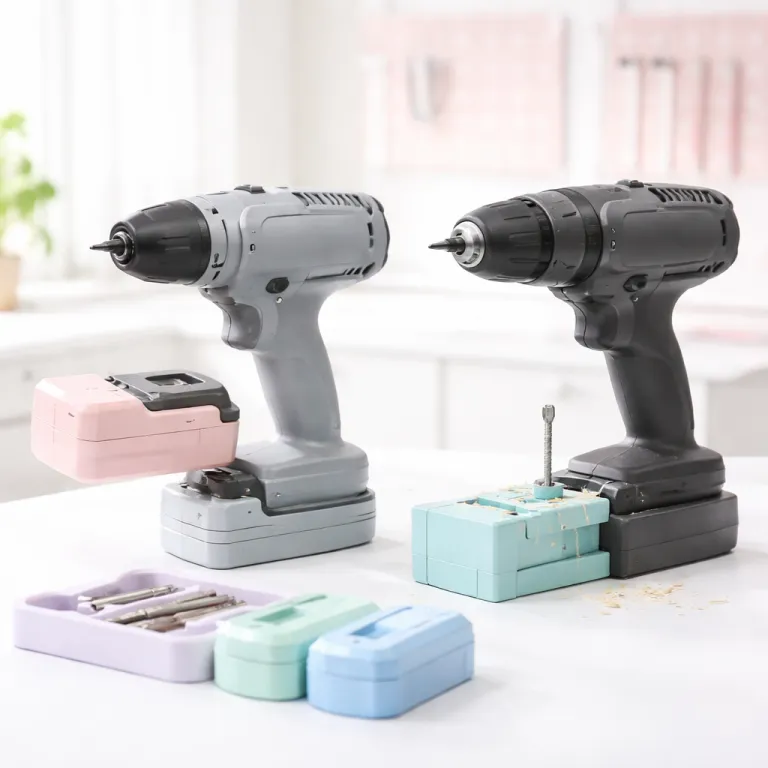
DeWalt vs Milwaukee cordless drill: you are choosing a platform, not a tool
Walk into a store comparing a DeWalt vs Milwaukee cordless drill and it feels like you are just picking a single tool. In reality you are choosing the cordless power rail that every future saw, impact driver, nailer and light in your garage will probably ride on, because batteries lock you into one ecosystem and switching after three power tools usually costs about as much as buying a fresh combo kit. That is why the DeWalt 20V Max line and the Milwaukee M18 and Milwaukee M18 Fuel ranges matter more than any one drill impact spec on a box.
DeWalt leans hard on its 20V Max battery platform, with dozens of DeWalt drill models, compact ATOMIC bodies and mid range XR performance that suits most homeowners. Milwaukee pushes the M18 and M18 Fuel cordless drill and impact driver families, which target higher power, tougher job sites and a deeper catalog of heavy duty power tools Milwaukee users can grow into over time. When you compare a typical DeWalt DCD series drill kit to a Milwaukee M18 drill kit, you are really comparing how you want to buy batteries, bare tools and upgrades for the next decade.
Think about how often you actually use a cordless drill and which other tools you might add. A weekend renovator might only need one drill, one impact driver and a circular saw, while a side gig contractor may quickly stack up a rotary hammer, multi tool, grinder and work lights on the same batteries. The more drills and tools you expect to own, the more the long term battery kit costs, bare tool prices and ecosystem depth of DeWalt versus Milwaukee will matter, especially once you factor in typical retail pricing and the cost of higher capacity packs.
Power, performance and durability: where Milwaukee Fuel pulls ahead
When people say Milwaukee Fuel feels stronger, they are usually talking about brushless M18 Fuel hammer drills and impact drivers that deliver more torque than comparable DeWalt Max XR models. For example, current M18 Fuel hammer drills such as the 2904-20 are commonly rated around 1,200 to 1,400 inch pounds of torque in manufacturer specifications, while many DeWalt 20V Max XR hammer drills like the DCD996 and DCD999 land closer to the 800 to 1,000 inch pound range, according to published spec sheets and independent bench tests from outlets such as Project Farm and Torque Test Channel. In repeated tests driving long structural screws and lag bolts, those reviewers have shown that higher end Milwaukee drill and impact driver combos hold speed longer under load, which matters when you are boring 25 millimeter holes through pressure treated posts or running big spade drill bits all day.
Milwaukee Fuel kits like the 2997-22 hammer drill and impact driver kit are built for daily abuse, with all metal chucks that resist wobble and housings that shrug off job site drops better than many mid tier DeWalt kits. Over time, side gig contractors report fewer chuck failures and less trigger fatigue on these top Milwaukee tools, especially when paired with the newer M18 High Output or M18 Forge battery packs that keep voltage sag under control and maintain power under sustained load. If you expect to run multiple drills, grinders and saws on one platform, the deeper M18 Fuel catalog and its consistent high performance make Milwaukee a strong buy for heavy users who prioritize speed and durability.
That does not mean every DeWalt DCD vs Milwaukee comparison automatically favors the red brand, because lighter tasks rarely tap full torque. For hanging cabinets, assembling furniture or drilling pilot holes with small drill bits, both DeWalt and Milwaukee drills feel equally quick, and the limiting factor becomes your bit quality and technique rather than raw power. In those everyday scenarios, the extra price of a premium Milwaukee Fuel kit may not translate into visible time savings for a typical homeowner, especially if most work involves short bursts rather than continuous heavy drilling.
Where DeWalt 20V Max wins: value, availability and compact kits
DeWalt 20V Max shines when you look at price, availability and the way most homeowners actually use a cordless drill. Big box promotions often put a DeWalt Max DCD series drill and impact driver combo kit with two 1.3 or 1.5 amp hour batteries, a charger and a soft bag DeWalt branded case well under the cost of a comparable Milwaukee drill kit, especially around holiday sales, based on typical advertised street pricing from major retailers. Typical street prices for these DeWalt starter bundles often land in the lower to mid price tier, while similar Milwaukee M18 kits usually sit a bracket higher in the mid to upper range.
The ATOMIC and XR compact drills DeWalt offers are shorter and lighter than many Milwaukee M18 models, which matters when you are working inside cabinets or overhead for long periods. For a homeowner driving a few dozen screws at a time, that lower weight and smaller grip often feel like the best cordless compromise between comfort and power, even if the spec sheet torque trails Milwaukee Fuel slightly. DeWalt also benefits from wide distribution at retailers that act like a kit depot, so grabbing an extra battery kit or replacement charger on a Sunday afternoon is rarely a problem.
Battery pricing tilts toward DeWalt as well, especially for mid capacity 4 amp hour packs that pair nicely with drills and light saws. Over several years, the lower average price per battery and frequent bundle deals mean a casual user can build a respectable cordless power lineup of drills, an impact driver, a multi tool and a small circular saw without overspending. If you mainly care about reliable performance, fair price and easy access to parts rather than absolute top end power, DeWalt Max remains a very rational buy for a first cordless platform.
Homeowner vs side gig contractor: matching the platform to your projects
The right DeWalt vs Milwaukee cordless drill decision depends heavily on whether you are a homeowner tackling occasional projects or a side gig contractor chasing weekend jobs. A homeowner who mostly hangs shelves, assembles flat pack furniture and drills the occasional masonry anchor will rarely stress either brand’s drill impact combo enough to expose their limits. For that user, a mid range DeWalt DCD drill and compact impact driver kit with two batteries offers more than enough performance at a friendlier price.
Side gig contractors live a different reality, where tools ride in trucks, get dropped on concrete and chew through fasteners for hours at a time. In that world, the extra robustness of Milwaukee Fuel hammer drills, impact drivers and saws, plus the breadth of the M18 power tools catalog, often justifies the higher upfront price. When you are running multiple drills, grinders and lights on the same batteries, the ability to share M18 High Output packs across the entire tools Milwaukee lineup becomes a real productivity advantage that shows up in fewer battery swaps and faster task completion.
Think about your five year project list, not just the drill you want today. If you see yourself adding a reciprocating saw, a compact router, maybe even a cordless table saw, then choosing the right power tool platform now will save you from paying the exit cost later when you realize you need different tools. Switching from DeWalt to Milwaukee or the other way around after owning three or four drills and tools usually means buying a new combo kit, new batteries and sometimes even a new bag DeWalt style case or Milwaukee contractor bag, which is an expensive reset.
Battery ecosystems, kits and the real cost of ownership over time
Every cordless drill lives or dies by its battery ecosystem, because batteries are the most expensive consumable in any kit. DeWalt Max and Milwaukee M18 both offer multiple capacities, from compact 2 amp hour packs that keep drills light to larger 5 or 6 amp hour packs better suited to saws and grinders, and your mix will shape the long term cost of your cordless power setup. The more drills and tools you own, the more those battery price differences add up over time and influence the total cost of ownership.
DeWalt tends to win on mid range battery price, especially in bundled battery kit deals that include two packs and a charger for less than the cost of two equivalent Milwaukee packs, according to typical retail promotions and buyer reports. Milwaukee counters with higher output options and the M18 Forge line, which use advanced cell construction to reduce internal resistance and maintain power under heavy load, a clear benefit for demanding power tools like rotary hammers or large impact wrenches. For a homeowner mainly running a cordless drill and a small impact driver, those high end packs are nice to have but not essential, while for a contractor they can be the difference between finishing a job on one charge or swapping batteries constantly.
When you evaluate a DeWalt vs Milwaukee cordless drill kit, look beyond the headline price and count the batteries, their capacities and how they fit your future tools. A cheaper drill kit with a single low capacity pack may force you to buy extra batteries at full price later, erasing any initial savings. A slightly more expensive kit with two solid packs, a charger and a durable bag DeWalt or Milwaukee case can actually be the best buy once you factor in the real cost of ownership over five or ten years.
Practical buying advice: which platform to choose and why
For most DIY homeowners, the best cordless starting point is a mid tier DeWalt Max DCD drill and impact driver combo kit with two batteries, because it balances performance, price and availability. That kind of kit gives you enough power for deck screws, light masonry and metal drilling, while leaving room to add more DeWalt drills or other tools later without overcommitting your budget. If you mainly shop at big box stores, the frequent DeWalt promotions and wide range of compatible power tools make it easy to buy DeWalt once and stay on that rail.
If you are a side gig contractor or you know you will expand into heavier cutting, grinding and fastening, Milwaukee Fuel on the M18 platform is usually the smarter long term investment. The higher torque drills, tougher impact drivers and broader catalog of specialty power tools Milwaukee offers mean you are less likely to outgrow the system or need to switch platforms later. In that scenario, paying more upfront for a Milwaukee drill and impact driver kit with robust batteries is a rational tradeoff against downtime and replacement costs.
Whichever way you lean in the DeWalt vs Milwaukee cordless drill debate, commit to one platform early and build around it. Mixing brands for drills, saws and lights might seem flexible, but it scatters your batteries, chargers and accessories, raising both clutter and cost over time. In the end, the right choice is not the drill that wins a spec sheet race; it is the rail of batteries and tools that still feels like the best buy on the tenth deck screw at a frozen six a.m.
Key figures on cordless drill platforms and ecosystems
| Platform | Typical brushless hammer drill torque (in-lbs) | Common kit battery capacity | Approximate bare tool weight | Typical mid tier kit price band |
|---|---|---|---|---|
| DeWalt 20V Max XR (e.g., DCD996) | ~820–1,000 (manufacturer specs) | 2.0–5.0 Ah lithium ion packs | 3.0–3.5 lb with battery | Lower to mid price tier |
| Milwaukee M18 Fuel (e.g., 2904-20) | ~1,200–1,400 (manufacturer specs) | 2.0–5.0 Ah, plus High Output options | 3.2–3.8 lb with battery | Mid to upper price tier |
- Major cordless platforms such as DeWalt 20V Max and Milwaukee M18 each support well over one hundred compatible power tools, giving buyers a wide runway for future expansion without changing batteries.
- Brushless cordless drills typically deliver 30 to 50 percent more runtime per battery charge than brushed models, which directly affects how many holes or screws you can complete before swapping packs.
- High capacity lithium ion batteries in the 5 to 6 amp hour range often cost more than half the price of an entry level drill kit, making battery pricing a critical factor in long term ownership costs.
- Independent tool review outlets such as Project Farm, Torque Test Channel and Tool Box Buzz have repeatedly found that premium cordless drill and impact driver kits can maintain over 80 percent of their original torque output after several years of regular use when batteries are stored and charged correctly.
- Consumer surveys of DIY users reported by home improvement magazines show that most homeowners replace or upgrade their primary cordless drill set roughly every seven to ten years, which aligns closely with the practical lifespan of lithium ion batteries under light to moderate use.
Frequently asked questions about DeWalt vs Milwaukee cordless drill choices
Is DeWalt or Milwaukee better for a first cordless drill kit?
For a first cordless drill kit, DeWalt often makes more sense for typical homeowners because its 20V Max DCD drill and impact driver combos offer strong performance at a lower average price, with batteries and bare tools widely available in big box stores. Milwaukee is better suited to users who expect to expand quickly into heavier power tools and want the extra durability and torque of M18 Fuel. Both brands are reliable, so the decision should hinge on your budget and how many tools you plan to add.
Which platform has the stronger cordless drill, DeWalt Max or Milwaukee Fuel?
Milwaukee Fuel hammer drills generally deliver higher peak torque and faster sustained drilling under heavy load than comparable DeWalt Max XR models, which shows up when boring large holes or driving long structural screws. DeWalt drills are still very capable for most home projects, and their compact ATOMIC and XR bodies can be more comfortable in tight spaces. Unless you routinely push your drill to its limits, the practical difference in strength may be smaller than the spec sheets suggest.
How many batteries do I need with a cordless drill and impact driver set?
For most DIY users, a cordless drill and impact driver kit with two batteries is the minimum comfortable setup, because it lets you work with one pack while the other charges. If you plan longer work sessions or add more tools like a saw or grinder, stepping up to three or four batteries reduces downtime and extends pack life by spreading the load. High capacity packs are helpful for saws, while compact packs keep drills and impact drivers lighter for overhead or precision work.
Can I mix DeWalt and Milwaukee tools on the same batteries?
You cannot safely mix DeWalt and Milwaukee cordless tools on the same batteries, because each brand uses its own proprietary battery interface and electronics. Adapters exist from third parties, but they can void warranties, reduce performance and introduce safety risks, especially with high draw tools. The safest and most economical approach is to choose one platform and keep all your drills, drivers and other tools within that battery ecosystem.
When is it worth switching from DeWalt to Milwaukee or vice versa?
Switching platforms is usually only worth it if your current cordless system cannot support the tools or performance you now need, such as moving from light DIY work to regular contracting. Once you own three or more tools and several batteries, the cost of replacing everything often equals or exceeds the price of a new mid range combo kit, so the decision should not be taken lightly. If you do switch, sell or gift your old kit to offset the expense and avoid maintaining two incompatible battery ecosystems.
