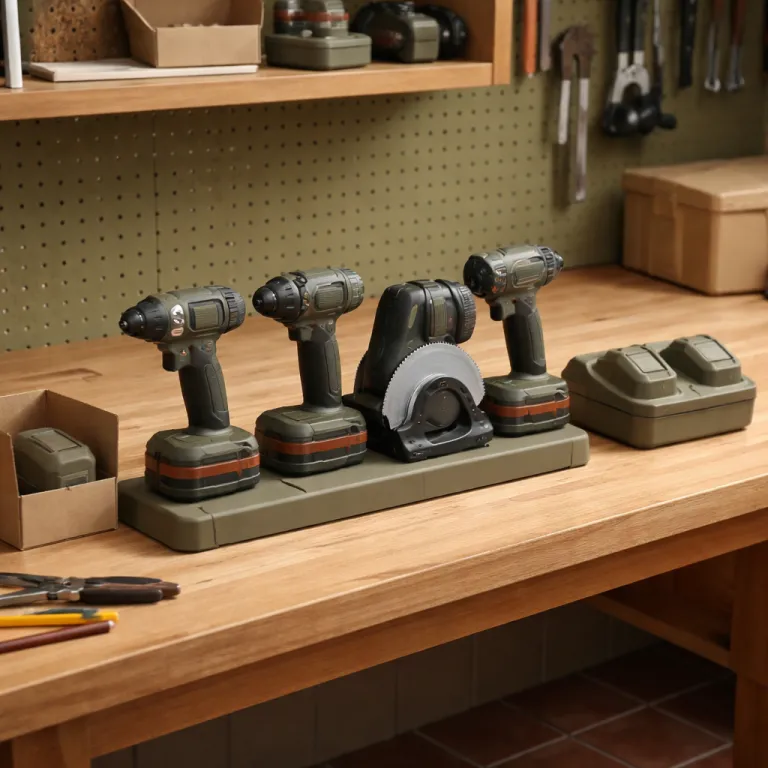
Why your cordless drill set is really a battery decision
The quiet truth in any cordless tool battery platform comparison is simple. Over the life of a cordless drill set, batteries and chargers usually eat 30 to 50 percent of your total power tool budget, so the smartest buyers choose the battery platform first and the drill second. That estimate comes from price breakdowns in major US retailers’ combo kits, where replacement batteries and chargers routinely cost as much as, or more than, the bare tools themselves. That means the real question is not which tool feels nicest in your hand today, but which battery platforms will still power the tools you want when your projects and skills grow.
Think about your next five years of work, not just the shelves you plan this weekend. Once you own two or three cordless power tools on one battery platform, switching tool brands often costs as much as buying a new combo kit, because you are rebuying every battery, every charger and often a different voltage standard. That is why a serious cordless tool battery platform comparison matters more than chasing the best drill torque number or the flashiest fast charging claim on the box.
For most US homeowners, the four serious ecosystems are Milwaukee M18, DeWalt 20 volt Max, Makita 18 volt LXT and Ryobi 18 volt One Plus. Each platform has dozens of power tools, from compact drills to outdoor string trimmers, and each brand sells multiple batteries with different amp hour ratings and lithium ion chemistries. Manufacturer catalogs and trade surveys consistently show these four lines offering hundreds of compatible tools, while smaller brands often top out at a few dozen. When you commit to one of these tool systems, you are really buying into a long term relationship with that brand’s chargers, tools battery packs and premium batteries, not just a single cordless drill set.
Milwaukee’s M18 line is the power platform most light pros grow into. The batteries are not cheap, but their performance under heavy work loads is excellent, and the brand keeps adding niche power tools that run on the same tool batteries, from compact impact wrenches to outdoor blowers. Independent jobsite tests often show M18 high output packs holding voltage well when driving large lag screws or boring with big auger bits. If you want one cordless power ecosystem that can handle both fine indoor work and brutal outdoor demolition, Milwaukee’s M18 batteries and tools battery options are usually the best battery bet for long term flexibility.
DeWalt’s 20 volt Max platform plays a different game. The brand focuses on broad retail availability, strong midrange performance and a huge spread of tools, so you can buy a drill today and a cordless string trimmer or miter saw later without changing batteries. For many homeowners, a DeWalt Max drill and impact kit becomes the gateway into a full battery platform that quietly replaces old corded tools one by one.
Makita’s 18 volt LXT system sits between Milwaukee and DeWalt in personality. The brand leans into refined ergonomics, balanced weight and smooth performance, which matters when you drill overhead or drive pocket screws all afternoon, and its lithium ion batteries have a reputation for consistent battery life rather than headline grabbing peak power. Lab tests and long term user reports often note that Makita packs trade a little peak output for cooler running and steady runtime. If you care more about how a power tool feels after the hundredth screw than the first, Makita’s cordless platform deserves a close look in any cordless tool battery platform comparison.
Ryobi’s 18 volt One Plus line is the budget outlier that still counts as serious. The tools are not premium, but the platform is enormous, and the backward compatibility story is unmatched, because old tools and new batteries keep working together across decades. Ryobi’s own case studies highlight that the same basic interface has survived multiple chemistry changes, letting new lithium ion packs power older drills and saws. For a homeowner who wants a wide range of tools battery options, from fans to string trimmers, without paying premium batteries prices, Ryobi’s battery platforms often deliver the best value per volt.
Everything outside these four platforms is where regret usually lives. Single tool cordless kits from no name brands often ship with weak batteries, slow charging times and no upgrade path, so when the first battery dies you are stuck rebuying the same mediocre tool or throwing the whole set away. If you care about long term performance and real cordless power, avoid orphan platforms and focus your money on one of the big four ecosystems instead.
Once you accept that the platform is the real purchase, the drill becomes a module, not a destiny. You can start with a compact drill driver today, then add an impact driver, a saw and outdoor tools later, all running on the same batteries and chargers. That is how you turn one smart cordless drill set decision into a full house of compatible power tools that actually work together.
For a deeper walk through the tradeoffs, a detailed cordless drill buying guide that lays out seven key questions can help you sanity check your platform choice before you drop serious money. Use that kind of structured checklist to compare not just torque and speed, but battery life, charging ecosystem and the breadth of each tool system you are considering. When you line up Milwaukee, DeWalt, Makita and Ryobi against your real projects, the right battery platform usually becomes obvious.
The four big platforms ranked for real homeowners
Ranking cordless platforms is less about fan loyalty and more about fit. A thoughtful cordless tool battery platform comparison for homeowners has to weigh power, battery life, tool selection and long term cost, not just which brand has the loudest marketing. For a US weekend warrior who wants a cordless drill set that will age gracefully, the order usually runs Milwaukee M18, DeWalt 20 volt Max, Makita 18 volt LXT and Ryobi 18 volt One Plus, each serving a different kind of work.
Milwaukee M18 sits at the top for people who flirt with pro level tasks. The platform covers more than three hundred power tools, including heavy outdoor equipment and specialty tools that most brands skip, and its premium batteries hold voltage under load better than many competitors when you lean on a hole saw or long spade bit. Manufacturer catalogs and independent trade publications both cite M18 as one of the broadest 18 volt ecosystems on the market. If you ever think you might frame a wall, build a deck or run big string trimmers on the same batteries as your drill, Milwaukee’s tool system gives you room to grow without changing platforms.
DeWalt 20 volt Max is the safest middle lane for most homeowners. The brand’s cordless drills, like the DCD791 and combo kits such as DCK283D2, balance weight, performance and price, and the same batteries power a wide range of saws, grinders and outdoor tools. In many independent runtime tests, DeWalt midrange packs drive a two inch hole saw through dozens of studs on a single charge, which is more than enough for typical home projects. When you buy into DeWalt Max, you are betting that a broad, stable battery platform with good enough power tools will serve you better than chasing the absolute best battery specs on paper.
Makita’s 18 volt LXT line rewards people who care about feel and finesse. The drills are often a touch lighter, the handles slimmer and the triggers smoother, which matters when you drive hundreds of pocket screws for cabinetry or use hex key accessories for precise work with cordless drill sets. Third party reviews frequently note that Makita’s brushless motors run quietly and stay controllable at low speeds. If you do a lot of careful indoor work, Makita’s lithium ion batteries and refined tools battery lineup can make the difference between a job that feels like a slog and one that feels controlled.
Ryobi 18 volt One Plus is the volume play. The tools are not as refined as Milwaukee or Makita, but the platform is huge, the prices are friendly and the backward compatibility story is unmatched, because old tools still accept new batteries and new tools still run on older packs. Ryobi and independent reviewers both point out that more than three hundred tools now share the same basic 18 volt interface. For a homeowner who wants a cordless drill set, a few saws, some outdoor tools and maybe a couple of oddball gadgets, Ryobi’s battery platforms often stretch a limited budget the farthest.
Then there are the brands you should treat with caution. Black and Decker cordless tools, for example, target light household use with lower voltage packs and modest performance, which can be fine for assembling furniture but frustrating for drilling into framing lumber or masonry. Metabo HPT offers some strong individual tools, yet its ecosystem depth and US retail presence lag behind the big four, which matters when you need a replacement tool battery or want to add outdoor equipment later.
Orphan platforms and no name Amazon brands are where most platform regret stories start. These cordless kits often bundle a drill, a light and a couple of small batteries at an attractive price, but the battery life is short, the charging is slow and there is no path to add serious power tools or outdoor gear. When the first battery fails, you discover that the best battery you can buy for that platform is another mediocre pack from the same obscure brand, and your money is trapped.
Cross brand adapters promise a shortcut, but they are a bad bet. Adapters that let you run a DeWalt Max battery on a Milwaukee tool or a Makita pack on a Ryobi drill often bypass built in safety electronics, which can overheat batteries, damage tools and void warranties. The US Consumer Product Safety Commission has issued multiple recalls and safety notices related to poorly designed third party adapters and modified battery packs, citing fire and burn hazards. If you want to change platforms, the smart move is to sell your old tools, batteries and chargers as a bundle and reinvest in a new, coherent tool system instead of trying to force one brand’s batteries into another brand’s tools.
Once you have picked a platform, you can focus on the drill details that actually matter. Look at chuck quality, brushless motors, torque ratings and the presence of hammer mode, then match those features to the kind of work you really do, whether that is driving deck screws or drilling pocket holes. For joinery projects, a guide to pocket screws for cordless drill users can help you pair the right drill settings, bits and accessories with the platform you have chosen.
Essential features in a cordless drill set, seen through the platform lens
Every cordless drill box shouts about torque, speed and brushless motors. Those specs matter, but in a serious cordless tool battery platform comparison, they sit behind three quieter features that shape how your drill feels after years of work, not just on day one. You want a drill that plays nicely with your chosen batteries, protects their battery life and delivers consistent performance across the full voltage range, from fresh off the charger to nearly empty.
First, pay attention to the batteries themselves. A good lithium ion pack for a drill should balance amp hour capacity, weight and heat management, because an oversized battery can make a compact drill feel clumsy while an undersized pack sags in voltage under load and shortens runtime. Look for premium batteries with robust housings, clear fuel gauges and electronics that talk cleanly with the tool and charger, especially if you plan to share those packs with outdoor tools or high draw saws.
Second, study the charging ecosystem. Fast charging sounds great, but pushing too much current into a hot battery can shorten its long term life, so the best battery platforms use smart chargers that monitor temperature and voltage, then ramp charging up or down as needed. When you compare brands, check how many chargers they offer, whether they support multiple volt ranges and how they handle tools battery packs that come in different sizes. Technical manuals for modern chargers often describe staged charging curves that bring a pack from empty to about 80 percent quickly, then slow down to limit heat and protect cycle life.
Third, look at how the drill manages power. A well designed power tool will deliver smooth torque across its speed range, protect the motor from overload and shut down gracefully when the battery is low, instead of stuttering and cooking the cells. That kind of thoughtful power management is what separates a premium cordless drill set from a bargain kit that chews through batteries and leaves you with weak performance halfway through a job.
Ergonomics are not just comfort; they are control. A drill that balances well with both compact and high capacity batteries lets you switch between light indoor work and heavier outdoor tasks without feeling like you are wrestling a brick, and a good handle shape reduces fatigue when you drive hundreds of screws. When you test tools in store, snap in different batteries and feel how the weight shifts, because that is the reality you will live with for years.
Chuck quality is another underappreciated feature. Cheap chucks develop runout, which means the bit wobbles, and that ruins precise work like drilling pilot holes for hinges or using hex key accessories for fine adjustments, while better chucks hold bits straight and grip consistently. If you care about accurate drilling, especially in hardwoods or metal, a solid chuck is worth more than a few extra advertised newton metres of torque.
Mode selection and clutch design matter more than many spec sheets admit. A clear, positive clutch ring helps you avoid stripping screws, and a reliable hammer mode lets one drill handle both wood framing and occasional masonry without reaching for a corded tool. When you compare models within a platform, prioritize the drill whose controls feel intuitive and repeatable, because that is what keeps your work clean when you are tired.
Finally, think about accessories and compatibility. The best cordless drill set is the one that works smoothly with your bits, drivers, pocket hole jigs and hex key sets, and that often means staying within a mature platform where third party accessory makers test fit and performance. A focused guide to hex key essentials for precise work with cordless drill sets can help you build an accessory kit that matches the power and control of your chosen drill.
When you line up Milwaukee, DeWalt, Makita and Ryobi drills side by side, the differences in feel, balance and control often matter more than the raw numbers. Use the platform decision to narrow your choices, then let your hand, your typical work and your tolerance for weight decide which specific drill earns a place in your toolbox. That is how you end up with a cordless drill set that feels like an extension of your arm, not just another gadget on the shelf.
Cost, longevity and the smart way to switch platforms
Money is where cordless platforms quietly separate into smart choices and expensive mistakes. Over the life of a cordless drill set, you will usually buy at least two extra batteries, maybe a second charger and a couple more tools, and that is where a careful cordless tool battery platform comparison pays off. The more you can keep those purchases on one coherent platform, the less you waste on duplicated chargers, incompatible batteries and stranded tools.
Run a simple five year projection on paper. Start with a midrange drill and impact kit that includes two batteries and a charger, then add a circular saw, a multi tool and one or two outdoor tools like string trimmers or blowers, and finally budget for one replacement battery when an original pack ages out. If you stay on one platform, you are buying bare tools more often than full kits, which means you are paying mostly for performance and features, not rebuying the same chargers and batteries over and over.
Now imagine you switch platforms after that third tool. You will likely buy another starter kit from a different brand, which means two more batteries, another charger and a second set of tools that cannot share power with your first batch, and by the time you add a couple of outdoor tools you have spent roughly the price of a new premium combo kit just on duplicated infrastructure. That is why the smartest move is to buy fewer tools on one rail, not many on three rails, even if a sale on a different brand looks tempting.
Longevity is not just about how long a drill runs on one charge. It is about how long the brand keeps supporting the same voltage standard, how well the batteries handle repeated charging cycles and whether the tool system keeps expanding with new power tools that interest you. Ryobi’s three decade story of backward compatible 18 volt One Plus batteries and tools is a case study in how a stable platform can protect your investment, while frequent voltage changes or incompatible new lines can strand older tools battery packs.
Battery care plays a quiet but important role in long term cost. Avoid leaving lithium ion batteries on hot dashboards, do not run them to absolute zero every time and use the chargers designed for your platform, because those chargers manage voltage and temperature to protect battery life. Treat your premium batteries like the expensive components they are, and they will reward you with more consistent performance and fewer surprise failures in the middle of a job.
When a platform no longer fits your work, plan your exit like a project. Instead of selling one drill here and one battery there, bundle your tools, batteries and chargers into a coherent kit and sell the whole package, because buyers pay more for a ready to work set than for scattered pieces. Then reinvest that money into a single new platform that matches your current mix of indoor projects, outdoor work and future ambitions.
Resist the urge to bridge platforms with adapters. Running a DeWalt Max battery on a Milwaukee tool or a Makita pack on a Ryobi drill through a cheap adapter may seem clever, but it often bypasses safety circuits, stresses cells and can even violate CPSC safety guidance, and the savings vanish when a tool or battery fails early. If you must mix brands, do it with separate, intact tool systems, not with hacked together power connections.
For homeowners who feel overwhelmed by specs, a structured cordless drill buying guide that walks through seven key questions can anchor your decision in real use cases instead of marketing claims. Think about how often you work, what materials you drill, whether you need outdoor tools on the same batteries and how much weight you are willing to hold at arm’s length. The right answer is rarely the flashiest brand, but the platform whose tools, batteries and chargers quietly match the way you actually build, fix and maintain your home.
In the end, the cordless drill you trust is not the one with the highest advertised torque. It is the one whose batteries still click into place after years of charging cycles, whose charger still hums along on a dusty garage shelf and whose platform still offers the next tool you need when a new project calls. What really matters is not the foot pounds on the box, but the tenth deck screw at a frozen six in the morning.
Key figures for cordless battery platforms and drill sets
- Across major brands, batteries and chargers typically account for 30 to 50 percent of the lifetime cost of a cordless tool setup, which means platform choice has more financial impact than the initial drill price alone (based on aggregated pricing from major US retailers and manufacturer kit breakdowns).
- Milwaukee’s M18 platform and Ryobi’s 18 volt One Plus platform each offer more than 300 compatible tools, while DeWalt 20 volt Max supports more than 200 tools, giving these ecosystems significantly deeper coverage than smaller brands with under 50 cordless tools in their lineups (reported by manufacturer catalogs and industry surveys).
- Modern lithium ion batteries for cordless drills are commonly rated for 500 to 1 000 full charge cycles before noticeable capacity loss, so a homeowner who charges a pack once a week can reasonably expect 8 to 15 years of usable battery life with proper care (based on manufacturer cell specifications and independent lab testing of power tool packs).
- Fast chargers that push higher current into batteries can reduce charge time by 30 to 50 percent compared with standard chargers, but they also increase heat, which is why most premium platforms use temperature monitoring and staged charging to protect long term battery health (documented in charger technical manuals and engineering white papers).
- Backward compatible platforms like Ryobi’s 18 volt One Plus have maintained the same basic battery interface for roughly three decades, allowing new lithium ion batteries to power older tools and vice versa, which significantly reduces the risk of tool obsolescence for long term owners (highlighted in manufacturer case studies and long running user forums).