Summary
Editor's rating
Value for money: not cheap, but makes sense if you stick with Makita
Compact design that actually helps on real jobs
Battery life and charging: plenty of runtime, slowish charger
Build quality and durability: feels tough, a couple of small concerns
Performance: strong enough for real work, but not the most brutal Makita
What you actually get in the Makita DLX2221ST box
Pros
- Compact, lightweight brushless drill and impact driver that are still plenty powerful for most jobs
- Two 5.0Ah 18V LXT batteries with strong runtime and compatibility across many Makita tools
- Solid build quality and comfortable ergonomics suitable for regular use
Cons
- Standard 110-minute charger is slow for the price of the kit
- Some kits reported missing small accessories like belt clips and printed instructions

Specifications
View full product page →| Brand | Makita |
Two Makita tools, one bag: worth the money or just hype?
I’ve been using this Makita DLX2221ST twin pack for a few weeks on small jobs at home and on site, swapping back and forth between the DHP483Z drill and the DTD155Z impact driver. I’m not a tool collector, I just need stuff that works without fuss. I bought this set because I was fed up dragging an old corded drill and a cheap impact driver that kept rounding screws. I wanted one bag, two tools, and batteries that last a full day of light to medium work.
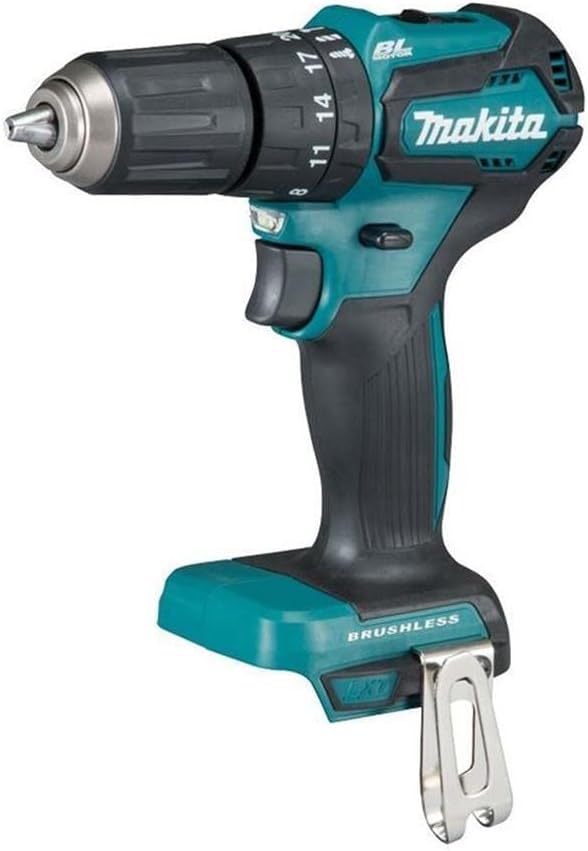
Right away, the first thing that stood out is how compact and light both tools are. If you’re used to older 18V drills, these feel almost small in the hand, especially the impact driver. They don’t feel like toys though. The build is what you expect from Makita: solid housings, rubber overmold, and nothing rattling or loose out of the box. No fancy bells and whistles, just standard Makita ergonomics and a brushless motor in each tool.
In real use, this kit has handled most of what I threw at it: drilling into wood, masonry plugs in brick, and driving big wood screws into studs. The impact driver in particular has more punch than you’d guess from its size. The combi drill is more of an all-rounder than a monster, but for general DIY and light trade work it’s fine. If you spend your life drilling huge holes in concrete or running coach screws all day, you might want the next level up in torque, but for mixed jobs this is okay.
Overall, my first impression is that this set is practical and efficient rather than flashy. It’s not the cheapest 18V kit on the market, and there are more powerful Makita models, but as a compact twin pack with two 5.0Ah batteries, it hits a decent balance between power, weight, and runtime. It’s not perfect, and a couple of details annoyed me, but it’s a solid everyday kit if you’re in or moving into the Makita ecosystem.
Value for money: not cheap, but makes sense if you stick with Makita
Let’s be honest: Makita isn’t the budget option. This DLX2221ST kit costs more than a lot of no-name or entry-level branded twin packs. You are paying partly for the name and the battery platform. That said, when you break it down – two brushless tools, two 5.0Ah batteries, charger, and case – it’s not a terrible deal. Buying all that separately would usually cost you more. One Amazon reviewer summed it up as “two drills for the price of one”, which is pretty much how I see it: if you were already going to buy a Makita combi and impact driver, this bundle is an efficient way to do it.
Where the value really shows is if you plan to stick with Makita long-term. The 18V LXT platform covers a huge range of tools: grinders, saws, radios, vacuums, you name it. Having two 5.0Ah batteries gives you a solid base to expand without rebuying power packs every time. Compared to DeWalt constantly refreshing battery formats (as one reviewer complained), Makita’s approach is less painful on the wallet. If you’re a casual DIYer who just wants one drill for the odd shelf, this is probably overkill. But if you do regular work or want to build a kit over time, it starts to make more sense.
On the downside, there are a few things that drag the value down a bit. The standard slow charger feels cheap for the price point. Missing small parts like belt clips or instructions (if that happens to you) is also annoying and means chasing customer service. And performance-wise, while the tools are good, they’re not the absolute top of Makita’s range. You’re paying for a balanced, compact kit, not for maximum power. So if raw torque is your only goal, you might feel you’re paying a premium for something a bit more modest.
Overall, I’d say the value is pretty solid but not mind-blowing. It makes the most sense for people who want reliable, compact tools and plan to use the batteries across other Makita gear. If you just want the cheapest way to drill a few holes, this isn’t it. If you want tools that feel decent in the hand, last more than a year, and sit inside a stable battery ecosystem, then the price is easier to swallow.
Compact design that actually helps on real jobs
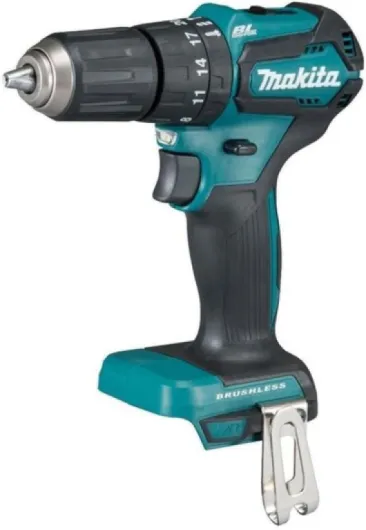
The main design thing with this kit is how compact and slim the tools are for 18V. Both the drill and the driver feel shorter and lighter than a lot of older Makita or DeWalt models I’ve used. The brushless motors help keep the size down. When you’re working in tight spots – like under a sink or between joists – that shorter length makes a difference. The impact driver especially is easy to get into awkward corners where a big chunky drill would be a pain.
The rubber overmold and grip shape are pretty standard Makita. If you’ve used any of their recent 18V tools, you’ll feel at home. The grip isn’t too fat, and even with gloves on I had no problem holding it securely. The trigger feels smooth, not twitchy, so you can feather the speed nicely. The forward/reverse switch is right under your thumb, easy to flick without shifting your grip. Nothing clever here, just a layout that works and doesn’t make you think about it.
In terms of controls and settings, it’s simple. The combi drill has the usual two-speed gearbox, torque settings, and drill/hammer modes. Nothing fancy like electronic clutch or smart modes. The impact driver has variable speed and some electronic modes depending on the version, but in practice I mostly just used trigger control and let the tool do its thing. For me, that’s enough – I don’t need a drill that feels like a smartphone. I just want clear markings and switches that don’t get knocked accidentally, and this kit does that.
The only design gripe I have is small stuff: the missing belt clip in my kit, and the fact that the standard charger feels a bit dated and bulky compared to some newer fast chargers from other brands. Also, the tools look like every other Makita – teal and black, nothing special. If you care about looks, this will feel boring, but personally I’d rather have boring and tough than flashy and fragile. Overall, the design is practical and focused on real use, not on showing off on Instagram.
Battery life and charging: plenty of runtime, slowish charger
The two 5.0Ah 18V LXT batteries are one of the big selling points of this kit. In real use, they give you a lot of freedom. On a typical day of mixed DIY – drilling some holes, driving screws for a small framing job, hanging shelves, and a bit of general fixing – I didn’t manage to drain a single battery completely. I usually rotated them out of habit, but honestly, one 5.0Ah pack is enough for a long session if you’re not doing continuous heavy work. For pros on site, having two of these means you can pretty much work all day if you manage your charging.
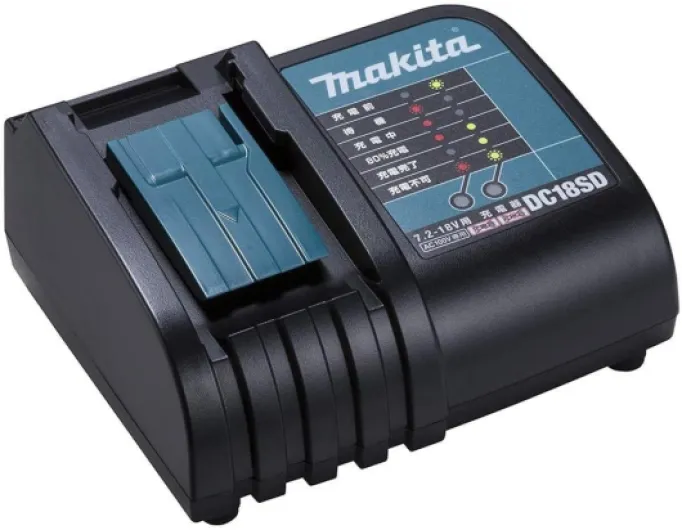
The downside is the standard 110-minute charger. It works, it’s reliable, but it’s slow compared to rapid chargers from Makita or other brands. If you run a battery down fully, you’re looking at around an hour and a half to get back to full. For me, with two big batteries, this wasn’t a practical problem – I just kept one on charge while using the other. But if you’re used to fast charging, it feels a bit old-fashioned. One Amazon review pointed this out, and I agree: for a kit at this price, a quicker charger would make more sense.
One big advantage, and a reason I moved away from DeWalt, is that Makita keeps its battery platform consistent. These 18V LXT packs fit loads of other Makita tools. So if you already have Makita stuff, this kit drops right in. If you’re just starting, it gives you a good base to add more tools later without buying more batteries and chargers every time. Compared to brands that keep changing battery formats, this is a lot less frustrating and saves money long-term.
In terms of battery durability, I obviously can’t judge long-term life after only a few weeks, but Makita 5.0Ah packs I’ve used in the past held up well over years of occasional abuse. They’re not tiny or lightweight, but they balance the tools nicely and don’t make them feel too nose-heavy. Overall, the runtime is very good, the platform is flexible, and the only real weak point is the slower charger. If that bothers you, you can always buy a fast charger later, but it does add to the overall cost.
Build quality and durability: feels tough, a couple of small concerns
In terms of build, these feel like typical Makita workhorses. The housings are solid, the rubber overmold is thick enough to take a few knocks, and there’s no flex or creaking when you twist the body. I’ve already dropped the impact driver from about waist height onto a concrete floor once (my fault, not clipped properly), and it only picked up a few scuffs. No cracks, no weird noises afterwards. That gave me a bit of confidence that this kit isn’t made of thin plastic just to save weight.
The chuck on the combi drill feels decent. It grips bits tightly and I didn’t have any slipping, even with slightly abused hex bits. It’s not the chunkiest metal chuck I’ve ever seen, but for this size of drill it’s fine. The gearbox changes smoothly between speeds, and the torque settings click positively. Nothing feels loose or vague. With some cheaper drills you can tell the clutch is going to wear out quickly; here it feels more solid, like it will hold up to regular use.
The only durability question mark for me is the charger and accessories. The charger casing looks and feels a bit cheaper than the tools themselves, and based on past experience, it’s usually the chargers that die first in a kit, not the tools. Also, getting a kit where the belt clip and instructions weren’t included doesn’t inspire confidence in quality control from whoever boxed it. That’s more of a supplier/packaging issue than the tools themselves, but it still matters when you’re paying decent money.
From a longer-term view, Makita 18V LXT tools have a pretty solid reputation. I’ve used older brushed Makitas on site that took real abuse – dust, occasional rain, being thrown in the back of a van – and they kept going. These brushless ones run cooler and should, in theory, last even longer because there are no brushes to wear out. Obviously I can’t fast-forward a few years, but based on the feel and early use, I’d say this kit is built to handle regular work, not just weekend DIY. It’s not indestructible, but it feels a step above the bargain brands you see in supermarkets.
Performance: strong enough for real work, but not the most brutal Makita
Performance-wise, this kit sits in that sweet spot of “more than enough for most people”. The combi drill tops out at 1700 RPM, which is decent for drilling in wood and metal. I used it for drilling pilot holes in 2x4s, masonry holes for wall plugs in brick, and a few 20–25 mm spade bit holes in softwood. It handled all of that without drama. In hammer mode, it got through standard brick for plugs and fixings fine, but if you’re doing loads of heavy masonry, you’ll still want an SDS drill. This is more of a general-purpose drill than a dedicated masonry tool.
The impact driver is where this kit earns its keep. With up to 140 Nm of torque, it has no problem driving long wood screws into studs or decking boards. I drove a bunch of 100 mm screws into treated timber without pre-drilling, and it just sank them quickly. Compared to a cheap DIY impact driver I had before, the difference is night and day – less cam-out, fewer stripped heads, and it doesn’t feel like it’s struggling. The compact size makes it easier to keep the bit straight when you’re in an awkward position, which also helps avoid mangling screws.
Control is good too. The triggers are responsive, so you can ease screws in without overdriving them, especially if you’re fitting hinges or working with softer wood. I didn’t find the need to constantly switch modes or fiddle with settings; I just adjusted pressure and trigger pull. For a normal user, that’s ideal. It’s not the most powerful impact driver Makita makes, but for regular carpentry, furniture assembly, and general fixing work, it’s more than enough.
In day-to-day use, the tools stay reasonably cool unless you really lean on them for a long time. I had one session of drilling multiple holes in thick timber where the drill warmed up, but not to the point of smelling or feeling dangerous. Noise levels are what you’d expect: the impact driver is loud when hammering away, so ear protection is still a good idea on longer jobs. Overall, the performance is solid and predictable: no surprises, no weird behavior, just steady power. If you need the absolute top-end torque or speed, there are beefier Makita models, but for mixed DIY and light trade work, this set holds up well.
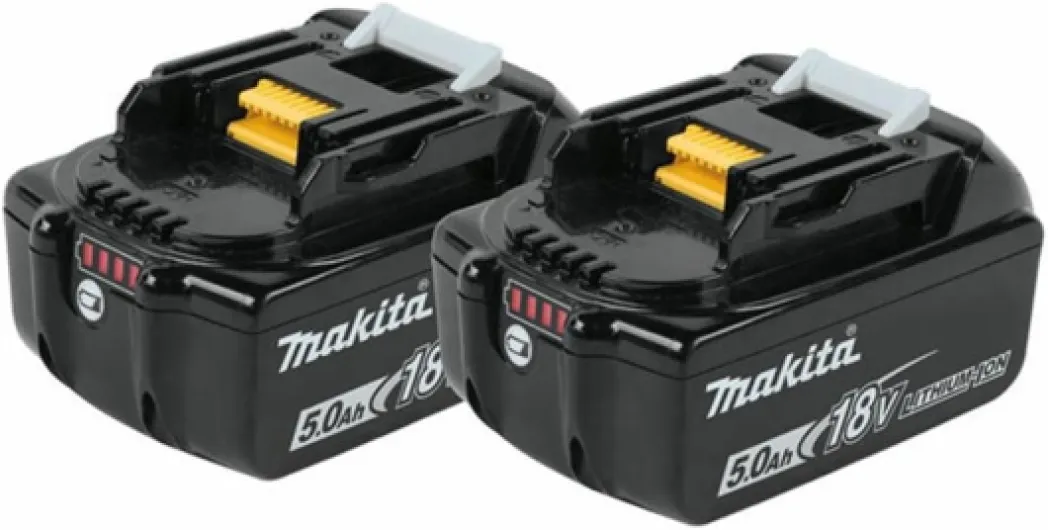
What you actually get in the Makita DLX2221ST box
In the box you get the basics: one DHP483Z combi drill, one DTD155Z impact driver, two 5.0Ah 18V LXT batteries, a 110-minute charger, and a carry case. No drill bits, no driver bits, and in my case there was no belt clip or printed manual for the drill, which lines up with that 1-star review complaining about missing instructions and clip. That’s not a deal-breaker, but for the price I expected everything to be there and ready to go. I had to dig up the manual online, which is annoying but not the end of the world if you’ve used a drill before.
The carry case is decent and spacious. It’s not a super rugged toolbox, but it’s fine for chucking in the van or in the car boot. There’s enough room to throw in a small set of drill bits and driver bits, plus some wall plugs or screws. One Amazon review mentioned the box being really spacious, and I agree – you don’t have to play Tetris every time you pack it away. It’s more practical than fancy, which is what I want for tools.
The charger is the standard 110-minute unit, not the fast charger. This is one of the things that feels a bit stingy. With 5.0Ah batteries, a faster charger would have been nice, especially if you’re working more intensively. That said, with two big batteries, I never actually ran out of juice in a normal day of mixed use, so the slow charger is more of a mild irritation than a real problem. Still, if you’re used to rapid charging, you’ll notice the difference.
Overall, the kit is straightforward: two brushless tools, two solid batteries, basic charger, and a usable case. No gimmicks, no bonus accessories. If you already own Makita bits and attachments, you’re fine. If this is your first kit, budget for a bit set and possibly a belt clip if yours doesn’t come with one. For the price, I’d have liked a faster charger and all small accessories present, but the core of the kit – the tools and batteries – is solid.
Pros
- Compact, lightweight brushless drill and impact driver that are still plenty powerful for most jobs
- Two 5.0Ah 18V LXT batteries with strong runtime and compatibility across many Makita tools
- Solid build quality and comfortable ergonomics suitable for regular use
Cons
- Standard 110-minute charger is slow for the price of the kit
- Some kits reported missing small accessories like belt clips and printed instructions
Conclusion
Editor's rating
After using the Makita DLX2221ST twin pack for a while, my overall take is that it’s a practical, compact, and reliable kit rather than something flashy. The combi drill and impact driver are both brushless, light, and easy to handle, with enough power for most DIY jobs and a good chunk of trade work. The impact driver in particular pulls its weight, driving long screws without complaining. The two 5.0Ah batteries give you plenty of runtime, and the build feels tough enough to survive regular use and the odd knock.
It’s not perfect. The standard 110-minute charger feels slow for a kit in this price range, and missing small accessories like a belt clip or printed instructions is irritating if it happens to you. Also, if you want the most powerful Makita tools out there, this isn’t that – it’s more of a balanced, compact option than a heavy-duty brute. For casual DIYers, it may even feel like overkill, both in price and capability.
I’d recommend this kit to people who either already own Makita tools or plan to build a Makita setup. If you’re doing regular work around houses, light carpentry, installations, or you’re a tradesperson who wants a lighter second set, it makes sense. If you just need one cheap drill for the odd flat-pack or picture frame, look for something simpler and cheaper. For me, this kit hits a good middle ground: not the cheapest, not the most powerful, but reliable, compact, and easy to live with day to day.