Summary
Editor's rating
Is it worth the money compared to other SDS drills?
Compact body, sensible controls, and a bit front-heavy
Battery life: good with 5Ah, but it does like to drink
Build quality and how it holds up to real site use
Hits hard for its size and chews through brick and concrete
What you actually get (and what you don’t)
Pros
- Strong drilling performance for its size with 2.1J impact energy
- Comfortable, compact design with relatively low vibration for an SDS
- Works with existing DEWALT 18V XR batteries and feels robust for daily use
Cons
- Bare unit only – batteries, charger and usually a case cost extra
- Runtime drops fast on smaller batteries; really needs 4–5Ah packs
- Loud and not suited for heavy demolition or continuous chiselling work

Specifications
View full product page →| Brand | DEWALT |
A cordless SDS that actually feels like mains power
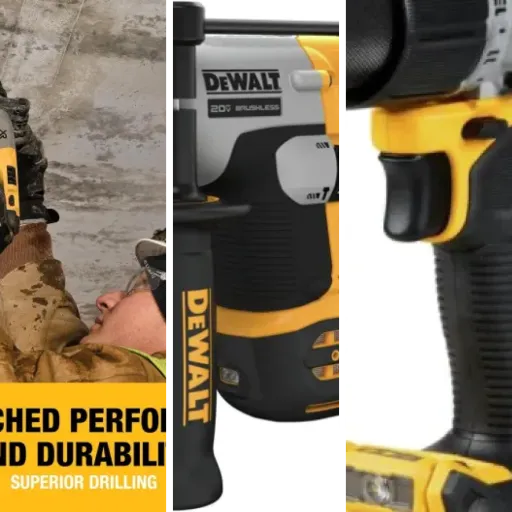
I’ve been using the DEWALT DCH273N-XJ 18V XR SDS-Plus hammer drill for a few weeks on a mix of jobs: fixing battens to concrete, running cables through brick walls, and some light chisel work. I already had a few DEWALT 18V tools and 5Ah batteries, so picking up the bare unit made sense. I wasn’t expecting it to replace my old corded SDS, but I wanted something easier to drag around site and up ladders.
First impression: it hits harder than it looks. It’s not a monster demolition tool, but for a relatively compact 24mm SDS, it bites into brick and concrete without much drama. I’ve used cheaper cordless SDS drills before that just felt like a noisy toy; this one actually feels like you’re getting proper work done. You pull the trigger and it just starts chewing through the wall instead of bouncing around.
In day-to-day use, what stood out for me is the balance between power and weight. At about 2 kg bare, plus a 5Ah battery, you can hold it out in front of you for overhead drilling without your arms dying after three holes. The vibration is also fairly well controlled; it’s not soft or gentle, but compared to older SDS drills I’ve had, my hands feel less beaten up after a full afternoon of anchors.
It’s not perfect: it’s loud, batteries drop fast if you hammer it with larger bits, and it’s not going to replace a big corded SDS-Max if you’re chasing out all day. But as a cordless workhorse for anchors, fixings and general site stuff, it does the job very well and feels like a sensible upgrade if you’re already in the DEWALT 18V XR ecosystem.
Is it worth the money compared to other SDS drills?
On value, it really depends on whether you’re already in the DEWALT 18V XR system. As a bare unit, the DCH273N usually sits at a mid-range price for a pro-brand cordless SDS. You’re paying more than for a no-name or DIY-brand drill, but less than some of the very top-end kits with batteries included. For what it delivers – decent power, good vibration control, and solid build – I’d say the price is fair, but not a bargain.
Compared to cheaper SDS drills (corded or cordless), the difference you feel is mainly in vibration, consistency, and how much you trust it not to die mid-job. With budget tools, I often feel like I’m rolling the dice each time I start a heavier job. With this one, it just feels like it’s made to be used every day. That peace of mind has value if you earn money with your tools. For occasional DIY, the price might feel a bit steep, but you’re also less likely to end up buying twice.
If you don’t own any DEWALT batteries, the equation changes. By the time you add a couple of 5Ah batteries and a charger, you’re in the territory of full kits from other brands, sometimes including a case and accessories. In that situation, I’d say you should compare:
- What other tools you plan to buy in the same battery system
- How often you actually need an SDS drill
- Whether a cheaper corded SDS plus a small cordless drill might cover your needs
Overall, I’d rate the value as good but not mind-blowing. If you’re a tradesperson or a serious DIYer already on DEWALT XR, it makes sense and feels like money well spent. If you’re starting from zero and just want an SDS for the odd job, there are cheaper ways to get holes in walls, even if they’re less pleasant to use.
Compact body, sensible controls, and a bit front-heavy
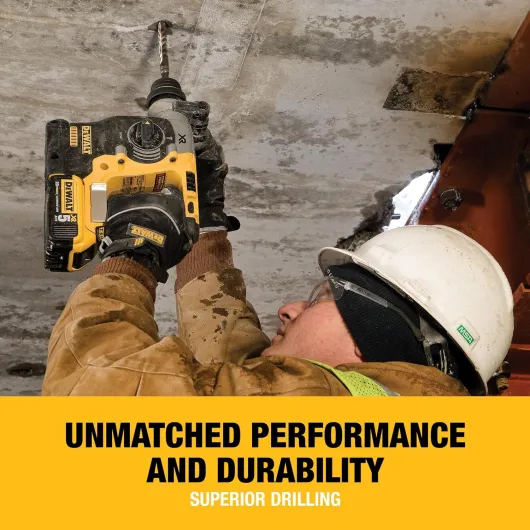
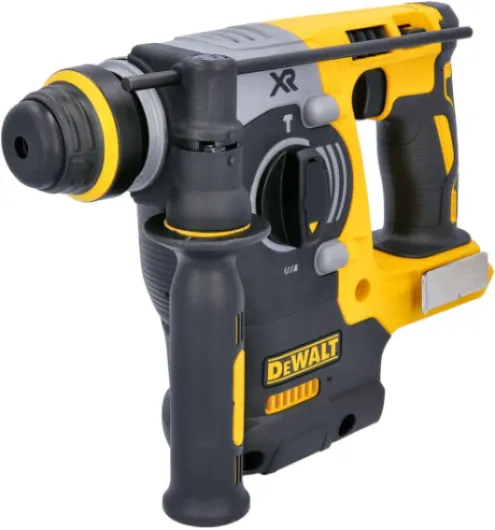
From a design point of view, the DCH273N is pretty typical DEWALT: yellow and black plastic, rubber overmold in the right places, and a fairly chunky body. It’s not tiny, but for an SDS-Plus rotary hammer with 2.1J impact energy, it’s on the compact side. The overall length is short enough that working between joists or near corners isn’t a pain, and you can get reasonably close to edges when drilling for fixings.
The grip shape is comfortable. The main handle has enough rubber to stop it slipping when your hands are dusty or sweaty. After a few hours of on-and-off drilling, I didn’t get any hot spots or weird pressure points in my hand, which I have had with cheaper brands. The trigger is progressive enough that you can start holes gently, especially in tiles or softer brick, instead of going full-send from the first second. That makes it easier to avoid wandering.
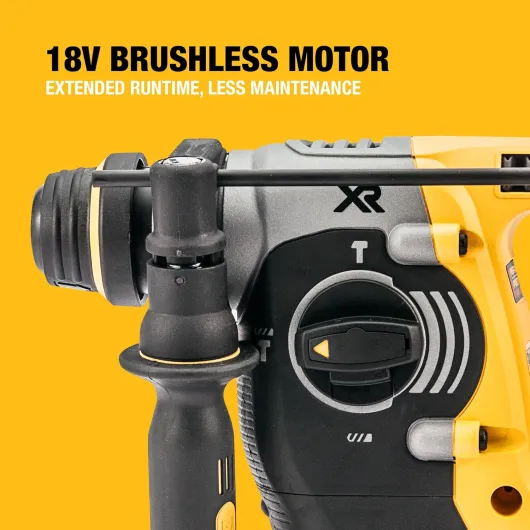
The side handle is multi-position and clamps firmly around the collar. You can rotate it to pretty much any angle, which is handy when drilling overhead or sideways into a wall. It doesn’t feel flimsy; once tightened, it doesn’t creep even when you’re leaning into a 16mm or 20mm bit. The only minor annoyance is that if you’re wearing thick gloves, you sometimes bump the mode selector ring when adjusting your grip, but that’s more about getting used to the tool than a design flaw.
Balance-wise, with a 5Ah battery on, it’s slightly rear-heavy when you’re not drilling, but as soon as the bit is in the wall it feels natural. The center of gravity is low enough that it doesn’t twist badly if the bit snags, and the electronic clutch helps a bit there. Overall, the design is practical: no fancy gimmicks, just a compact SDS drill that feels thought-through for real work instead of looking pretty in a catalog.
Battery life: good with 5Ah, but it does like to drink
The drill is part of the 18V XR system and is rated at 5A on the spec sheet, but that’s really about the batteries it’s designed for rather than a fixed draw. I’ve mainly run it on 5Ah XR batteries, and that seems like the sweet spot. With a 5Ah pack, I was able to drill roughly 60–80 holes in concrete (8–10mm bits, around 70–80mm deep) before the battery hit one bar and I swapped it out. That’s a bit under the “90 holes per charge” claim, but I wasn’t exactly babying it and some of that was in harder concrete.
On brick and block, the consumption is noticeably lower. Doing a day of mixed tasks (a bunch of 6mm plug holes, a few 12–16mm holes, and some light chiselling), I went through about one and a half 5Ah batteries. If you’re on site all day using it heavily, I’d say you want at least two 5Ah batteries, ideally three if you don’t want to think about it. The one Amazon review saying “get spare batteries” is spot on; the tool is good enough that running out of juice becomes the bottleneck.
With smaller 2Ah or 3Ah packs, it works, but the runtime drops fast and the balance feels a bit off. For occasional DIY users who do 10–20 holes and stop, that might be fine. For regular trade work, I’d honestly skip the small packs and stick to 4Ah or 5Ah. The drill itself doesn’t seem to overheat easily; even after long sessions, it was warm but not roasting, and I didn’t hit any thermal cut-offs.
So in short: the battery performance is decent but not magic. It’s still an SDS hammer drill, and those use power. If you’re already invested in XR batteries, you’ll be happy. If you’re not, budget for at least two 5Ah packs and a charger, otherwise you’ll spend more time waiting for batteries than actually drilling.
Build quality and how it holds up to real site use
In terms of durability, I obviously haven’t had it for years yet, but I’ve treated it like a normal site tool rather than something fragile. It’s been in the back of the van, rattling around with other tools, and had the usual dust, plaster and a bit of rain. So far, no play in the chuck, no weird noises, and no loose parts. The SDS-Plus chuck still locks bits firmly, and there’s no wobble beyond the usual SDS movement.
The casing is mostly plastic with rubber overmold, but it feels dense, not hollow. I’ve had it drop from about waist height onto a concrete floor once (side handle took some of the hit), and nothing cracked or bent. The mode selector still clicks positively between positions. The side handle threads also haven’t stripped, which I’ve seen on cheaper drills after over-tightening a few times.
One thing I pay attention to is how tools cope with dust. This drill has held up fine during drilling overhead into old crumbly plaster and concrete where dust goes everywhere. I usually give it a quick blow-off with compressed air at the end of the day, and up to now there’s been no sticky trigger or crunchy selector. DEWALT mentions some resistance to dust and moisture; I wouldn’t dunk it in water, but a bit of drizzle or a dusty room hasn’t bothered it.
Given DEWALT’s track record and the number of Amazon reviews (over 1,400 with a 4.7/5 rating), I’d say the general feedback matches what I’ve seen: it feels like a work tool, not a disposable gadget. It’s not indestructible, and if you abuse it like a demolition hammer every day you’ll probably kill it sooner, but for normal construction, renovation and electrical work, I expect it to last several years without drama if you don’t do anything stupid and keep the vents reasonably clean.
Hits hard for its size and chews through brick and concrete
On performance, this thing is honestly pretty solid. DEWALT rates it at 2.1J of impact energy and up to around 1,060–1,100 RPM, and in real use it feels like that’s not just marketing numbers. I’ve drilled everything from 6mm plug holes to 20mm holes for pipe runs in both brick and poured concrete. On standard UK brick, it flies through; 6–8mm holes for brown plugs take seconds, and you don’t have to lean on it much. In concrete, you feel it working harder, but it still progresses at a decent pace.
Where I really noticed the difference compared to my old corded budget SDS is the vibration and control. The Perform & Protect tech isn’t magic, but after running 30–40 holes in a session, my hands felt less numb than with the old drill. The body doesn’t rattle itself to bits and the bit stays fairly stable in the hole. That helps when you want straight fixings and not some wobbly half-oval hole that plugs don’t grip well in.
I also tried the hammer-only mode for some light chiselling: removing small areas of plaster, knocking off old tile adhesive, and opening up a couple of chases. It’s fine for that kind of job. If you’re expecting it to behave like a big SDS-Max breaker, you’ll be disappointed, but for small adjustments and tidying up, it saves you from grabbing another tool. The clutch also saved my wrist once when a 16mm bit snagged on rebar; it just slipped instead of wrenching my arm.
In practice, I’d say it’s well suited for:
- Anchors and fixings from 6–12mm in brick and concrete
- Occasional larger holes up to 20–24mm if you’re patient
- Light chiselling and chasing
What you actually get (and what you don’t)
This specific version, the DCH273N-XJ, is the bare unit. That means: no battery, no charger, usually no case. In the box I got the drill body, the multi-position side handle, and the built-in belt hook already fitted. That’s it. If you’re expecting a kit with bits, batteries or a bag, you’ll be disappointed. It’s clearly aimed at people who already have DEWALT XR batteries lying around.
The drill has the usual three modes on the selector ring: drill only, hammer drill, and hammer only for light chiselling. The mode selector is clear enough, with simple icons and a firm click when you switch. There’s also a variable speed trigger and a forward/reverse switch where you’d expect it. Nothing fancy, just the standard DEWALT layout. If you’ve used any of their other 18V drills, you’ll be at home within a minute.
One small detail I appreciated is the LED work light with a delay. It’s not some super bright floodlight, but in a dark hallway or under stairs it’s enough to see your mark without juggling a torch. The belt hook is also actually useful on this tool; the weight is on the limit of what I want hanging off my belt, but when you’re up a ladder, it’s better than trying to balance the drill on a rung.
Overall, the presentation is very no-nonsense: it’s a tool, not a kit. If you’re already committed to DEWALT and you’ve got batteries and chargers, this keeps the cost down. If you’re starting from scratch, you’ll need to add at least one 4Ah or 5Ah battery and a charger, which bumps the total price quite a bit. So as a standalone product, it’s good, but as a first SDS drill for someone without batteries, you have to factor in that extra spend.
Pros
- Strong drilling performance for its size with 2.1J impact energy
- Comfortable, compact design with relatively low vibration for an SDS
- Works with existing DEWALT 18V XR batteries and feels robust for daily use
Cons
- Bare unit only – batteries, charger and usually a case cost extra
- Runtime drops fast on smaller batteries; really needs 4–5Ah packs
- Loud and not suited for heavy demolition or continuous chiselling work
Conclusion
Editor's rating
The DEWALT DCH273N-XJ is a solid cordless SDS-Plus hammer drill that feels properly capable on real jobs. It hits hard enough for anchors, fixings and medium holes in concrete and brick, without beating you up with crazy vibration. The compact size, decent LED light and comfortable grip make it easy to live with on site, and the build quality feels up to daily use. Paired with 5Ah XR batteries, you get respectable runtime and the convenience of no cable, which is a big plus when you’re up ladders or moving around a lot.
It’s not without flaws: it’s loud, it will chew through smaller batteries quickly, and as a bare unit it becomes expensive if you also need to buy batteries and a charger. It’s also not the right tool if you want heavy demolition power – this is for drilling and light chiselling, not breaking up floors all day. I’d recommend it for tradespeople and serious DIYers who already have DEWALT 18V XR gear and want a reliable cordless SDS that gets the job done without fuss. If you only drill a few holes a year or you’re not tied to a battery platform, a cheaper corded SDS might make more sense for your wallet.