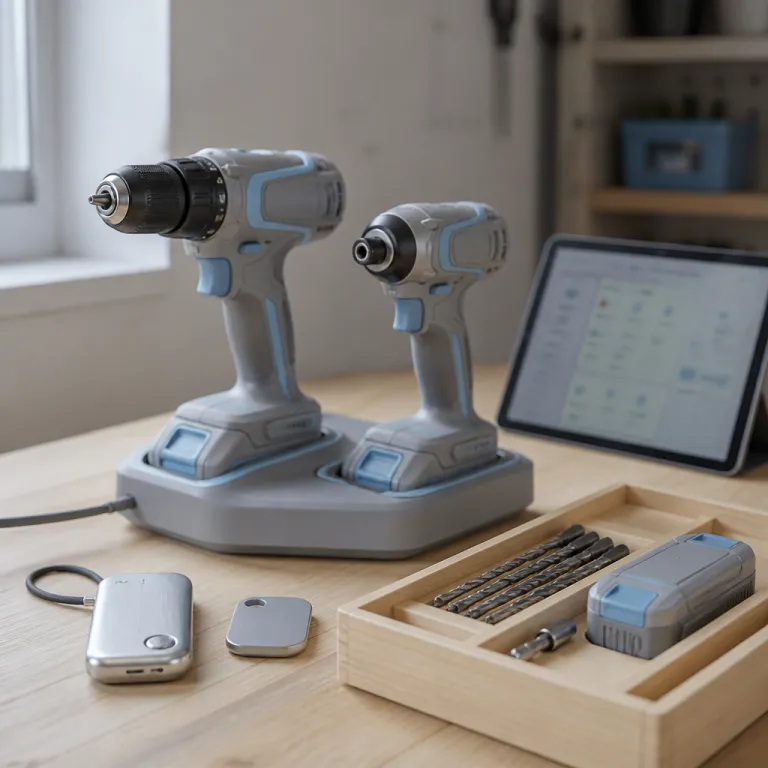
Smart drills as jobsite infrastructure, not just shiny gadgets
Connected drills like Milwaukee One‑Key and DeWalt Tool Connect sit at an awkward crossroads. Both brands pitch each Bluetooth‑enabled drill or impact driver as a precision instrument, but the real story is how these tools quietly become jobsite infrastructure. When you treat a cordless drill set as infrastructure, you stop asking whether the app is cool and start asking whether the equipment will still work when the phone dies.
- Think of a connected drill as a long‑term asset, not a disposable gadget.
- Milwaukee One‑Key emphasizes on‑tool control; DeWalt Tool Connect leans into inventory tracking.
- Both systems keep core profiles in the drill so it still works if the app or phone fails.
Milwaukee’s One‑Key system bakes control into the tool itself, so the app mainly serves as a programming and tracking layer rather than a permanent remote control. Once you push a custom profile to an enabled drill, the max settings for RPM, torque and trigger ramp‑up live in the tool’s memory, and you can cycle them with a mode button without opening the One‑Key app on site. That matters when your phone battery tanks in the cold and you still need a hammer drill or impact driver to sink Tapcons into a block wall before inspection.
DeWalt Tool Connect takes a different path, using the app more as an inventory manager and less as a fine‑tuning console. A Tool Connect drill or impact driver gives you some control over speed and brightness, but the real power is in the Tool Connect Tag system that you can bolt to almost any asset, including non‑DeWalt brands. For a property manager juggling mixed tools across buildings, that flexibility can outweigh Milwaukee’s deeper control of a single max‑torque profile.
Viewed from a homeowner’s perspective, a Bluetooth‑enabled drill from either platform can look like overkill. A side‑gig remodeler or handyman, though, lives in the middle ground where a few connected tools can prevent lost‑and‑stolen headaches and keep a small fleet organized without enterprise software. The question is not whether the Bluetooth tag or app features are impressive, but whether they address the specific pain of walking onto a job and realizing the only hammer drill you own rode off in someone else’s van yesterday.
Milwaukee’s connected lineup centers on the M18 Fuel platform, where One‑Key versions of the 2804 hammer drill and 2853 impact driver add radios and onboard memory. DeWalt answers with 20V Max XR models like the DCD997 hammer drill and DCF888 impact driver, which integrate Tool Connect directly into the handle and battery interface. Both ecosystems still run on standard lithium‑ion batteries, so your existing M18 or DeWalt 20V Max packs remain compatible even when the drill itself becomes a node in a tracking network.
That compatibility is crucial because the battery is still the most expensive consumable in any cordless drill set. When you buy into Milwaukee M18 or DeWalt 20V Max, you are really buying years of batteries, chargers and bare tools, not just one connected drill. Smart features only make sense if they respect that long battery‑life arc instead of forcing you into a separate line of enabled tools with orphaned packs.
On the Milwaukee side, the One‑Key app lets you set four custom modes for an impact driver, each with its own RPM ceiling, torque limit and trigger response. You can, for example, create a low‑impact mode for cabinet screws, a medium mode for structural screws and a high mode for lag bolts, then assign tools in your crew to those profiles so nobody strips out soft brass hardware. DeWalt’s Tool Connect app is less granular but still lets you tame the raw impact of a DCF888 so it behaves more like a precise fastening tool than a blunt instrument.
For tracking, both brands lean on Bluetooth and location data rather than GPS, which means the range of each tool is limited to roughly a house or small jobsite. The trick is that every phone running the Milwaukee or DeWalt app becomes part of a passive tracking network, quietly pinging any nearby tag or enabled tool and updating its last‑seen location. That is how a lost drill sometimes reappears on your map when a different crew member walks past it with the app open in their pocket.
From a journalist’s view, the quiet rise of connected drills is less about flashy marketing and more about slow, incremental integration. First came simple Bluetooth beacons, then came basic location logging, and now we see torque profiles and usage logs that can prove a tool was not abused before a warranty claim. The next step is not more app features, but better ways to connect inventory data with the messy reality of small contractors who still track half their tools on a whiteboard.
Torque profiles, stripped screws and what actually matters on site
On paper, the Milwaukee One‑Key vs DeWalt Tool Connect story is about data and control. On site, it is about whether the tenth deck screw on a frozen morning goes in clean or snaps the head off and costs you ten minutes. That gap between spec sheet and reality is where a connected drill or impact driver either earns its keep or becomes another forgotten app icon.
Milwaukee’s One‑Key hammer drill and impact driver let you cap torque and speed so the tool behaves consistently across different materials. You can program a low‑torque profile for pocket‑hole screws in the app, then push it to the drill so the trigger feels forgiving even when your hands are numb and you misjudge the material. That profile lives in the tool, not the phone, so the app is only needed when you want to tweak the ramp‑up or change how aggressively the impact mechanism engages.
DeWalt Tool Connect does not go as deep on torque curves, but it still lets you tame the raw power of a 20V Max XR impact driver. In practice, that means you can set a softer mode for finish hardware, then a stronger mode for structural screws, and switch between them with a button instead of guessing by ear. For a light pro who owns one main DeWalt Max drill and one impact driver, that kind of repeatable behavior matters more than chasing the absolute max torque rating on the box.
Both ecosystems use the same batteries as their non‑connected cousins, so you are not buying a separate battery platform just to get Bluetooth. Milwaukee’s M18 batteries slide onto One‑Key enabled tools exactly as they do onto a standard 2804 or 2853, and the runtime you get from a 5.0 Ah pack does not change in any noticeable way because a radio is sipping a little power in the handle. DeWalt 20V Max batteries behave the same way on a Tool Connect drill as they do on a plain DCD791, which keeps your tool lineup simple and your charging routine predictable.
Where connected drills really diverge from a standard kit is in how they log usage. Milwaukee lets you view basic usage data in the One‑Key app, including trigger pulls and overload events, which can help you address whether a tool is being abused or simply worn out. DeWalt’s app offers a lighter version of this, but still enough data to support a warranty conversation when a hammer drill fails suspiciously early.
For a small crew, that usage data turns into a quiet inventory manager, even if you never export a spreadsheet. You start to see which connected tools are doing most of the work, which batteries are aging faster and which crew member always seems to be holding the drill that overheats. Over a season, that view of your inventory can guide real decisions about when to rotate equipment or assign tools differently to balance wear.
There is also a safety angle that rarely makes the marketing copy but matters in the field. Milwaukee’s Precision and Auto‑Stop modes on certain One‑Key impact tools can cut power when a fastener seats, reducing the wrist‑twisting impact that comes from overdriving lag bolts or drilling through thin metal. DeWalt Tool Connect offers similar soft‑stop behavior on some models, and while it is not as configurable, it still helps prevent the kind of minor injuries that quietly erode a side‑gig contractor’s earning power.
Smart sockets and accessories are starting to echo this trend, and anyone building a cordless ecosystem around Milwaukee should pay attention to how hand tools integrate. A detailed review of why the Milwaukee socket set is a must‑have for cordless drill users shows how even passive tools can be chosen to complement the torque and speed profiles of your connected drills. When your sockets, bits and drills are all selected with the same impact and torque behavior in mind, you strip fewer fasteners and break fewer accessories.
For the homeowner who only owns one drill and a couple of batteries, all this can sound like over‑engineering. Yet the same electronic clutch logic that powers a flagship connected drill is already trickling down into non‑connected models, giving you better control even if you never install an app. The connected flagships are simply where those features get tested first before they become the quiet default in the next generation of plain tools.
Theft, tracking and the limits of Bluetooth fences
Theft is the unglamorous reason connected drills and tags exist. A single lost hammer drill hurts, but a pattern of missing tools can sink the margins of a small remodeling business. Connected platforms promise to turn every drill, impact driver and battery into a tagged asset that never truly disappears from your records.
Milwaukee’s approach builds the tag into the tool itself, so every One‑Key enabled drill broadcasts a Bluetooth signal that the app can hear within a modest range. When any phone running the Milwaukee app walks past that signal, the location data quietly updates in the cloud, giving you a last‑seen address and time stamp. You can then view that on a map, which is often enough to jog memories about which jobsite or truck the tool actually ended up on.
DeWalt Tool Connect splits the difference between integrated radios and external tags. A Tool Connect drill or impact driver has Bluetooth built in, but you can also bolt a rugged Tool Connect Tag onto ladders, compressors or even non‑DeWalt brands. For a property manager or small GC with mixed equipment, that flexibility means the same app can track everything from a Milwaukee saw to a generic generator.
In practice, both systems are only as strong as the tracking network around them. If your crew never installs the One‑Key or Tool Connect app, the Bluetooth beacons from your enabled tools will never be heard, and the location data will stay stale. The platforms work best in dense areas where many phones are running the apps, which is why a connected drill is more likely to ping in a city than on a remote rural build.
For a side‑gig contractor, the real value is often psychological rather than forensic. Knowing that a drill or other high‑value tool is tagged and visible in your inventory changes how casually people treat it, especially when they understand that the app will show who last had it on their phone. That quiet accountability can reduce petty losses more effectively than any single recovery story splashed across marketing materials.
There are limits, and you should walk into this with clear eyes. Bluetooth range is short, walls and vehicles block signals, and a determined thief who strips batteries and grinds off any visible tag will still beat the system. What you are really buying with a connected drill is not a LoJack for tools, but a better way to address the everyday chaos of misplaced equipment and forgotten batteries.
Cost is another hard edge that rarely gets discussed honestly. Connected versions of the same drill often cost noticeably more than their non‑connected siblings, and that premium stacks up fast when you outfit a full kit with multiple enabled tools and extra batteries. For example, typical street pricing often shows a One‑Key hammer drill and impact driver kit running $30–$60 higher than the equivalent non‑connected combo, with similar gaps on DeWalt Tool Connect kits versus standard 20V Max XR bundles.
That hybrid approach is where many light pros land after a few seasons. They keep a Milwaukee One‑Key hammer drill and an impact driver as their primary smart pair, then surround them with simpler tools that share the same batteries but skip the radios. The connected drills anchor the inventory manager and tracking network, while the rest of the lineup quietly benefits from the same chargers, packs and bit sets.
For homeowners, the theft argument is weaker unless you routinely leave tools in shared spaces or apartment basements. In that case, a single connected drill with a built‑in tag can still be worth the premium, especially if you lend tools to neighbors and want a record of where they last checked in. Just remember that no app will replace the basic habit of locking the truck and not leaving a bright yellow or red case sitting in plain view.
Dependency risk, app futures and what will actually last ten years
The uncomfortable question hanging over every connected drill is simple. What happens if the servers go dark or the app stops getting updates on your next phone? When your livelihood depends on a cordless drill set, you cannot afford to have core features trapped behind a fragile software layer.
Milwaukee has made one smart design choice here by storing critical profiles in the tool itself. Once you program a hammer drill or impact driver through the One‑Key app, the max RPM, torque and trigger behavior live in the onboard memory, so the tool will keep behaving the same even if the app will not launch on a future operating system. That means your carefully tuned deck‑screw profile or metal‑drilling mode survives long after the current version of the app disappears from the store.
DeWalt Tool Connect leans more on the app for configuration, but the basic modes you set are also stored in the drill, not streamed from the cloud. A DeWalt 20V Max XR Tool Connect drill will still cycle through its speed and brightness presets even if you never sign into the app again, which protects you from the worst kind of lock‑in. Where you lose out is on future firmware updates or new features that might require a living ecosystem to reach your enabled tools.
This is where the trickle‑down effect becomes your safety net. Features like electronic clutches, auto torque sensing and soft‑stop modes that debut on connected flagships are already appearing on non‑connected models across both brands. Even if the connected ecosystems stalled tomorrow, the core improvements in control and battery life would remain baked into the broader M18 and DeWalt Max lineups.
For a buyer trying to choose a platform, the smarter question is not whether the app will exist forever, but whether the underlying batteries and chargers will. Milwaukee’s M18 and DeWalt’s 20V Max have both proven durable over multiple generations of tools, with new drills and impact drivers continuing to accept older batteries. That continuity matters more than any single Bluetooth feature, because it determines whether your cordless setup will still be viable when your current phone is long gone.
There is also a cultural risk in leaning too hard on data and dashboards. When every connected drill session generates usage and location logs, it is tempting for managers to micromanage instead of trusting experienced hands. The best use of that data is to address clear problems, like chronic overloading of a specific tool or suspicious patterns of lost‑and‑stolen incidents, not to second‑guess every trigger pull from a distance.
For the individual contractor, the healthiest stance is pragmatic. Use the inventory‑manager features to assign tools and keep track of batteries, but do not build your entire workflow around the assumption that the digital inventory will always be perfectly accurate. Keep a simple manual backup, whether that is a spreadsheet, a whiteboard or even labeled cases, so a dead phone or server outage does not stop work.
Long‑term trust still comes from the same old places. It is not the marketing copy about enabled tools or the promise of a global tracking network, but the way a drill feels after thousands of holes and the way a battery behaves on a freezing roof at dawn. If you want a sense of how these platforms age, look at long‑haul reviews such as an inside‑the‑Makita XT269M teardown after extended remodel‑crew abuse, which show how chucks, triggers and packs actually wear under real work.
In the end, connected features should be treated as a bonus layer on top of a fundamentally solid cordless platform. Choose between Milwaukee and DeWalt first on the strength of their core drills, batteries and service, then decide whether a One‑Key or Tool Connect drill or two fits your workflow. The real test is not the spec sheet or the app screenshot, but whether the tool still earns its place in your bag when the only thing that matters is driving that last screw before the rain hits.
Key figures on connected drills and cordless platforms
- Market research from major power tool analysts such as The NPD Group and IDC indicates that connected and Bluetooth‑enabled tools still represent a small but fast‑growing slice of the professional cordless segment, with estimates often placing them in the single‑digit percentage range of total drill and impact‑driver sales, yet growing several times faster than non‑connected models over recent years. These figures are drawn from recurring category‑level reports on professional power tools and cordless platforms.
- Industry reports on tool theft, including surveys from trade groups like the National Equipment Register and insurance‑industry studies, consistently suggest that contractors can lose thousands of dollars per year in missing equipment. While Bluetooth tracking cannot eliminate theft, early adopter surveys from large rental fleets and multi‑crew contractors indicate that basic location data and tagging can reduce unaccounted‑for losses by a noticeable margin, especially when every crew runs the app and keeps tags active.
- Battery platform stability has become a key purchasing factor. Both Milwaukee M18 and DeWalt 20V Max have maintained backward compatibility across many generations of tools and batteries, which means that a drill or hammer drill bought today is likely to share packs with future impact drivers and saws for many years, protecting the long‑term value of a cordless drill‑set investment. This continuity is documented in manufacturer spec sheets and platform roadmaps.
- Runtime tests conducted by independent reviewers and tool‑testing labs repeatedly show that the added power draw from a Bluetooth radio in a connected drill is minimal compared with the overall capacity of a modern 5.0 Ah lithium‑ion pack. In controlled tests where standard and connected versions of the same model are run side by side, most users do not see a meaningful difference in the number of holes or screws per charge, a finding echoed in long‑form reviews and lab summaries.
- Adoption of inventory‑manager apps remains uneven among small contractors. Surveys of light pros and small GCs show many using only a subset of features such as basic assign‑tools tracking and last‑seen location views, while larger firms with dozens or hundreds of enabled tools are more likely to integrate digital inventory data into broader asset‑management systems, maintenance schedules and job‑costing reports. These usage patterns show up repeatedly in trade‑press case studies and user interviews.