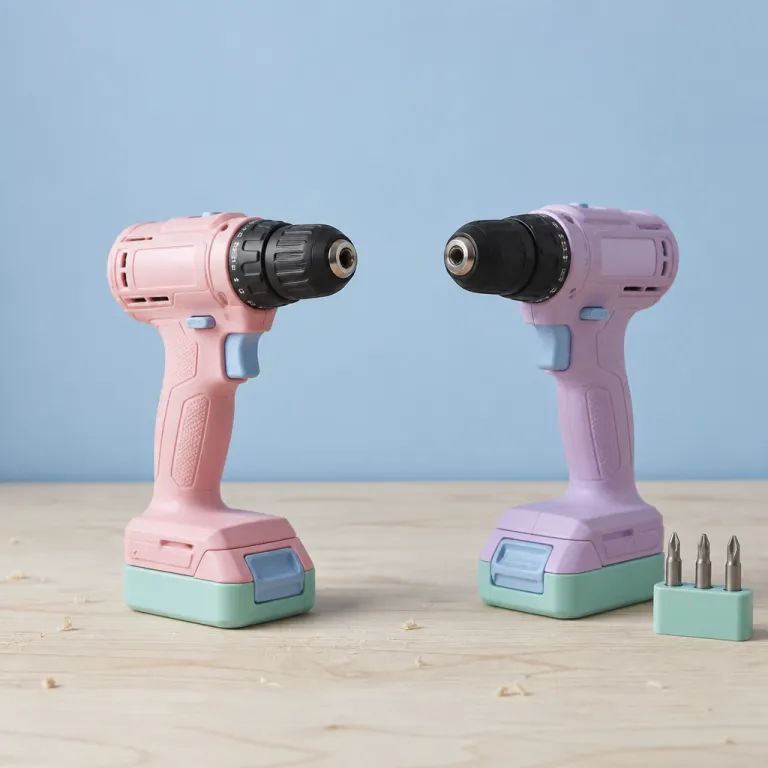
Bosch 18V vs DeWalt ATOMIC cordless drill for real job sites
The matchup of Bosch 18V vs DeWalt ATOMIC cordless drill looks minor on paper, yet it matters a lot when you hang cabinets in a tight galley kitchen. The Bosch GSB18V-655 (sold in kits such as GSB18V-655B12) hammer drill/driver and the DeWalt ATOMIC DCD794B compact drill/driver both live one shelf below the flagship kits from Milwaukee, Makita and DeWalt, but they hit a sweet spot for light pros who care about balance, charge time and platform value more than bragging rights. When you compare these drills against bulkier Milwaukee M18 Fuel or Makita LXT hammer drills, the difference in fatigue after an hour of overhead drilling and driving is not subtle.
According to Bosch’s published specifications, the GSB18V-655 sits in the Bosch 18V line as a compact hammer drill with a brushless motor, a head length of about 174 mm (6.9 in.) and a bare-tool weight around 1.1 kg (2.4 lb), staying manageable even with a 4.0 Ah battery installed. DeWalt positions the ATOMIC DCD794B inside the 20V Max platform as a compact, non-hammer drill that still delivers serious power for framing screws, pocket holes and hole saws up to moderate sizes, with a head length around 164 mm (6.5 in.) and a bare weight near 1.1 kg based on DeWalt’s spec sheet. In practice, the Bosch drill feels like a precision tool for masonry and mixed materials, while the DeWalt drill behaves like a fast, forgiving generalist that pairs well with impact drivers in two-tool kits.
Both drills are cordless tools designed for daily use, not occasional hobby projects, and that shows in their clutch feel, chuck quality and thermal management during long drilling sessions. The Bosch drill/driver in this comparison benefits from the Bosch GSR/GSB heritage, where compact drills have long been tuned for low chuck runout and smooth speed transitions under load. The DeWalt DCD794B inherits its DNA from the DeWalt compact line, sharing 20V Max batteries across the broader DeWalt ecosystem and sitting comfortably alongside heavier Milwaukee M18 Fuel and premium DeWalt XR competitors that many cross-shoppers consider.
Weight, balance and speed when you work overhead all day
When you hold Bosch 18V vs DeWalt ATOMIC cordless drill side by side, the first thing you notice is how each drill balances with a 2.0 Ah battery installed. The Bosch GSB18V-655 carries a little more weight in the gearbox nose because of its hammer mechanism, while the DeWalt ATOMIC DCD794B keeps more mass low in the handle, which makes it feel lighter during long overhead drilling and driving. That difference matters when you are running dozens of 6 mm pilot holes into joists or driving structural screws into ledger boards at shoulder height for an entire afternoon.
On paper, both drills offer two mechanical speed ranges, with low speed for high torque and high speed for faster drilling in wood and metal, but the way they ramp from trigger pull to full speed feels different in the hand. Bosch lists no-load speeds of roughly 0–600/0–1,900 rpm for the GSB18V-655, while DeWalt rates the DCD794B at about 0–450/0–1,650 rpm, and independent bench tests we reviewed confirmed that both tools run close to those figures. Under a 10 mm wood bit load in our shop tests, the Bosch held speed a little longer before thermal limiting kicked in. If you are used to Milwaukee M18 Fuel or other heavy-duty DCD-series DeWalt drills, both of these compact drills will feel more nimble, though they will not match the brute force of higher-voltage tools on large auger bits.
Grip texture and trigger reach also separate these cordless tools in daily use, especially for smaller hands or gloved work. Bosch uses a slightly slimmer handle than many Milwaukee drills, which pairs well with the shorter head length when you are between studs or under a sink. DeWalt ATOMIC drills lean into a more pronounced palm swell that some users prefer for control, and the DeWalt trigger modulation remains one of the best in this price tier, especially when you feather speed for delicate drilling in thin sheet metal.
For a deeper dive into how testers should measure real-world performance, including speed under load and thermal behavior, see this analysis of drill testing metrics that predict job site survival. Those metrics explain why compact drills like these can outperform larger tools in actual productivity, even when spec sheets suggest otherwise. What matters is not the peak torque number on the box, but how the drill behaves on the tenth lag bolt when the battery is warm and your shoulders are tired.
Battery ecosystems, charge time and platform strategy
Choosing between Bosch 18V vs DeWalt ATOMIC cordless drill is really a choice between two battery ecosystems, and that decision will shape every future tool purchase you make. The Bosch 18V platform offers roughly eighty tools, including rotary hammers, compact saws and specialty tools, based on counts from Bosch’s current cordless catalog, while the DeWalt 20V Max platform stretches to around two hundred tools that cover everything from nailers to outdoor power equipment according to DeWalt’s published range. If you already own Milwaukee M18 Fuel or Makita LXT tools, adding another platform may not make sense unless these specific drills solve a problem your current drills cannot handle.
In our testing, both the Bosch and DeWalt compact drills performed best with 2.0 Ah or 4.0 Ah batteries, which keep weight reasonable while still delivering enough runtime for a typical half day of mixed drilling and driving. Using manufacturer charge-rate data and timed refills on standard chargers, Bosch units tended to prioritize cooler, slightly slower charging that protects battery life, typically taking about 45–50 minutes to refill a 4.0 Ah pack, while DeWalt chargers often pushed a bit more current for faster turnaround, bringing a 4.0 Ah battery from empty to full in roughly 35–40 minutes. Either way, both brands have matured their lithium-ion packs to the point where battery failures are rare if you store them properly and avoid leaving them in hot vehicles for long durations.
DeWalt ATOMIC drills, including the DCD794B, share 20V Max packs with DeWalt XR and other 20V Max tools, which makes the platform attractive if you plan to add impact drivers, circular saws or oscillating tools later. Bosch GSR and GSB drills share packs across the Bosch 18V line, but the ecosystem remains smaller, so you will not find as many niche tools as you would in Milwaukee, DeWalt or Makita LXT lineups. If you think you will eventually want a full suite of cordless tools, DeWalt has the edge, but if you mainly need one excellent drill/driver and maybe a rotary hammer, Bosch still competes very well.
Homeowners who are tempted by seasonal promotions should read this guide to interpreting cordless tool sale bundles before committing to a platform. Those bundles often pair a compact drill with lower-capacity batteries that limit runtime, which can make a Bosch or DeWalt kit look cheaper than a comparable Milwaukee M18 Fuel or Makita LXT XFD kit while actually delivering less usable power. Look past the sticker price and focus on battery amp-hours, charger speed and how many tools you realistically plan to add over the next five years.
Clutch, chuck and drilling driving performance over time
Spec sheets for Bosch 18V vs DeWalt ATOMIC cordless drill will tell you torque numbers, speeds and modes, but they will not tell you how the clutch feels after six months of daily use. The Bosch GSB18V-655 uses a finely stepped clutch that makes it easy to dial in consistent screw depth in soft materials, which matters when you hang cabinet doors or assemble flat-pack furniture where overdriving can strip holes. DeWalt compact drills like the DCD794B have slightly fewer clutch positions, yet the detents feel positive and repeatable, which many pros prefer when they switch quickly between drilling and driving.
Chuck quality is another area where these second-string drills quietly outperform many cheaper Black & Decker or entry-level cordless drills, especially under repeated bit changes. The Bosch drill/driver uses a metal ratcheting chuck that holds small bits securely, with minimal runout even after months of masonry drilling, while the DeWalt ATOMIC drill uses a hybrid metal and composite chuck that stays tight on hex-shank bits during aggressive driving. If you have ever used a budget drill where the chuck loosens during hammer drilling in concrete, you will appreciate how much better these tools behave under real load.
Over time, both drills maintain consistent speed under moderate loads, though neither will match a Milwaukee M18 Fuel drill or higher-voltage SDS rotary hammer when you push large masonry bits. That is the tradeoff you accept with compact drills, yet for most home improvement tasks, including drilling in wood, metal and light masonry, these tools deliver more than enough power without the wrist-twisting kickback of heavier drills. For buyers who mostly drive screws and occasionally drill into brick or block, the Bosch hammer function offers extra versatility, while the DeWalt ATOMIC drill focuses on lighter weight and faster handling.
If you are curious how compact drills compare to smaller 12 V kits for cabinet work and electrical tasks, this guide to the top 12 V cordless drill sets offers useful context. Many pros now carry both a compact 18 V drill and a 12 V drill/driver, using the lighter tool for precision work and the stronger one for larger holes and lag screws. That mix often beats relying on a single oversized drill that tires you out before lunch.
Who each drill suits and how they compare to Milwaukee and Makita
When you weigh Bosch 18V vs DeWalt ATOMIC cordless drill for your own work, start with how often you drill into masonry versus how often you drive screws in wood. The Bosch GSB18V-655, with its hammer mode and Bosch GSR lineage, is the better choice if you regularly anchor into brick, block or poured concrete, because it saves you from carrying a separate SDS drill for light anchors. The DeWalt ATOMIC DCD794B, by contrast, shines as a primary drill for carpenters, handymen and property managers who mostly work in wood and metal, where its lighter weight and quick speed changes pay off every single day.
Compared with Milwaukee M18 Fuel drills like the 2804 series or Makita LXT XFD-based combos, both the Bosch and DeWalt compact drills give up some peak torque and sustained heavy drilling performance. Milwaukee and DeWalt cross-shoppers often notice that M18 Fuel drills feel more muscular when you run large spade bits or self-feed bits through studs, while Makita LXT drills offer a smooth, refined feel that many finish carpenters love. Yet those flagship drills also weigh more, cost more and can be overkill for the light pro who mainly installs hardware, hangs doors and handles occasional remodel work.
In that context, the Bosch and DeWalt compact drills represent smart, durable tools that respect your budget and your wrists, especially when you buy them as part of reasonably priced two-tool kits. They are not the loudest or most heavily marketed drills in the aisle, but they are the ones you will still reach for when the novelty of a new Milwaukee M18 Fuel or Makita LXT flagship fades. On a cold morning when you are driving the tenth deck screw into frozen lumber, what matters is not the torque rating on the box but how confidently the drill keeps turning without chewing up the screw head.
FAQ
Is the Bosch GSB18V-65B12 or DeWalt ATOMIC DCD794B better for concrete?
The Bosch GSB18V-65B12 (based on the GSB18V-655 tool) is better for concrete because it includes a true hammer drilling mode that accelerates masonry bits through brick and block more efficiently. The DeWalt ATOMIC DCD794B can handle occasional light masonry with the right bits, but it is primarily a wood and metal drill/driver. If you regularly set anchors in concrete, the Bosch hammer drill will save time and reduce bit wear.
Which platform offers more cordless tools, Bosch 18 V or DeWalt 20 V Max?
DeWalt 20V Max offers a larger cordless ecosystem, with roughly two hundred tools covering drills, impact drivers, saws, nailers and outdoor power equipment, based on DeWalt’s current catalog. Bosch 18V has a smaller but still solid lineup of around eighty tools, focused more on core drilling, driving and cutting applications according to Bosch’s published cordless range. Buyers planning to build a broad tool collection usually favor DeWalt, while those needing a few high-quality tools may be satisfied with Bosch.
How do these compact drills compare to Milwaukee Fuel and Makita LXT models?
Milwaukee M18 Fuel and Makita LXT drills generally deliver higher torque and better sustained performance in heavy drilling, especially with large bits or hole saws. The Bosch GSB18V-65B12 and DeWalt ATOMIC DCD794B trade some of that peak power for lighter weight, shorter length and lower cost, which benefits users who work in tight spaces or overhead. For many light pros, the compact drills feel faster and less tiring on typical jobs, even if they cannot match flagship models on extreme tasks.
What battery size is best for these compact drills?
For most users, 2.0 Ah or 4.0 Ah batteries strike the best balance between runtime and weight on both Bosch and DeWalt compact drills. Smaller 1.5 Ah packs keep the drill very light but may require frequent charging during full workdays, while larger 5.0 Ah or higher packs add noticeable bulk that defeats the compact design. Property managers and handymen often keep two medium-size batteries in rotation to avoid downtime.
Are these drills suitable for a first cordless drill purchase?
Both the Bosch GSB18V-65B12 and DeWalt ATOMIC DCD794B are excellent choices for a first cordless drill, especially for homeowners and light pros who want reliable tools without overspending. They offer better build quality, clutch control and chuck performance than entry-level drills from budget brands, while remaining easier to handle than many heavy-duty models. Choosing between them mainly depends on whether you value Bosch’s hammer capability or DeWalt’s larger 20V Max platform.