Why DeWalt 20V Max compatible tools matter once you own a kit
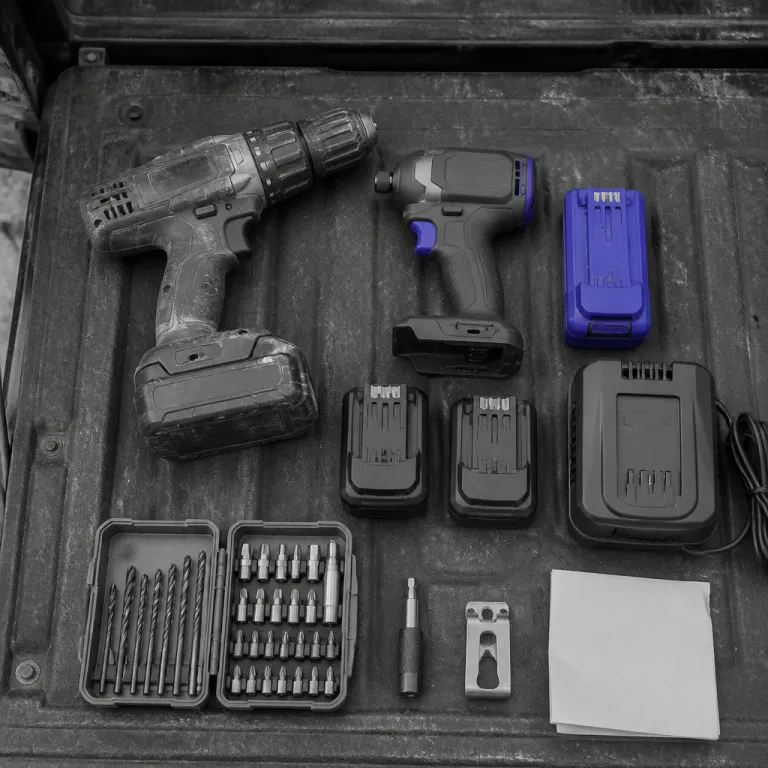
If you already own a DeWalt cordless drill set, your next purchase is not just a new tool, it is a platform decision that locks in future spending. The DeWalt 20V Max ecosystem now covers well over two hundred cordless power tools, according to recent manufacturer catalogs and the 2024 DeWalt product range overview, so every added drill, saw or cordless impact driver either saves you money through shared batteries or exposes the limits of your original combo kit. Think of each new power tool as a test of how far your existing Max battery and charger can stretch before you are tempted by another brand’s shiny product on Amazon or at the local shop.
Most DIYers start with a basic DeWalt combo kit that includes a drill driver, an impact driver and two small batteries, then they slowly add bare tools as projects grow. Those bare battery tool purchases are where DeWalt 20V Max compatible tools shine, because you skip the cost of extra battery-and-charger bundles and focus on the specific tool you actually need for the next month’s work. When you already bought into DeWalt batteries, the price gap between a bare compatible DeWalt circular saw and a full kit from a rival brand can easily reach thirty to forty percent, especially once you factor in delivery fees and duplicate chargers.
The catch is that not every Max cordless tool behaves the same when powered by your original compact DeWalt battery packs. High draw tools like a cordless impact wrench, a tire inflator or a hedge trimmer will expose weak batteries quickly, while compact brushless drills sip power and feel fine on 2 amp hour packs. Before you add more DeWalt 20V Max compatible tools, you need to understand which tools DeWalt does best, where the batteries become the bottleneck and when a battery adapter or even a different platform might make more sense.
The bare tool advantage and how to read DeWalt kit pricing
Once you own at least one DeWalt battery and a working charger, bare tools become your best value play. A typical DeWalt 20V Max brushless drill sold as a bare tool often costs thirty to forty percent less than the same product bundled in a combo kit with two small batteries and a charger, even when the kit looks tempting on Amazon with flashy options featured in the listing. That price difference compounds every time you add more compatible 20V Max tools, because you are no longer paying repeatedly for chargers you do not need and low capacity batteries you will outgrow.
Look closely at the box or online description before you buy any tools DeWalt offers in multiple formats, because the words “tool only” or “bare tool” are what signal the real savings. If you see a DeWalt cordless impact driver advertised at a bargain price but it quietly includes a 1.3 amp hour Max battery and a slow charger, that is not a bargain for someone who already bought a better combo kit last July and has stronger batteries at home. In that case, a bare compatible DeWalt impact driver body with no extra battery adapter or charger is the smarter choice, even if the shelf price looks higher at first glance.
There is one exception where a fresh tool combo or combo kit can still make sense for an established DeWalt owner. When you are stepping up into heavier power tools like a ring anvil impact wrench, a larger circular saw or a high output cordless impact driver, some premium kits bundle higher capacity Max batteries that you actually need and a faster charger that cuts downtime. In those cases, compare the combined price of buying two separate Max cordless batteries and a bare power tool against the kit, then factor in any seasonal shop promotions or free delivery offers before you decide.
For perspective on how other brands structure value kits, it can help to read a detailed miter saw bundle review such as this lightweight 10 inch saw analysis, then apply the same scrutiny to DeWalt pricing. The logic is similar across brands, but DeWalt 20V Max compatible tools give you more flexibility because you can mix compact and high output batteries on the same platform. That flexibility is only an advantage if you resist the urge to rebuy chargers and tiny DeWalt batteries every time a shiny yellow box shows up in a weekend sale.
Core DeWalt 20V Max tools worth adding first
After a drill driver, the single most transformative upgrade in the DeWalt 20V Max compatible tools lineup is a good impact driver. A compact brushless impact driver like the DCF887 or the DCF787D1 kit delivers far more real world driving power than a basic drill, especially when you are sinking long structural screws into deck framing or stubborn ledger boards. If you already own a DeWalt battery and charger, buying the impact driver as a bare tool keeps the price low while still giving you pro level torque in a small cordless package.
For readers who want to understand how a 20 volt impact driver behaves under load, a focused test such as this DCF787D1 impact driver review shows how much work you can expect from a single Max battery. In typical third party testing, a 2 amp hour pack drives roughly 150 to 200 medium construction screws on a compact impact driver, while a 5 amp hour battery often pushes past 400 to 450 screws before needing a recharge, which aligns with simple watt hour calculations. That kind of data matters when you are deciding whether your existing 1.5 amp hour DeWalt batteries are enough or whether you should budget for at least one 4 amp hour pack before the next big project.
Beyond drivers, three DeWalt 20V Max compatible tools consistently earn a place in a homeowner’s arsenal. A cordless oscillating multi tool handles trim cuts, drywall patches and awkward plunge cuts that no other power tool can reach, while a 165 millimeter circular saw turns sheet goods and deck boards into a one person job. Rounding out the list, a small LED work light or flashlight powered by any compatible DeWalt battery sounds boring, yet it is the tool you will grab every month when a breaker trips, a pipe drips or a tire inflator session runs long in the driveway.
ATOMIC, standard 20V Max and FLEXVOLT: choosing the right DeWalt line
DeWalt splits its cordless lineup into several overlapping families, and understanding them helps you pick the right DeWalt 20V Max compatible tools without wasting money. The standard 20V Max line covers most bread and butter power tools, from drill drivers and impact drivers to grinders, circular saws and a hedge trimmer or two, all running on the same slide style Max battery packs. ATOMIC branded tools are still 20V Max cordless models, but they shrink the tool bodies and often the motors to prioritize compact size and lower weight over absolute power.
For a DIY homeowner who mainly drives screws, drills pilot holes and hangs cabinets, an ATOMIC brushless drill or impact driver paired with a 2 amp hour DeWalt battery feels nimble and more than strong enough. Those compact tools DeWalt offers under the ATOMIC label slip into tight joist bays, overhead soffits and cramped mechanical rooms where a full size power tool becomes a knuckle buster after the third hour. The trade off is that ATOMIC saws and grinders can feel underpowered on thick stock, so if you plan to rip 50 millimeter deck boards all weekend, a standard 20V Max circular saw with a 5 amp hour Max battery is the better choice.
FLEXVOLT batteries complicate the picture, because they are physically compatible DeWalt packs that can run at 20 volts on regular tools or 60 volts on special high power tools. For an existing DeWalt owner, the key is that a FLEXVOLT pack acts like a very large Max battery when clipped into ordinary DeWalt 20V Max compatible tools, giving your circular saw or cordless impact wrench a noticeable boost in runtime. That said, FLEXVOLT batteries are heavier and more expensive, so they make sense mainly if you already own or plan to own at least one 60 volt tool combo, such as a big miter saw or a serious outdoor hedge trimmer that can justify the extra weight and price.
When your batteries are the bottleneck, not the tool
Many DeWalt owners blame the tool when a cut stalls or a lag screw refuses to seat, but in testing the weak link is often the battery. The smallest 1.3 and 1.5 amp hour Max cordless packs that come in entry level combo kits are fine for drilling pilot holes in pine, yet they sag badly when you bolt a circular saw, a cordless impact wrench or a ring anvil style high torque driver on top. If your DeWalt 20V Max compatible tools feel underwhelming, the first upgrade should usually be a higher capacity DeWalt battery, not a whole new tool.
Think about how long your work sessions run and what kind of power draw each battery tool demands, then size your batteries accordingly. A compact brushless drill or impact driver can run happily on a 2 amp hour pack for most household tasks, while a grinder, a hedge trimmer or a tire inflator that runs continuously for several minutes benefits from at least a 4 or 5 amp hour Max battery. For all day framing or deck building, two 5 amp hour DeWalt batteries and a fast charger give you a practical rotation where one pack works while the other charges, keeping your cordless tools moving without forced coffee breaks.
Battery adapters enter the conversation when you already own another platform and wonder whether a third party adapter can let you run those packs on compatible DeWalt tools. Technically, some adapters allow a Milwaukee or Makita pack to power a DeWalt battery tool, but they introduce extra failure points and can void warranties, so I do not recommend them for mission critical power tools. If you must experiment with a battery adapter for a low risk tool like a work light, treat it as a stopgap, not a permanent strategy, and remember that a clean, well matched DeWalt battery and charger pair will always give your tools DeWalt lineup the most reliable performance.
For readers comparing how different cordless platforms handle sustained loads, a detailed combi drill test such as this cordless combi drill review shows how battery capacity and charger speed shape real world productivity. Apply the same lens to your DeWalt 20V Max compatible tools, and you will quickly see whether your frustration comes from the tool design or from asking a tiny pack to do a big pack’s job. Once you fix the battery gap, many tools you thought were weak suddenly feel like the power tools you expected when you first bought into the yellow platform.
When to stay loyal to DeWalt and when to look elsewhere
Platform loyalty makes sense as long as the tools you need exist in the DeWalt 20V Max compatible tools catalog and perform competitively for the price. For core categories like drill drivers, impact drivers, oscillating tools, circular saws and mid torque cordless impact wrenches, DeWalt sits comfortably in the top tier, especially when paired with modern brushless motors and decent Max batteries. In those lanes, sticking with compatible DeWalt tools and buying bare bodies to leverage your existing DeWalt batteries is almost always the smartest financial move.
There are niches where DeWalt’s 20 volt lineup feels less compelling, and that is where it can make sense to break platform loyalty. If you need a hyper compact ring anvil impact wrench for under car work, or a specialty tire inflator with digital presets and automatic shutoff, sometimes another brand’s product simply performs better or costs less for the same power. In those cases, you weigh the hassle of adding another charger to your wall against the benefit of a tool that DeWalt does not quite nail, and you decide whether one extra cord in the garage is worth the performance gain.
When you compare a DeWalt tool against a rival, ignore marketing claims and focus on measurable factors like torque ratings, no load speed, battery compatibility and total kit price including battery-and-charger bundles. Check whether the competing tool uses a brushless motor, what size Max cordless battery it ships with and how long the warranty lasts, then ask whether your existing DeWalt 20V Max compatible tools already cover eighty percent of that job. In the end, the right choice is not the highest number on a box, but the tool that still drives the tenth deck screw at a frozen six a.m. without making you regret what you bought last July.
Key figures for DeWalt 20V Max owners expanding their toolkit
- DeWalt’s 20V Max platform supports more than 200 cordless power tools, giving existing owners a wide range of compatible tools before they ever need to consider a second battery system, according to manufacturer catalogs and product guides published by Stanley Black & Decker in 2023 and 2024.
- Independent pricing snapshots by Consumer Reports and similar testing organizations have found that bare tools typically cost 30 to 40 percent less than equivalent kits that include small batteries and chargers, which strongly favors DeWalt 20V Max compatible tools for users who already own multiple packs.
- High capacity 5 amp hour DeWalt 20V Max batteries can deliver roughly double the runtime of 2 amp hour packs on the same tool, based on simple watt hour calculations and field tests, which is especially noticeable on circular saws and grinders that draw continuous power.
- In typical runtime testing, a compact 20V Max circular saw running on a 2 amp hour pack may give around 8 to 12 minutes of continuous cutting in plywood, while a 5 amp hour battery under the same conditions often stretches that to roughly 20 to 25 minutes, depending on blade condition and material.
- FLEXVOLT batteries are backward compatible with 20V Max tools and can increase runtime significantly, but they weigh more and cost substantially more than standard Max batteries, so they are best reserved for heavy duty tools or mixed 20V and 60V setups.
- Stanley Black & Decker, DeWalt’s parent company, manufactures a large share of its tools in China, and U.S. tariffs of up to roughly 25 to 34 percent on some imported tools, as reported in trade press and government tariff schedules, can influence retail pricing and seasonal discounts for DeWalt 20V Max compatible tools.
FAQ about expanding with DeWalt 20V Max compatible tools
Can I use any DeWalt 20V Max battery in any 20V Max tool ?
All standard DeWalt 20V Max batteries are physically compatible with all 20V Max tools, so you can swap packs freely across drills, impact drivers, saws and lights. The main difference is runtime and peak performance, because higher capacity packs hold more energy and sag less under heavy loads. For demanding tools like circular saws or impact wrenches, a 4 or 5 amp hour pack is strongly recommended.
Are ATOMIC DeWalt tools as powerful as regular 20V Max models ?
ATOMIC tools prioritize compact size and lower weight, so they are usually slightly less powerful than DeWalt’s full size 20V Max brushless models in the same category. For drilling, driving and light cutting, most DIYers will not notice the difference, and the smaller footprint is a real advantage in tight spaces. For heavy ripping, grinding or large diameter hole boring, a full size 20V Max or FLEXVOLT tool is the better choice.
When should I upgrade my DeWalt batteries instead of buying a new tool ?
If your tools slow down quickly, stall under moderate load or force you to swap packs every few minutes, the batteries are probably the bottleneck. Upgrading from 1.3 or 1.5 amp hour packs to 4 or 5 amp hour batteries often transforms the same tool into a far more capable performer. This is especially true for saws, grinders and high torque impact drivers that draw continuous current.
Is it safe to use third party battery adapters with DeWalt tools ?
Third party battery adapters that let you run other brands’ packs in DeWalt tools exist, but they introduce extra electrical and mechanical failure points. They can void tool warranties and may not include the same safety protections as original equipment. For critical work or expensive tools, it is safer to stick with genuine DeWalt batteries and chargers.
When does it make sense to add a second cordless platform ?
Adding a second platform makes sense when DeWalt does not offer a tool you need, or when a competitor’s model is clearly better in performance, ergonomics or price for that specific category. Examples include ultra compact automotive impact wrenches, specialty nailers or advanced tire inflators where another brand leads. In those cases, accepting one extra charger on the wall can be worth the gain in capability.