Summary
Editor's rating
Value: where this saw actually makes sense
Design: light, simple, and a bit rough around the edges
Comfort and ease of use: light and simple, with a few quirks
Durability and build: decent for the price, not bulletproof
Performance: cuts well, but it’s not a high-end trim saw
What you actually get with the C10FCG2
Pros
- Lightweight and easy to carry at around 24 lbs, good for solo work and jobsite hopping
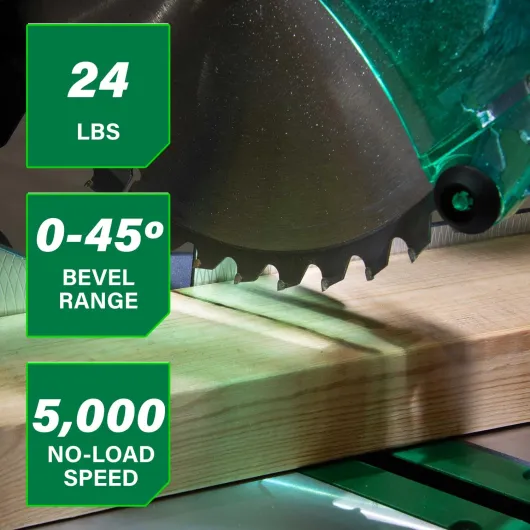
- Strong 15-amp motor with up to 5,000 RPM, handles 2x lumber and trim without bogging down
- Good price-to-performance ratio with a 5-year warranty and generally accurate cuts out of the box
Cons
- Dust collection is weak; a lot of sawdust ends up on the table and floor even with the bag
- Stock 40T blade is just average for finish work and may cause some tear-out on nicer trim
- Single bevel and non-sliding design limit flexibility for wider boards and more complex cuts

Specifications
View full product page →| Brand | Metabo HPT |
A budget miter saw that actually holds up
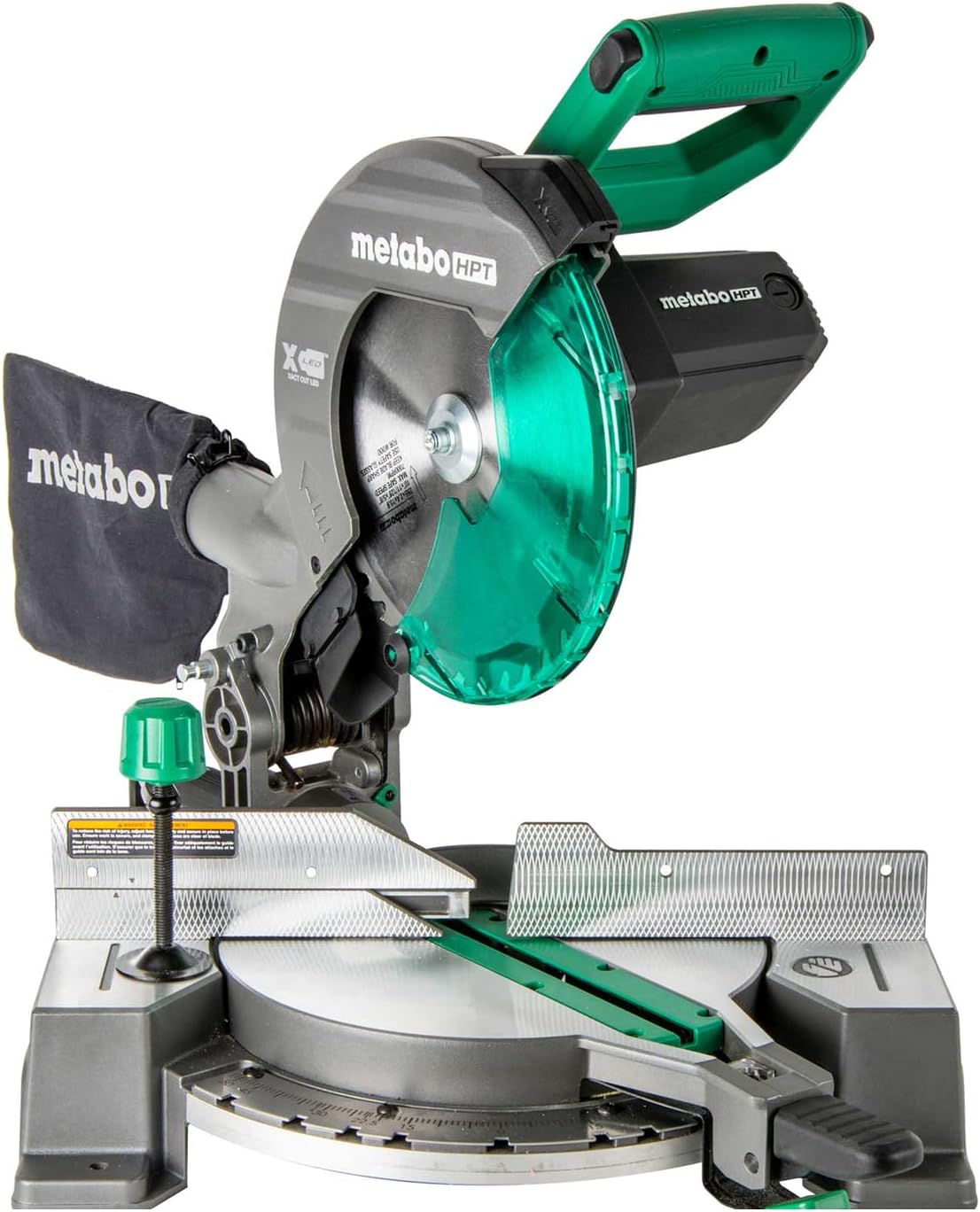
I’ve been using the Metabo HPT 10-Inch Single Bevel Compound Miter Saw (C10FCG2) as my main saw for smaller projects for a few weeks now. I bought it as a cheaper, lighter alternative to dragging my heavier sliding saw around. My expectations were pretty simple: it needed to cut 2x4s, trim, and basic framing accurately enough that I didn’t have to fight it on every cut. Nothing fancy, just something that wouldn’t slow me down.
In practice, this thing is very much a “grab-and-go” saw. At about 24 pounds, I can carry it one-handed with a board or toolbox in the other, which is a big plus when you’re bouncing between rooms or jobs. I used it for baseboards, some door trim, and a small outdoor bench project, and it handled all that without complaining. No weird bogging down, no burning smell, even with repeated cuts in pine and a bit of hardwood.
It’s not perfect though. The stock 40T blade is fine for rougher carpentry and basic trim, but if you’re picky about super clean edges on expensive molding, you’ll probably want to swap it for a better blade. Also, the dust collection is pretty weak. Even with the bag on, I still had a decent pile of sawdust on the table and floor after a session. It’s not worse than most cheap miter saws, but don’t expect a clean shop from just the bag.
Overall, the first impression is simple: it’s a straightforward saw that feels more solid than the price suggests, but you can tell where they saved money—mainly the blade, the dust setup, and some of the fit and finish. If you’re doing home projects or lighter pro work and want something that just works without overthinking it, it’s a pretty solid option. If you expect pro-level features and zero quirks, you’ll be annoyed in a few spots.
Value: where this saw actually makes sense
Price-wise, the Metabo HPT C10FCG2 sits in that budget to mid-range spot where you’re not paying premium money but still getting a brand-name tool with a decent track record. For what it costs, you get a 15-amp motor, a 10-inch blade, single bevel, 0–52° miter both ways, and a 5-year warranty. That’s a pretty solid package if you compare it to some no-name saws that don’t offer much support or long-term backing.
In practice, the value shows up in how much it actually lets you do without upgrades. Out of the box, you can handle: baseboards, door and window trim, casing, basic framing cuts, small furniture projects, and light outdoor builds like benches or small sheds. The stock blade is “okay but not great.” I’d budget for a better blade if you’re going to do a lot of finish work. But even with that extra cost, you’re still in a reasonable price range for what you get.
Compared to bigger sliding miter saws, you obviously lose crosscut capacity and some convenience. But those saws weigh a lot more and cost quite a bit more. If you mostly work with standard 2x material and typical trim sizes, this lighter, cheaper saw makes more sense. I’d rather beat up a saw like this on dirty jobsite lumber than risk a much more expensive one, to be honest.
Overall, I’d call the value “good” but not mind-blowing. You’re not getting luxury features, but you’re also not paying for them. You get a reliable, simple saw that, based on my use and the large number of positive reviews, will handle most home and light professional projects without drama. If your budget is tight and you need a functional miter saw that you won’t be scared to toss in the truck, this one fits that role pretty well.
Design: light, simple, and a bit rough around the edges
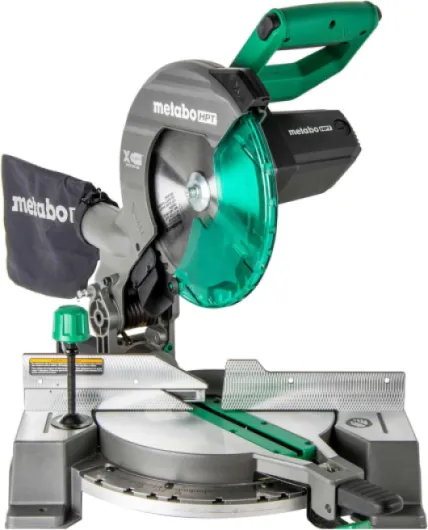
The design is pretty no-nonsense. The first thing you notice is how light it is for a 10-inch miter saw—around 24 pounds. That’s a big plus if you’re hauling it in and out of a truck or up stairs. The carry handle on top is basic but does the job. I’ve carried it with one hand and a stack of boards in the other, and it doesn’t feel like it’s going to rip my shoulder off like some heavier 12-inch saws do.
The miter adjustment is front-facing with a standard knob and detent lever. It’s not silky smooth, but it moves well enough. The detents at common angles like 0°, 15°, 22.5°, 31.6°, and 45° lock in positively, so you feel when you’re on the mark. The bevel adjustment is on the back and is the usual awkward reach-around, which is typical for cheaper saws. You only get left-bevel, which means if you’re doing a lot of compound cuts on both sides, you’ll be flipping boards more than with a dual-bevel model.
The Xact Cut shadow line is actually one of the more thoughtful design bits. Instead of a laser that drifts out of alignment, the light just shows where the blade will cut. In my use, I’d still drop the blade to double-check on more precise cuts, but the shadow line got me close enough most of the time for framing and trim. I’d call it a useful feature, not a gimmick, as long as you’re not expecting CNC-level precision.
On the downside, the base and fences are a bit small and feel a little cramped with wider boards. The fence is okay for 2x4s and 1x6 trim, but once you start handling longer pieces alone, you really need side supports or a stand. Also, the saw tends to walk a bit if you don’t clamp or bolt it down, especially when you’re cutting faster. That lines up with some reviews I read as well: it’s light, which is great for moving it, but not great if you just plop it loose on a wobbly table. Design-wise, it’s practical and focused on portability, with a few compromises in stability and ergonomics.
Comfort and ease of use: light and simple, with a few quirks
Using this saw day to day is pretty easy, especially if you’re not used to bigger, heavier tools. The light weight actually makes a difference. I could move it around the garage, onto a makeshift bench, and into the yard without feeling like I needed a second person. For someone working alone, that’s a big plus. I can see why one of the reviewers’ husbands uses it solo on jobs and just tosses it in the truck.
The handle and trigger feel okay. Nothing fancy, but the grip is comfortable enough even after a longer cutting session. One user mentioned having wrist surgery and still finding the handles comfortable, and I get that. The trigger pull isn’t stiff, and the safety switch isn’t awkward to reach. If you’ve ever used a saw where you’re constantly fighting the safety just to start a cut, you’ll appreciate that this one is pretty straightforward.
Setup is simple: plug it in, unlock the head, check the angles, and you’re basically ready. I watched a quick video just to confirm the assembly order, but it’s not rocket science. That said, there are a couple of annoyances. One reviewer had the screw for the left guard arm hiding in the dust bag, which is the kind of small quality control thing that can throw off a beginner who thinks they’re missing a part. Also, the lock for the blade-down position can drift out of alignment. Mine was okay, but I’ve seen that happen on similar saws and it can be annoying if you transport it a lot.
In general, I’d say it’s comfortable to use for light to medium work, but you really should mount or clamp it to something solid. On a bare table, the saw tends to move a bit under load, especially if you’re cutting faster. Once I screwed it down to a basic plywood stand, the whole experience felt better and safer. So comfort-wise: easy to carry, easy to operate, but it benefits a lot from a proper, stable setup.
Durability and build: decent for the price, not bulletproof
Build quality on the C10FCG2 is what I’d call “good enough for regular use” but not tank-like. The base and main structure feel reasonably solid, and nothing on mine has flexed or bent in normal use. The fences stay square once you set them, and the miter detents haven’t gotten sloppy after a few weeks of on-and-off work. For a saw at this price, that’s about what I expected. It doesn’t feel like it’s going to fall apart, but you can tell it’s not a top-tier pro model either.
The plastic parts—like the handle and some of the guards—feel pretty standard. Not super thick, but not flimsy to the point where I’m worried they’ll crack if I bump the saw. If you toss this thing around in a truck bed every day with no care, I’m sure it’ll show wear faster than a more expensive unit, but for home users and lighter trades work, it seems fine. The fact that Metabo HPT backs it with a 5-year warranty is reassuring. That doesn’t magically make it stronger, but at least you’re covered if something major fails early.
I haven’t had it long enough to comment on multi-year durability, but I did push it a bit: repeated cuts in treated lumber, some longer sessions cutting framing studs, and general jobsite handling. No overheating, no weird smells, and no play developing in the pivot or slide. The motor still sounds smooth. That’s usually a good sign early on. The only thing I can see potentially wearing faster is the bevel and miter locking mechanisms if you’re constantly adjusting them—they’re not heavy-duty metal chunks like on premium saws.
Considering the Amazon rating (around 4.6 with a lot of reviews) and my own use, I’d say durability is decent for the money. Just be realistic: if you’re a contractor using this as your main saw every single day for years, you might want something beefier long term. As a homeowner’s primary saw or a pro’s lightweight backup, it feels like it’ll hold up fine if you don’t abuse it.
Performance: cuts well, but it’s not a high-end trim saw
In terms of raw cutting performance, the Metabo HPT C10FCG2 is pretty solid for its class. The 15-amp motor has enough power that I never felt it struggle on standard 2x lumber. I ran multiple 2x4 and 2x6 crosscuts, plus a bunch of MDF and pine trim, and it sliced through everything cleanly as long as I let the blade do the work. If you try to force it too fast, especially with the stock 40T blade, you’ll feel a bit of resistance and see some minor tear-out, but nothing crazy.
Accuracy out of the box was decent. My 90° and 45° cuts were close enough that baseboards and door casings lined up fine without gaps that needed tons of caulk. I checked the fence and bevel with a square; they were slightly off but within what I’d call “normal for a budget saw.” A couple of quick tweaks got it dialed in better. The miter detents felt reliable, so I wasn’t constantly fiddling with micro-adjustments on every cut, which is nice when you’re just trying to finish a room.
Where it shows its limits is in two areas: super clean finish cuts and material support. The stock blade is more of an all-purpose blade. It’s okay for framing and general carpentry, but on painted trim or hardwood, you see some fuzz and chip-out on the back side. Swapping to a finer-tooth blade (60T or 80T) would help a lot. Also, because the saw doesn’t slide, you’re limited in crosscut capacity. For most home projects that’s fine, but if you’re used to cutting wide shelves or big boards in one pass, you’ll miss that feature.
I did notice some “kick back” or grab on the upstroke if I lifted the blade too fast, especially on smaller pieces, which matches what one reviewer mentioned. You really do need to keep the workpiece firmly against the fence and bring the blade up slowly. It’s not dangerous if you’re paying attention, just something to be aware of. Overall, the performance is good for the price—strong enough motor, decent accuracy, but clearly aimed at general use, not ultra-precise finish carpentry.
What you actually get with the C10FCG2
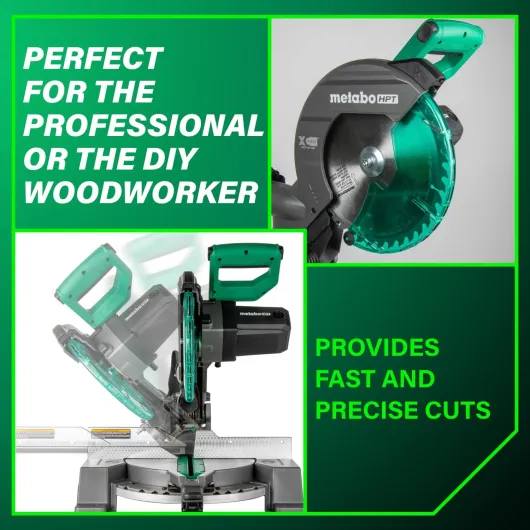
Out of the box, the Metabo HPT C10FCG2 is very straightforward. You get the saw, a 10-inch 40T tungsten carbide blade, a wrench, the dust bag, and the basic clamp. No fancy stand, no laser, no extra bells. The newer twist on this “next gen” model is the Xact Cut shadow line system, which is basically a light that casts the blade’s shadow on your work so you can line up your cuts. It’s a simple idea, but in real use it’s more helpful than the cheap lasers you see on some other budget saws.
The saw has a 15-amp motor rated up to 5,000 RPM, and you can feel it spin up quickly. I ran it through 2x4s, 1x6 pine, and MDF baseboard and never felt it bog down. It’s a single bevel saw, so it only tilts to the left up to 45°, and the miter range is 0–52° both left and right. That covers most of the common angles you’ll need for trim and framing. You do lose some convenience if you’re used to dual bevel or sliding saws, but at this price point, that’s normal.
One thing I liked is that the miter scale is pretty clear and easy to read. There are positive stops at common angles, and they actually line up decently out of the box. I still checked it with a square and a digital angle gauge, and it was close enough that I didn’t feel the need to spend 30 minutes fine-tuning. If you’re new to miter saws, that’s nice—you basically take it out, bolt it down or clamp it, and start cutting without a long setup ritual.
In terms of overall presentation, it feels like a tool built to a price, but not like a toy. It’s clearly aimed at DIYers and tradespeople who want a light secondary saw. You don’t get pro-level accessories or a premium finish, but you do get the essentials: decent power, decent accuracy, and a 5-year warranty in case something fails early. For what I paid, that’s a fair trade-off.
Pros
- Lightweight and easy to carry at around 24 lbs, good for solo work and jobsite hopping
- Strong 15-amp motor with up to 5,000 RPM, handles 2x lumber and trim without bogging down
- Good price-to-performance ratio with a 5-year warranty and generally accurate cuts out of the box
Cons
- Dust collection is weak; a lot of sawdust ends up on the table and floor even with the bag
- Stock 40T blade is just average for finish work and may cause some tear-out on nicer trim
- Single bevel and non-sliding design limit flexibility for wider boards and more complex cuts
Conclusion
Editor's rating
After using the Metabo HPT C10FCG2 for a while, my overall take is that it’s a straightforward, reliable 10-inch miter saw that focuses on the basics: decent power, acceptable accuracy, and low weight. It’s not fancy, and it definitely has some weak spots—dust collection is mediocre, the stock blade is just okay, and the saw really needs to be clamped or bolted down for the best experience. But once you set it up properly and learn its quirks, it cuts well enough for trim, framing, and typical DIY work without turning every job into a battle.
I’d recommend this saw to new homeowners, DIYers, and tradespeople who want a lighter secondary saw they can easily move around. If your projects are things like baseboard, door casings, shelves, small decks, or simple furniture, it will get the job done with minimal hassle. Add a better blade and a stable stand, and you’ve got a pretty capable setup for not a lot of money. The 5-year warranty and strong user ratings help too; it’s not some random brand that disappears after a year.
On the flip side, if you’re a finish carpenter doing high-end trim all day, or you need a sliding or dual-bevel saw for complex crown and wide boards, this isn’t the right tool. You’ll run into its limitations pretty quickly and get frustrated by the smaller table and single bevel. But if you go in with realistic expectations—lightweight, budget-friendly, solid performance within its range—it’s a good, practical choice.